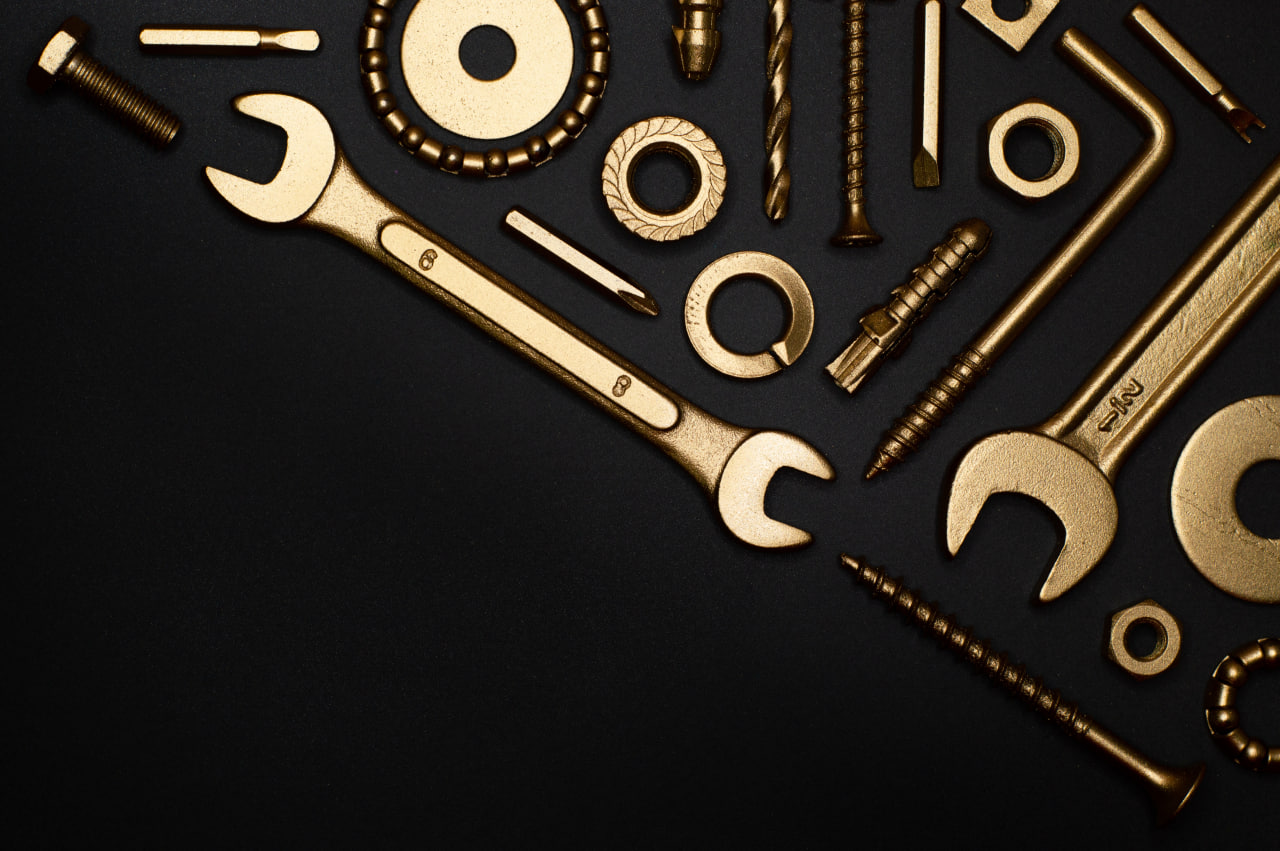
Carbon tool steels are a class of high-carbon alloys containing from 0.60% to 1.40% carbon. They are obtained by heating and quenching an alloy of iron and carbon, which gives the steel high hardness and wear resistance. This makes such steels an ideal material for manufacturing tools, assemblies, and elements of units subject to heavy wear.
One of the main features of carbon tool steels is their hardness. Its indicator can reach 65 HRC on the Rockwell scale, making them an excellent solution for producing pointed tools such as drills, mills, and cutters. Another important characteristic of tool alloys is their ability to retain cutting-edge sharpness even under prolonged service in extreme conditions. This is especially relevant in processes related to metalworking, in particular those where high temperature is required for cutting and forming metal.
Due to absence of alloying additions they have relatively low corrosion resistance. Therefore finished products often have additional protective coatings preventing metal destruction when working in aggressive environments or under elevated humidity. However, absence of alloying additions affects not only the metal’s physical-mechanical characteristics but also its cost. Thanks to the “simple” composition, the price of such alloys remains affordable for virtually all industries.
But not all carbon tool steels have identical characteristics. And quality and productivity of the finished tool depend directly on choosing the right material type. Let us consider two of the most popular alloy types, their characteristics, and applications.
Steel grade U8A belongs to the group of high-quality carbon unalloyed steels. It has high strength and hardness (58 HRC Rockwell) as well as good wear resistance. It belongs to knife-type alloys. Ideal for manufacturing impact and cutting tools as well as products requiring elevated wear resistance. Used to produce axes, hammers, chisels, cutters, center punches, screwdrivers, side cutters, and pliers.
Steel U8A contains no alloying additions in its composition, so it easily corrodes. To avoid this, a protective coating must be applied to the finished product, and regular care must be carried out, in particular not allowing water drops to remain on the tool after use. Thanks to high iron content (more than 97%), blades from steel U8A are very hard to break or damage. They do not require frequent sharpening and long retain cutting-edge sharpness. They do not fear impacts, vibrations, and other dynamic loads.
Alloy grade U10A is a carbon tool steel. Like U8A, it has no alloying additions in its composition. It has high strength and hardness (up to 63 HRC Rockwell). Used to manufacture tools whose cutting edges do not heat during service, in particular rasps, needle files, taps, files, twist drills, saws and saw blades, dies for cold stamping. Products from U10A are often used in woodworking and locksmithing.
The main difference between steel grades U8A and U10A is carbon quantity in the material composition. In the first case this indicator is 0.75–0.84%, in the second — 0.95–1.09%. This is evidenced by the numbers in the metal designations (“8” and “10” respectively). Carbon gives alloys strength and hardness, but as these indicators increase it reduces ductility and toughness.
If you have difficulty choosing the most suitable tool steel for your production, contact Petersburg Plant of Precision Alloys. Experienced specialists will select the material that best matches your tasks and, if necessary, manufacture an alloy to individual order. Modern equipment for melting and rolling steels, as well as our own laboratory equipped with the latest instruments, makes it possible to produce any steel grades in the form needed by the customer, including cold-rolled strip per GOST 21996.