+7 812 740–76–87
Version for the Visually Impaired
Send Request
Press Center
News Articles Interviews

Factory History

Founded in 1857

1857

Factory Foundation
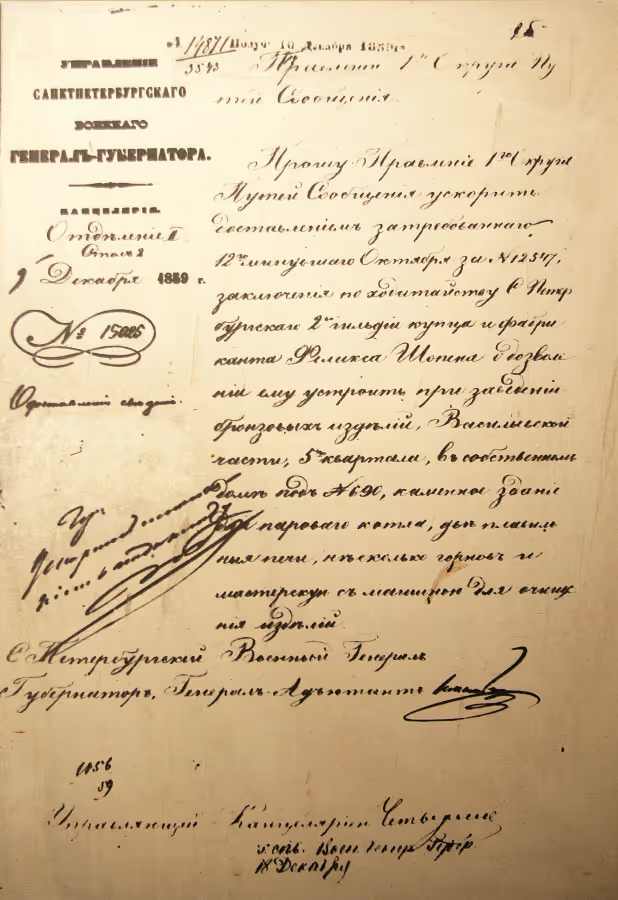
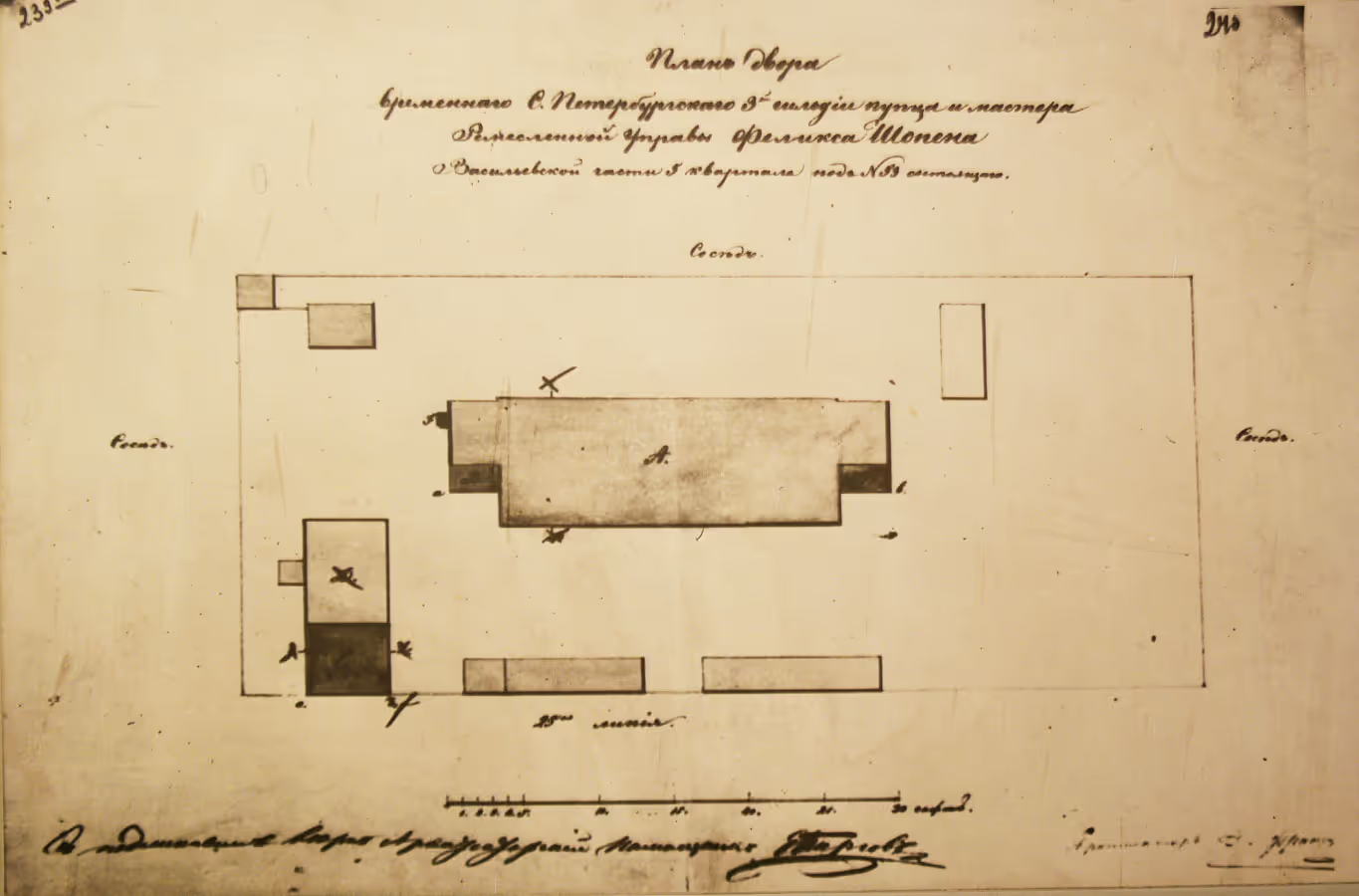
The factory's founding date is considered to be June 21, 1857. On this day, the Kunz-Chopin factory for the production of bronze products was registered at the office of the St. Petersburg Governor-General on the site of the V quarter of the Vasilyevsky part (the area of the current 24th and 25th lines of Vasilyevsky Island). On December 10, 1858, Felix Chopin, a merchant of the second guild and manufacturer, was granted permission to build a building for a steam boiler, two smelting furnaces, several forges, and a workshop for cleaning products.
St. Petersburg
Felix Chopin
A talented hereditary foundryman from France, Felix Chopin came to St. Petersburg in 1838 to work as a manager at the foundry of Alexander Gerin and by the time he opened his own business, he had earned the status of Supplier to the Court of His Imperial Majesty.
Production Boom
Chopin's factory acts as a contractor for significant state orders: lighting fixtures and decorative elements for the Moscow Kremlin, Winter, Marble, Tsarskoye Selo, and Gatchina Palaces, ceremonial doors of St. Isaac's Cathedral, and the Cathedral of Christ the Savior. Close cooperation is established with the Imperial Porcelain Factory. Chopin actively participates in various domestic and international exhibitions. Thus, in 1862, at the World Exhibition in London, a statue of Catherine II cast by him received a medal for the highest manufacturing technique. Eleven years later, it served as a model for the creation of the monument to the empress, installed in front of the Alexandrinsky Theater in St. Petersburg.
1870s
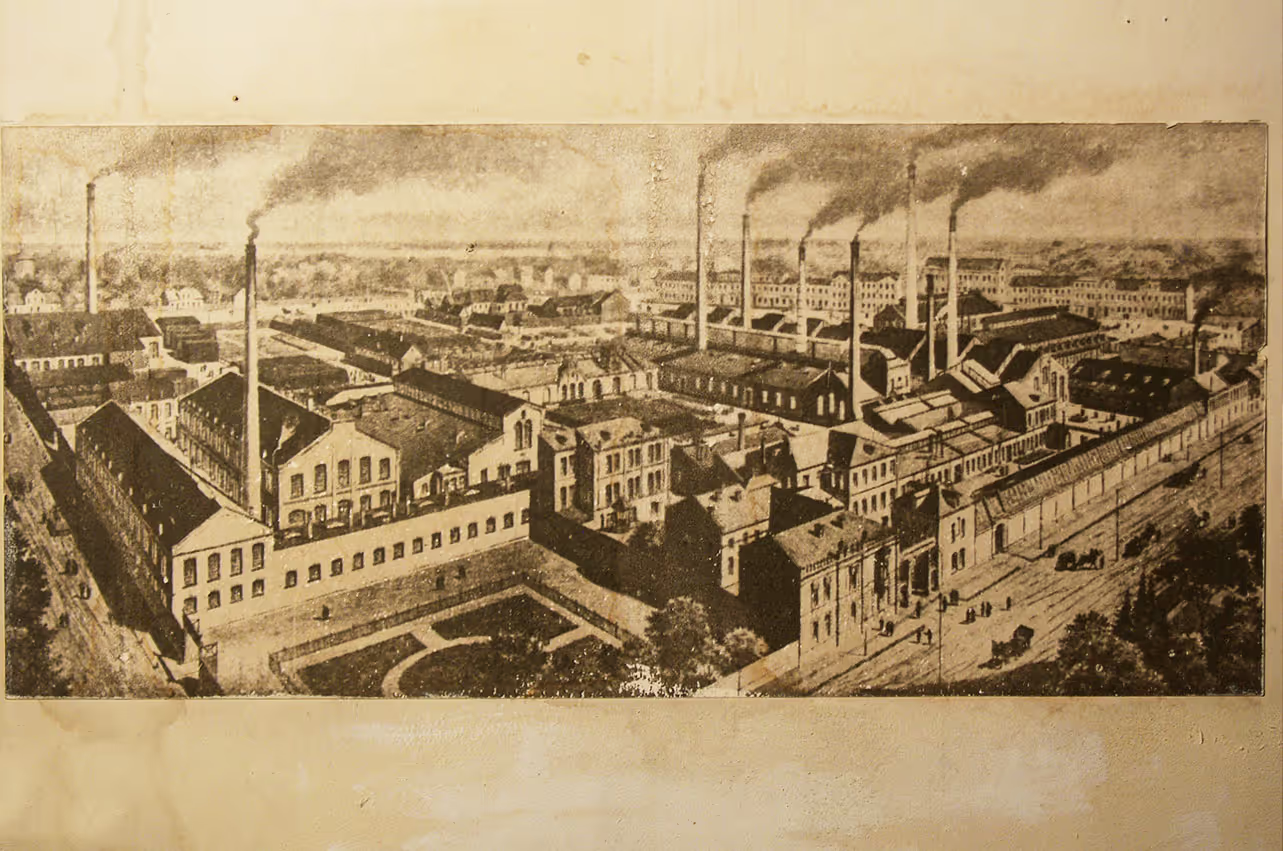
Chopin gradually withdraws from business, and over time, the production passes into the ownership of the Westphalian Union joint-stock company. Under the management of the Prussian subject Schilling, the territory of the enterprise expands, equipment is updated, and the production range develops. From 1875, Chopin's factory is renamed the "St. Petersburg Wire and Nail Factory L. Bergert".
Turn of the Century
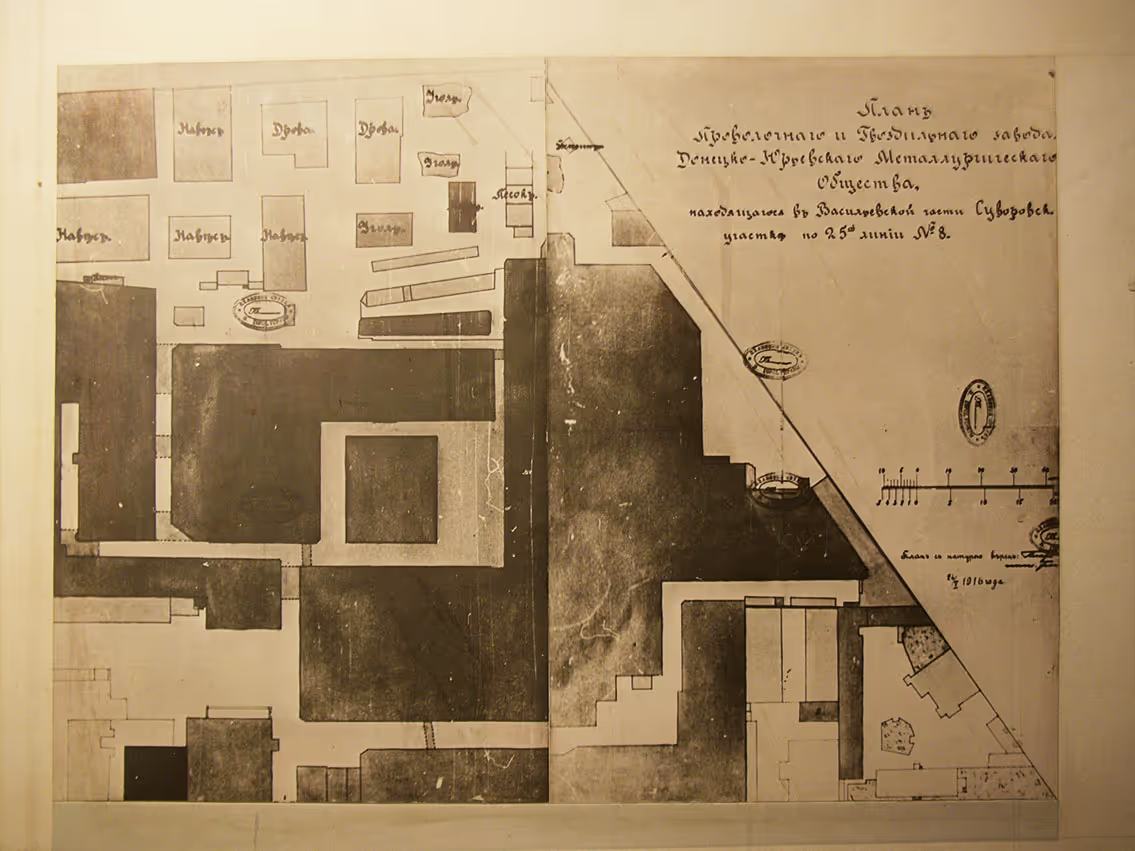
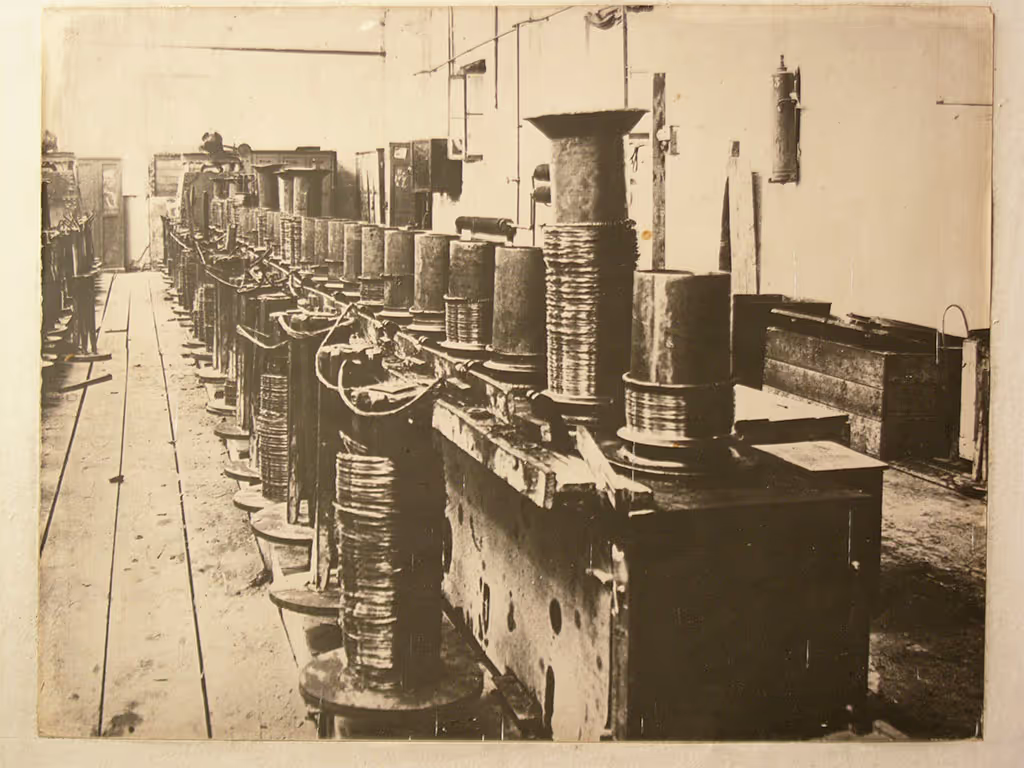
In 1904, the factory becomes part of the Donetsk-Yuryev Metallurgical Society ("DYMO"), one of the largest industrial associations of the Russian Empire. By 1909, the factory's technical equipment reached its pre-revolutionary peak: more than 200 metalworking and nail-making machines, over 70 presses, and 20 rope machines. The factory employed 1600 people – almost seven times more compared to 1883 (235 people). In 1914, the factory's capitalization (the value of land, buildings, and equipment) was estimated at 5.5 million rubles.
Revolution. Before and After
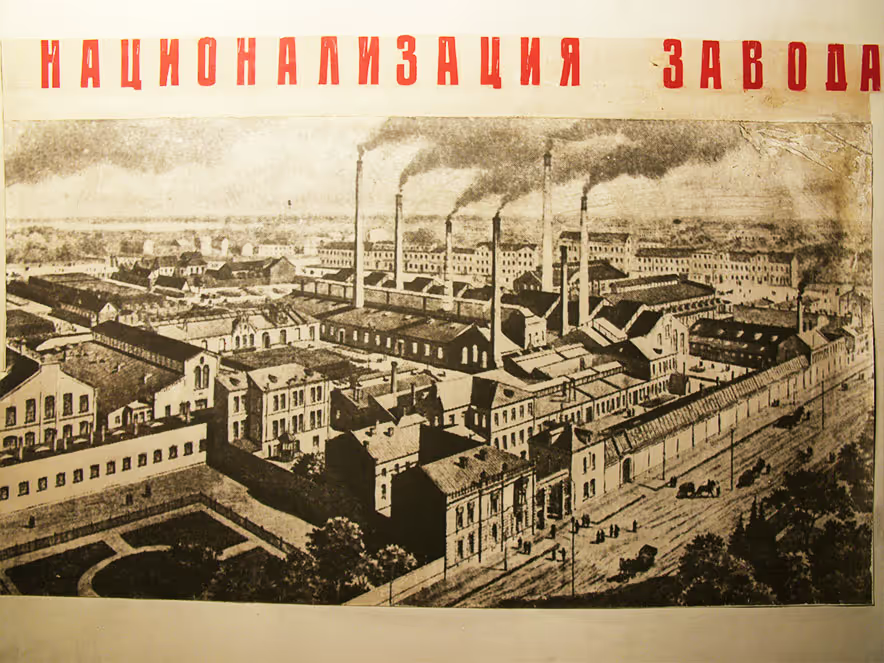
Despite the visible achievements, the enterprise was not spared from pre-revolutionary unrest. In 1916, workers from the "Wire-Nail" and "Horseshoe-Nail" factories gathered at the Vasileostrovsky Theater and declared an indefinite strike. Through joint efforts, they managed to achieve the fulfillment of a number of demands: the introduction of an eight-hour workday and insurance for disability and old age, the abolition of fines, and an increase in wages. Two years later, on June 28, 1918, by a decree of the Council of People's Commissars, the "St. Petersburg Wire and Nail Factory L. Bergert" was nationalized and renamed "Krasny Gvozdilshchik".

Since this factory is one of the factories of the Donetsk-Yuryev Society, which is still in private leasehold use, and it is not possible to nationalize them in fact, the presidium of the production organization collegium proposes to the Metal Department of the Supreme Council of National Economy to resolve the issue of nationalizing this society on an all-Russian scale.
Course for Industrialization
In the 1920s-30s, a large-scale reconstruction of the factory takes place. In a short time, three new shops equipped with modern technology are built: rope, steel wire, and hot rolling. The expansion of the product range, the renewal of production capacities, and the development of advanced technologies significantly reduced the need for foreign purchases (or, as they would say today, contributed to import substitution) and were highly appreciated by the country's leadership. On May 22, 1940, by a decree of the Presidium of the Supreme Soviet of the USSR, the "Krasny Gvozdilshchik" factory is renamed the "Steel Rolling Wire-Rope Factory named after V.M. Molotov".
Great Patriotic War
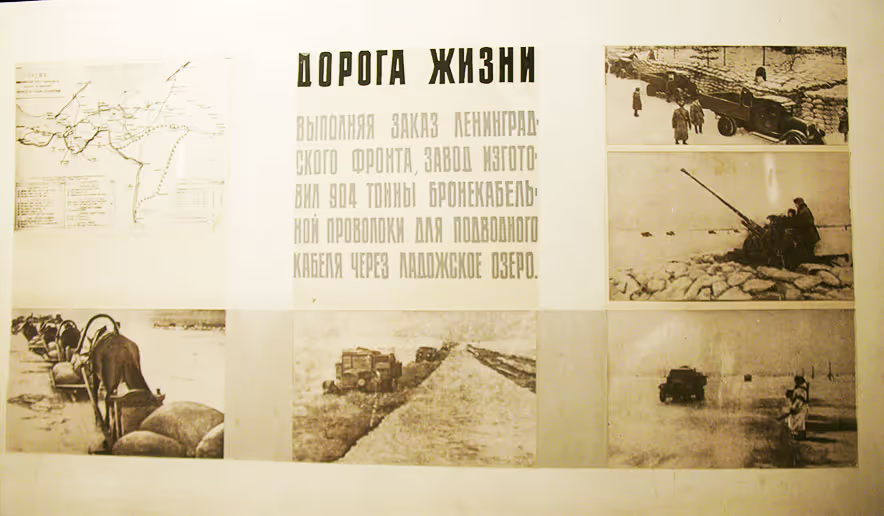
Responding to the challenge of the time, the factory promptly began producing products for the needs of the military industry and defense. While under siege, the enterprise produced parts for communication devices, submachine guns, grenades, mortars, and tanks. 904 tons of armored cable wire were manufactured for the underwater cable across Lake Ladoga ("Road of Life").

In just eight months of 1942, production volume increased almost 20 times: from 35 tons in May to 649 tons in December.

By the beginning of 1943, 1115 people worked at the enterprise, with the collective consisting of ¾ women.

Using the capacities of the central factory laboratory, vitamin C was produced from needles for the needs of workers and employees (with a total volume of 35,000 liters). A subsidiary farm of 20 hectares was organized in the Toksovo district. In 1943, the factory was awarded an honorary diploma for a high harvest in private and public gardens.

In addition to performing their direct duties in the workshops and production, factory employees actively participated in clearing the city of rubble and destruction, restoring infrastructure and housing.
Post-War
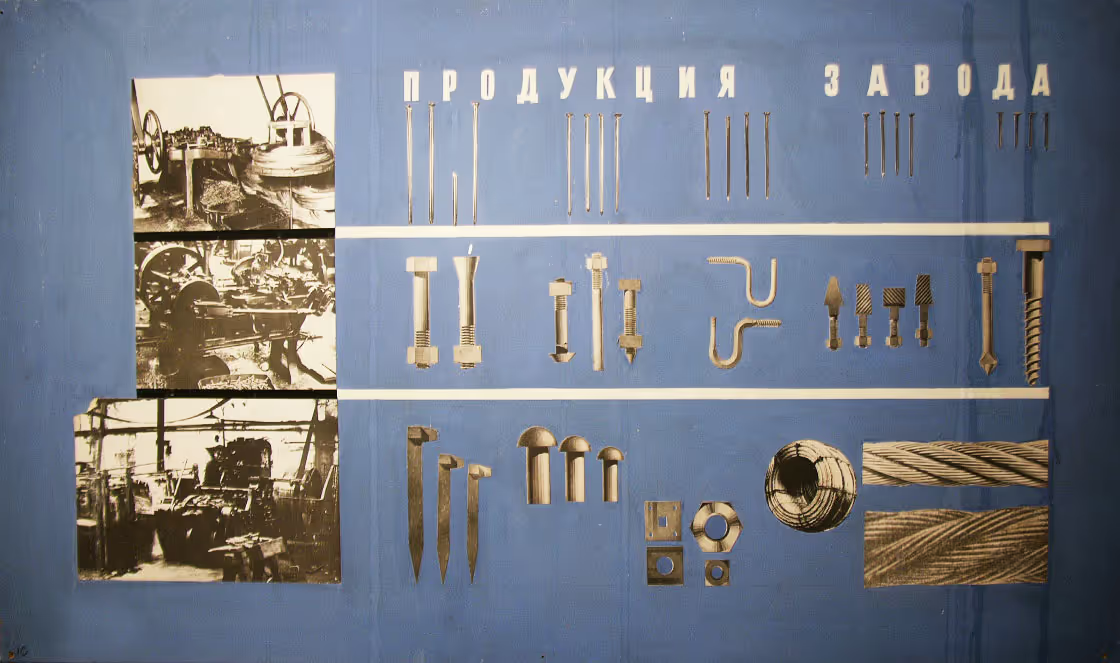
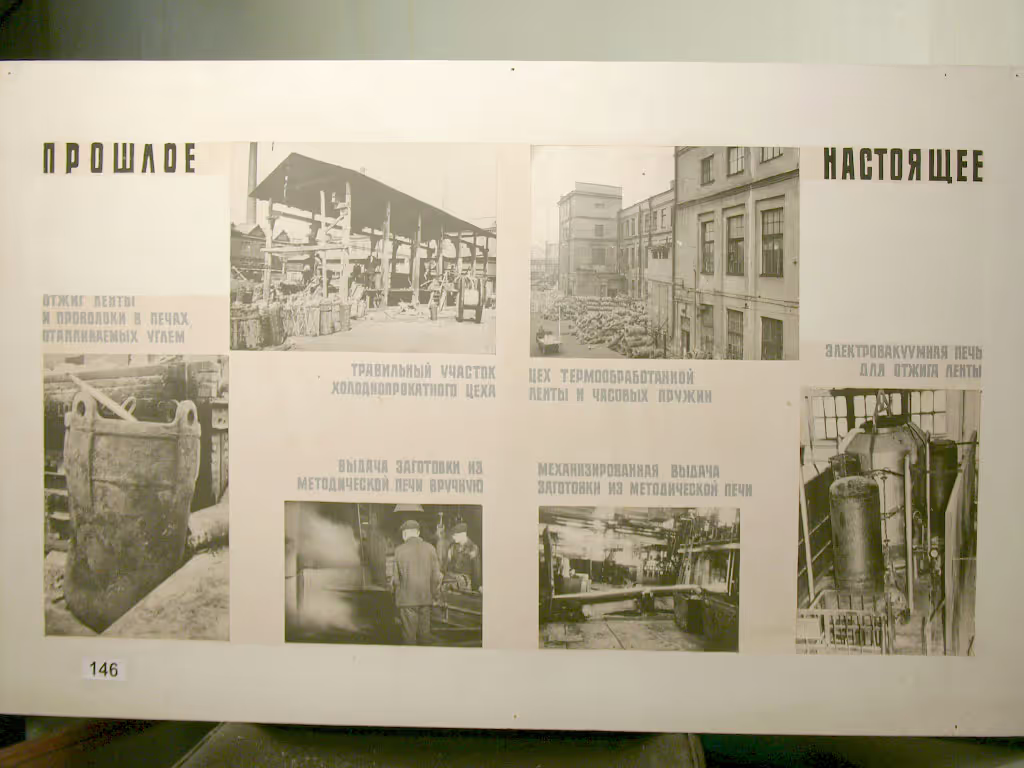
In 1948, a new stage of factory modernization begins. Work is carried out in two directions: updating the capacities of the main and auxiliary workshops and improving working conditions. As a result, by 1958, there is a ninefold increase in production and a sixfold increase in labor productivity. The enterprise masters the production of a wide range of new products. From raw materials and small parts for clock mechanisms, musical instruments, and razor blades - to cables for the Bratsk and Kuibyshev hydroelectric power stations and profile strips for metro escalators.

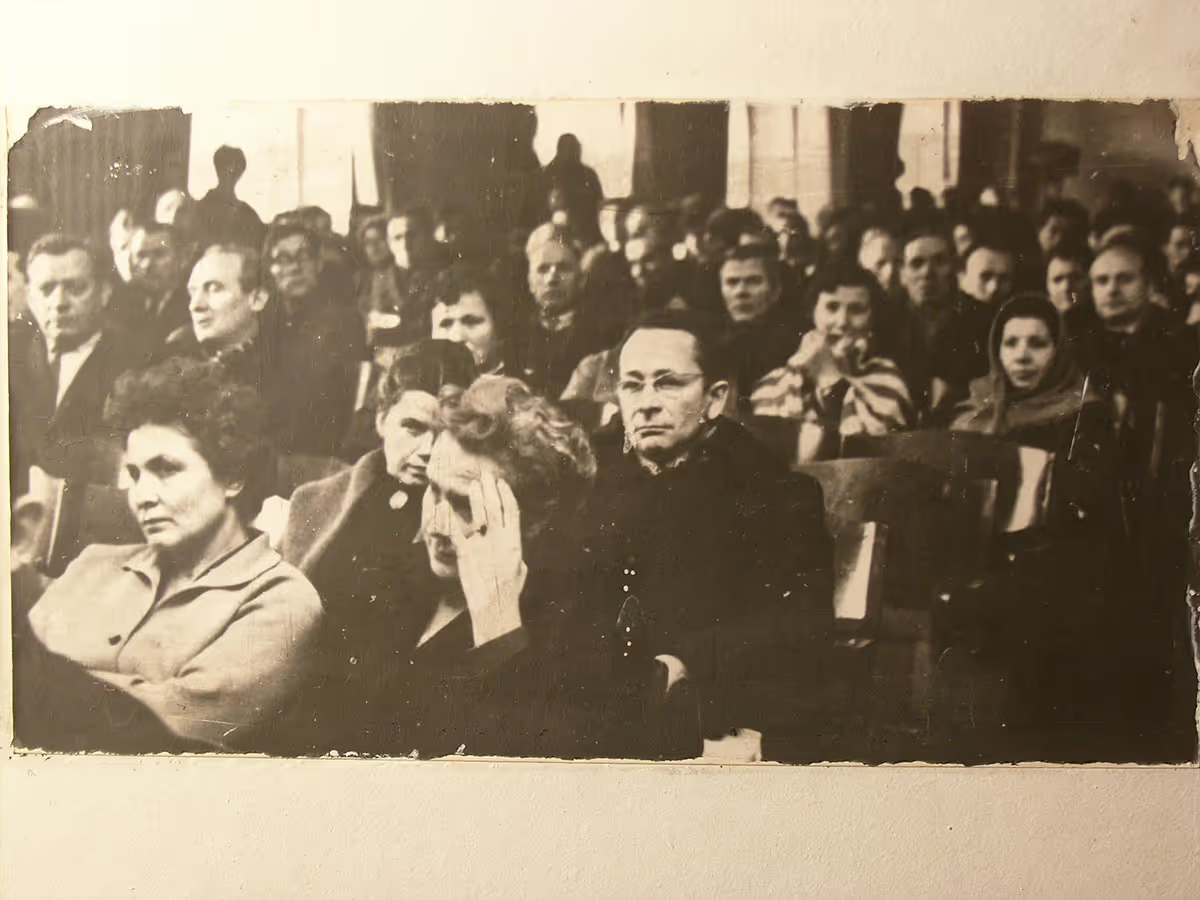
To better interact with the collective and the enterprise management, annual production and technical conferences are organized.

In 1957, the factory celebrates its centennial anniversary. On July 19 of the same year, by a decree of the Presidium of the Supreme Soviet of the USSR, it is awarded the Order of the Red Banner of Labor.
1960s
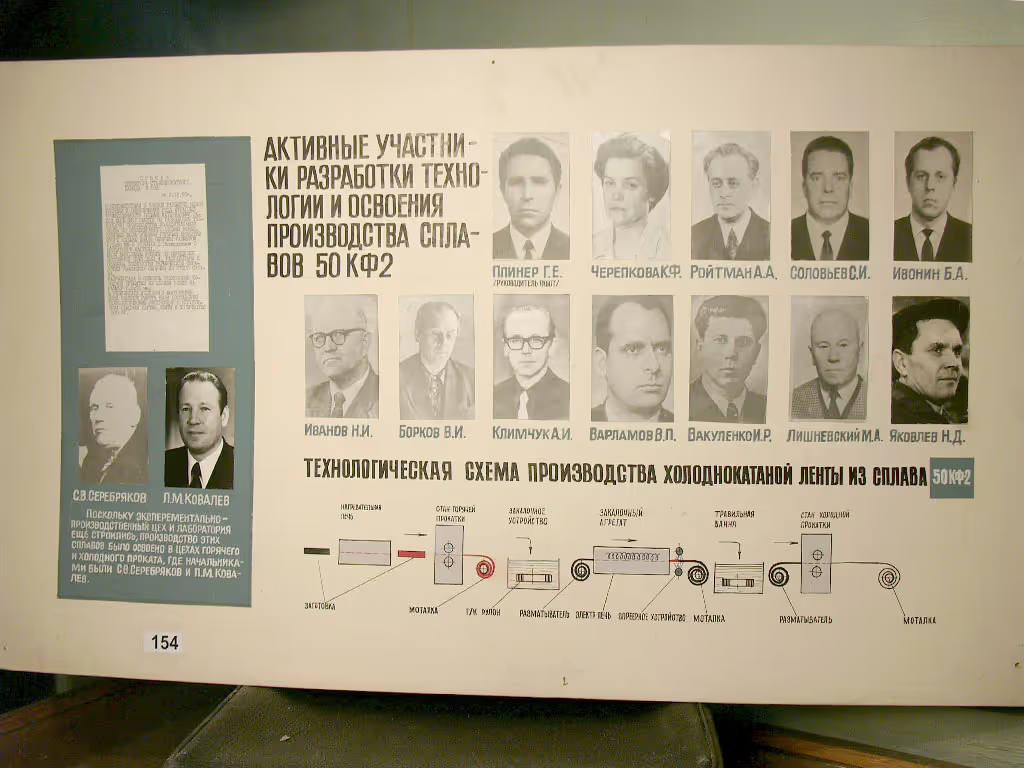
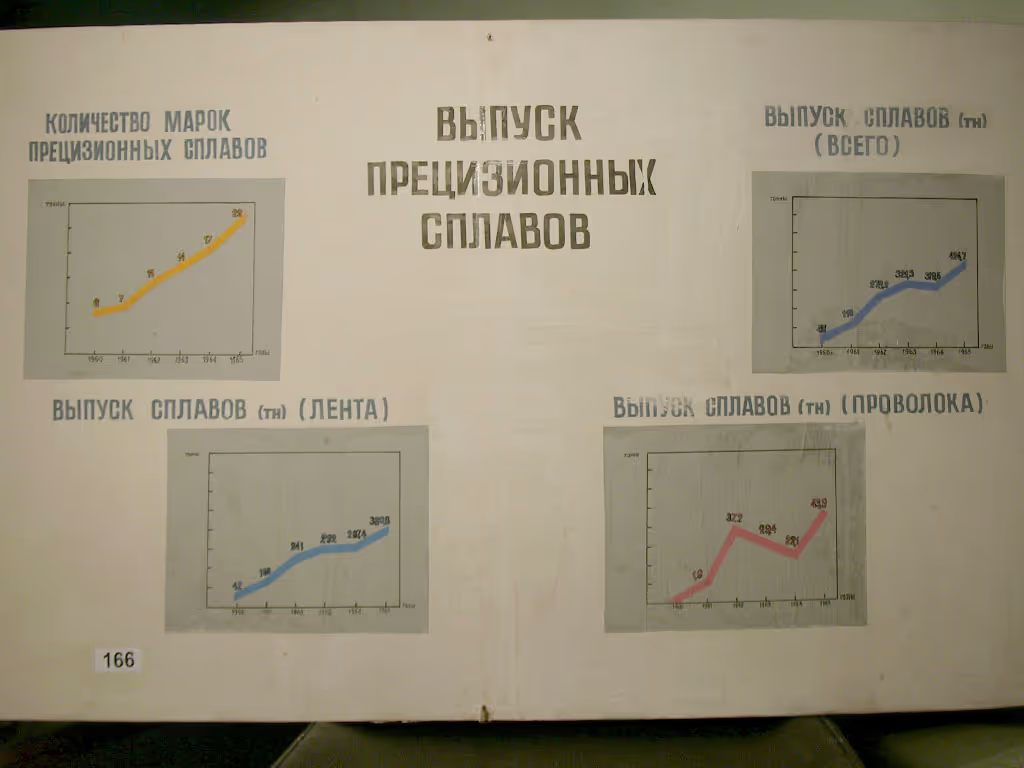
According to the decree of the Supreme Council of the National Economy of the RSFSR, a completely new shop with a full metallurgical cycle and a specialized laboratory are built. Their task: the development and production of precision alloys. A trial batch was produced in 1965. Over the next few years, streamlined production of about 50 types of products from precision metals was established.

In parallel, the factory was gasified, the level of manual labor was significantly reduced, a central laboratory for measuring equipment and a chemical water treatment shop were opened. In five years, by 1970, the total volume of manufactured products increased from 2 to 429 tons.
1970s
After the planned reconstruction and modernization of the precision alloys shop, its productivity increased by 300%. The factory takes a leading position among suppliers of enterprises in the instrument-making industry of the entire Soviet Union (40 types of unique products). Its products are purchased by eight countries of the world: Cuba, Poland, Czechoslovakia, Romania, Vietnam, Bulgaria, Libya, and Turkey.

The production capacities of the factory allow for the production of 11 types of metal products from 87 grades of steel according to 82 GOSTs and 200 technical specifications. In absolute figures, this is 116,000 tons, including 46 thousand tons of hot-rolled products and 70 thousand tons of metal products.
New Era
Perestroika, the transition to market relations, global economic, and political changes became a serious test for the factory. First and foremost, this was expressed in the catastrophic drop in demand for the products being produced. But even in the most difficult moments, the enterprise did not stop its activities; productions were re-profiled to manufacture goods in demand at that moment and simpler types of products in technical terms. Work was carried out to optimize, search for sales markets, restore old, and establish new connections.
2007 and Modern Times
JSC "Steel Rolling Plant" celebrates its 150th anniversary and marks the beginning of a new stage in its history. During a large-scale optimization of production, the enterprise LLC "St. Petersburg Precision Alloys Plant" is formed, which, thanks to a well-built strategy, relying on many years of experience and production traditions, quickly takes leading positions in the metallurgical industry and remains the leading enterprise in the country for the production of precision alloys to this day.