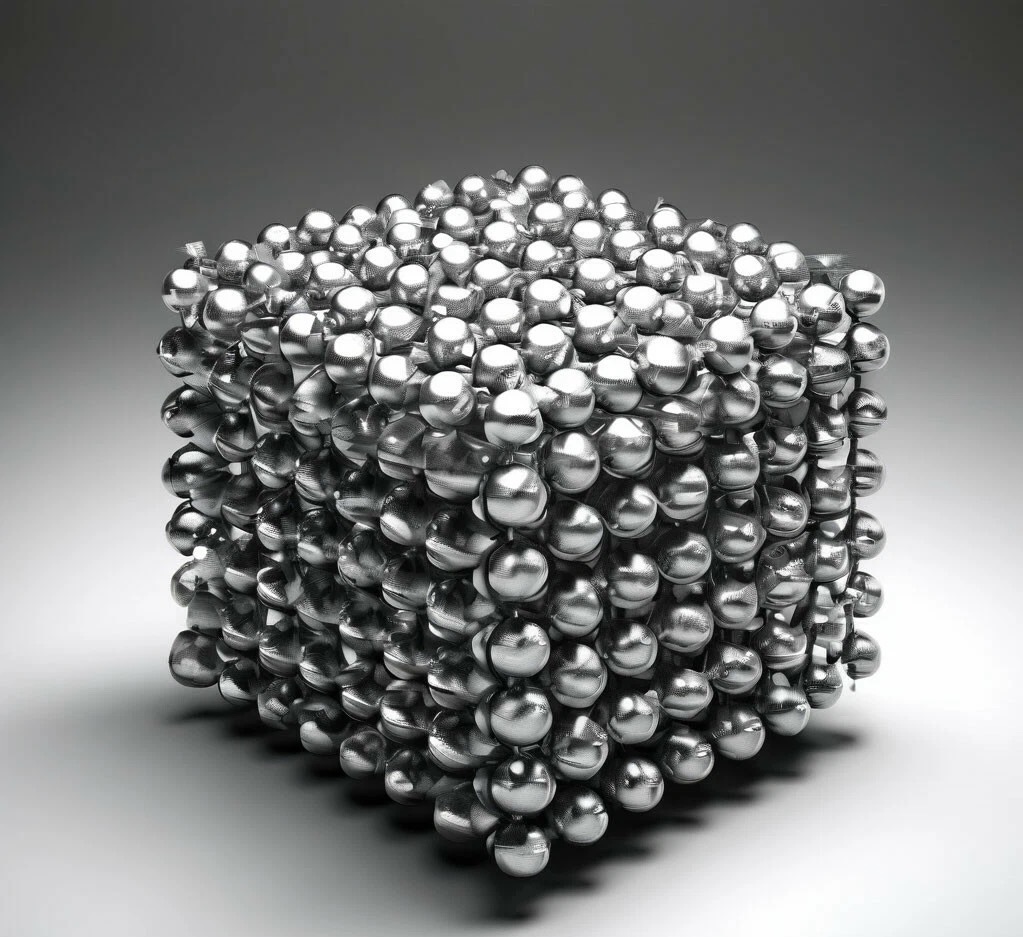
Material strength is one of the key factors determining application in various areas of engineering and industry. In this article we look at the strongest metals, alloys, and unique materials used in creating modern technical solutions.
Pure metals with high strength
Although many pure metals do not have outstanding strength, they serve as a basis for creating ultra-strong alloys. Let’s look at the strongest of them:
- Iron — ultimate strength 250 MPa. In pure form iron does not have high strength, but combined with carbon and other chemical elements it becomes the basis for various steels used in all industries.
- Nickel — ultimate strength 400 MPa. Although nickel strength is not high, its alloys have high resistance to temperature effects and mechanical loads, making them sought after in turbines, reactors, and other high-tech equipment.
- Titanium — ultimate strength 600 MPa. Even in pure form titanium has significant strength. Titanium alloys are widely used in aerospace and medicine thanks to high corrosion resistance and low weight.
- Tungsten — ultimate strength 1200 MPa. Tungsten, known for its refractoriness, corrosion resistance, and resistance to mechanical damage, is used in high-temperature furnaces, rocket engines, and cutting tools.
- Rhenium — ultimate strength 1350 MPa. Rhenium is used in producing superalloys for high-temperature applications.
- Iridium — ultimate strength 1670 MPa. Iridium, thanks to its exceptional strength, is used in specialized scientific and industrial fields.
Rhenium and iridium lead in strength, making them indispensable where maximum resistance to high temperatures and mechanical loads is required.
Alloys: unique metal combinations
Combining different metals in alloys makes it possible to reach strength levels impossible with individual elements. Let’s look at some of the strongest alloys:
- Tungsten alloys — resist extreme temperatures and huge mechanical loads. They begin to melt at 2780°C and withstand temperatures up to 800°C during machining, making them indispensable in cutting and drilling equipment and in parts for aviation and space.
- Vanadium steel — a particularly promising alloy whose strength reaches 5200 MPa. It is used in military and space industries thanks to its ability to withstand significant loads.
- Titanium–gold alloy β-Ti3Au — combines high strength and corrosion resistance, making it ideal for medicine and high-precision instruments, though it is costly.
Alloys created on the basis of pure metals give engineers and designers the ability to develop materials that not only surpass ordinary metals in strength but also have additional properties such as heat strength and corrosion resistance.
Innovative strong materials
Besides metals and alloys, there are a number of unique materials with exceptional strength characteristics that are actively used.
- Orb webs of the spider Caerostris darwini — the spider Caerostris darwini spins unique orb webs of incredible strength. They can reach several meters in diameter and can catch even small birds.
The secret of this species’ silk strength lies in the special composition of the silk the spider secretes. It contains a large amount of the protein resilin, which provides elasticity and springiness of the threads. Thanks to this property, the web can stretch 40–50% of its original length without breaking.
- Kevlar — an ultra-strong fiber used in automobile tires, brake pads, cables, prostheses and orthopedic products, body armor, and protective clothing. Kevlar is also widely used in shipbuilding and in parts for unmanned aerial vehicles.
Kevlar can withstand loads 8 times greater than steel wire and begins to melt at 450°C. Kevlar fibers have high mechanical strength in the range from 2700 to 5400 MPa. That is significantly more than even the strongest steels, which range from 500 to 1500 MPa.
- Carbon nanotubes are tiny cylindrical structures consisting of one or more layers of carbon atoms. Thanks to a unique atomic structure they have exceptional mechanical properties, including incredible strength.
Carbon atoms in nanotubes are arranged as hexagons, giving the material ultra-high stability and strength. Thanks to these properties carbon nanotubes find use in various fields such as composite materials, electronics, and even medicine.
These unique materials show how nature and modern technology can create substances with outstanding mechanical properties that open new horizons in areas from medicine to space research.
Strong materials produced by PZPS
The Saint Petersburg Precision Alloys Plant produces a range of sought-after materials with unique properties needed to solve complex technological tasks:
- Precision alloys — strip for elastic elements from alloys 40KKhNM, 36NKhTYu, and 17KhNGT has strength up to 1770 MPa, making it ideal for creating precise, reliable mechanisms.
- Corrosion-resistant steels — alloys 12Kh18N9, 12Kh18N10T, and 12Kh18N9SMR with strength up to 1000 MPa ensure durability and resistance of products in aggressive environments.
- Heat-strength and heat-resistant alloys — 20Kh13 and KhN78T are suitable for high-temperature work, ensuring equipment reliability and durability.
PZPS is an enterprise that actively develops and designs unique materials for various industries. The company’s products are distinguished by high quality and reliability, making it possible to successfully solve tasks of any complexity, up to the most extreme service conditions.
For more information about our products and services, call the numbers listed or leave a request on the website. We are always ready to help you choose optimal materials for your production tasks and innovative projects.