Material determines whether a part will withstand millions of load cycles, keep its shape when heated, and be able to work in a magnetic field.
Mechanical engineering, instrumentation, aviation, and energy use three main classes of materials: steels, special (including precision) alloys, and composite materials. Each occupies its own niche — and trying to go beyond it almost always means compromises.
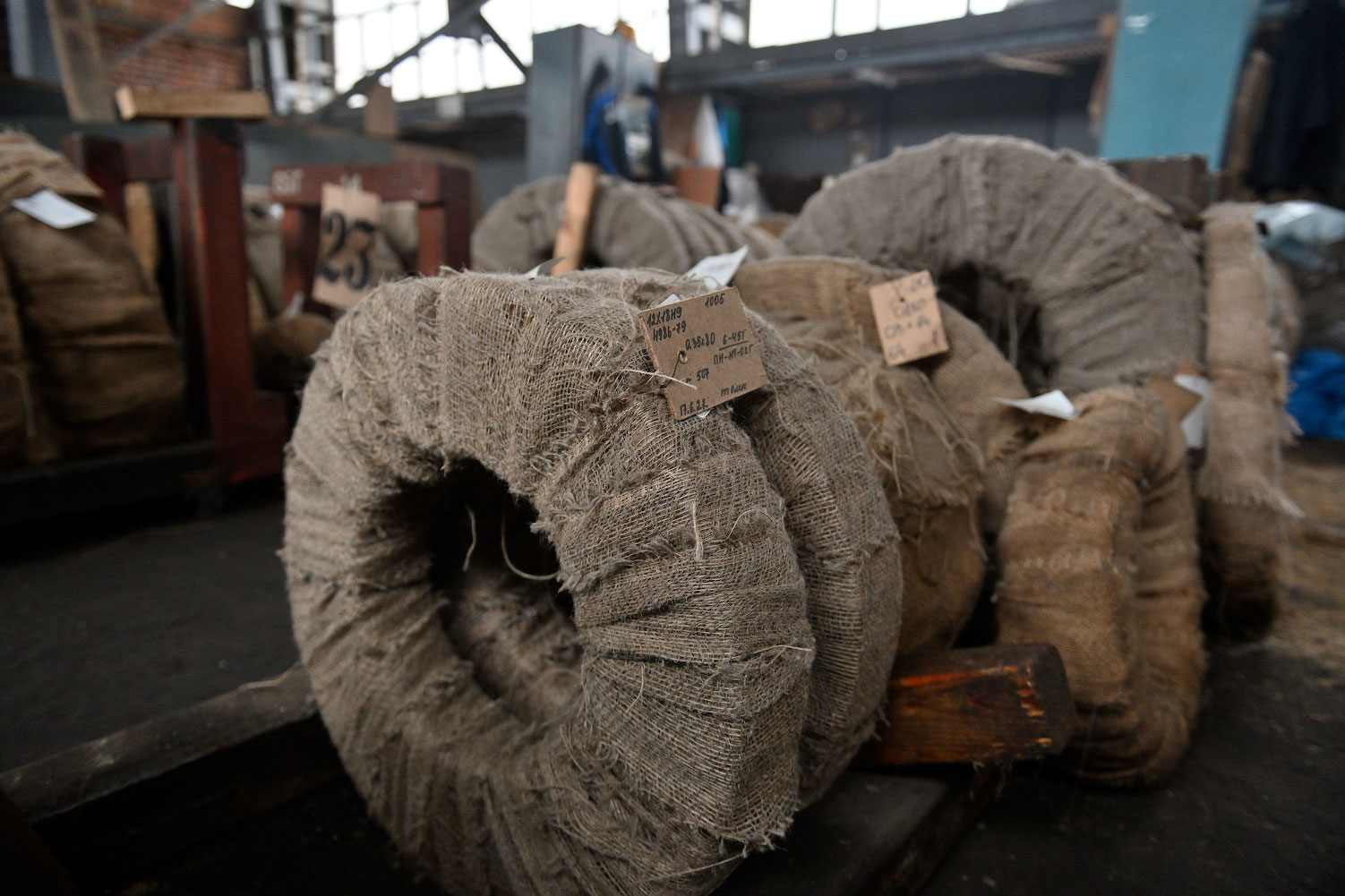
Precision alloys occupy a special place in this system — materials created for conditions where even minimal property deviations can cause equipment failure.
Structural and stainless steels remain the foundation of modern industry. Over more than a century of production, melting, processing, and joining technologies have been brought to a high degree of predictability.
Steels provide:
Together these properties make it possible to create equipment of almost any complexity — from machine tools to bridges and power plants.
Universality, however, does not mean there are no limits. They include:
Nevertheless, in most tasks — especially in series production — steel remains an economically justified choice.
Situations in which standard materials stop coping are inevitable. That is where special and precision alloys appear.
These are not merely “improved metals.” Their properties are calculated in advance and then reproduced with high accuracy in every batch.
The key feature is property stability:
Such accuracy is achieved through strict control of:
It is this controllability of properties that makes these materials indispensable in high-precision technology.
Composite materials — carbon-fiber, glass-fiber, and boron-fiber plastics, as well as metal-matrix composites — opened new opportunities to cut structural mass without losing strength. They provide high specific strength and stiffness at low density. Thanks to them, modern aircraft, trains, and drones became lighter, faster, and more efficient.
Composites are especially effective where mass is critical:
But lightness comes at the cost of operating complexity.
Main limitations:
In addition, their behavior under long cyclic loads and in aggressive environments is less well studied than that of metallic materials.
There are tasks in which precision alloys cannot be replaced by steel or composites — not for economic reasons, but for fundamental technical ones.
In a number of systems zero or strictly specified thermal expansion is required over a wide temperature range with isotropic properties.
Such requirements are typical of:
Composites, as noted, are anisotropic, while steels have too high and unstable an expansion coefficient.
For electrical and magnetic systems precise reproducibility of parameters is critical.
This matters for:
Composites are generally dielectrics or anisotropic semiconductors. Steels do not provide the required stability and reproducibility of magnetic permeability and coercive force.
At elevated temperatures precision alloys retain the elastic modulus with minimal deviations.
This matters for:
While polymer composites already begin to degrade at about 300°C, precision alloys retain properties up to about 450°C.
Practice shows that an effective engineering solution is always a balance.
Steels remain the foundation of general mechanical engineering: machine tools, equipment housings, building structures, pipelines.
Composites are a solution for mass reduction. They are indispensable in aviation, rocketry, high-speed ground transport, and light load-bearing structures.
Precision alloys are an engineering compromise between cost, processability, accuracy, and property stability.
Precision alloys are used if:
Each of the classes considered occupies its own niche, and trying to replace one with another often raises cost or lowers reliability.
Engineering history shows that every new stage of technology began not with a new machine, but with a new material. Steel gave the world the industrial revolution. Composites made modern aviation possible. Precision alloys provided the accuracy without which space, electronics, and energy are impossible.
The St. Petersburg Precision Alloys Plant melts and supplies a wide range of materials with strict control of chemical composition and physical properties in exact accordance with state standards.
Our plant specializes in materials for high-tech industries where property stability matters more than raw-material cost.
PZPS offers a wide product range:
Today material selection is not a technical formality, but a strategic decision on which equipment reliability, operating safety, and product service life depend.
If your project needs stable physical properties, high parameter accuracy, controlled thermal expansion, and predictable magnetic characteristics, it is time to use precision alloys.
Contact the plant’s specialists for material-selection advice and an optimal solution for your production.