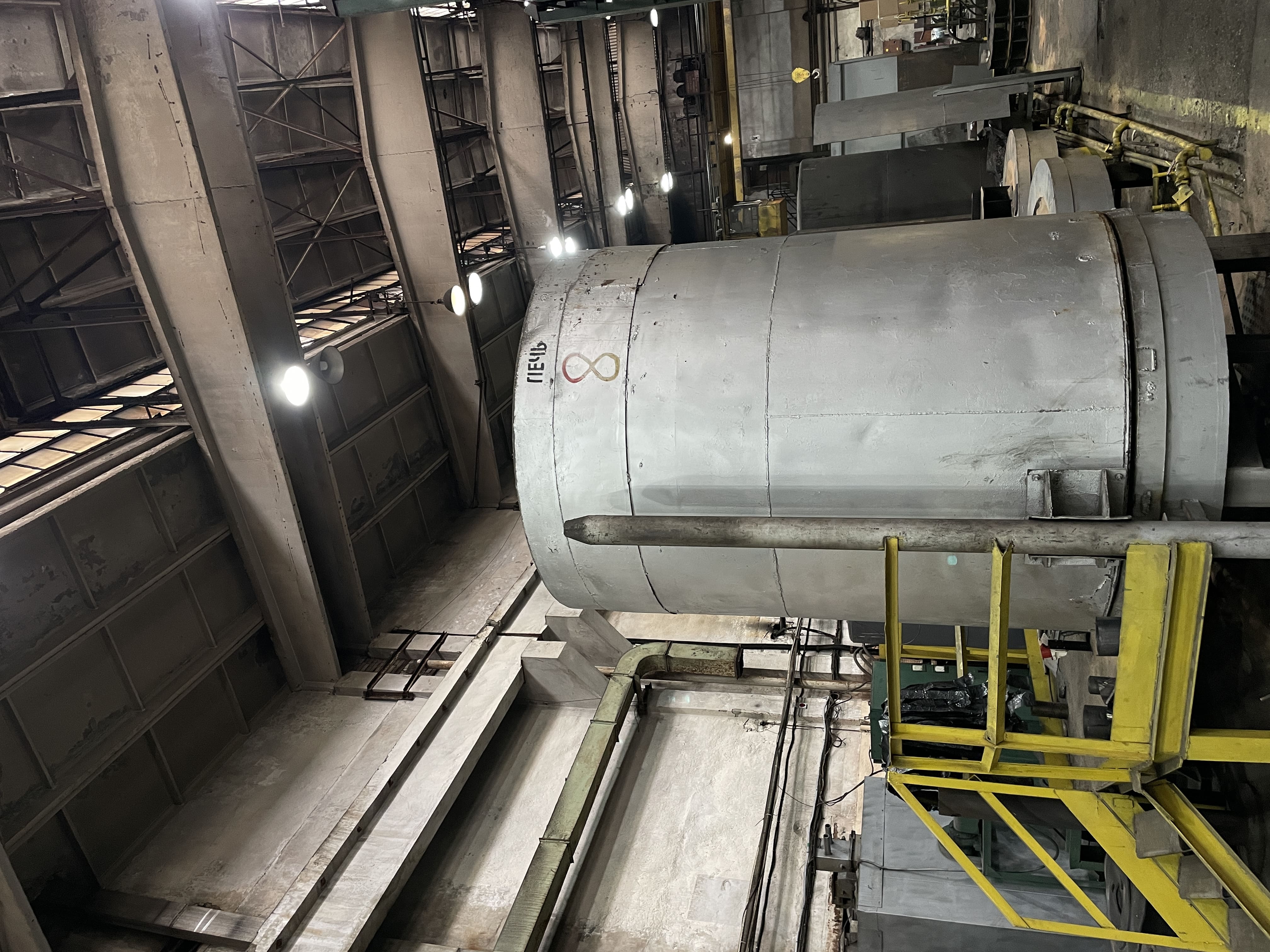
Heat treatment is a technological process during which metal products undergo controlled heating, holding at a given temperature, and gradual cooling. The main goal of the process is a directed change in the structure of steel or alloy, which improves their characteristics: strength, hardness, and ductility.
The process of heat treatment is based on physical and chemical changes that occur inside metals under the influence of temperature. As a result, the positions of atoms within the crystal lattice change, leading to transformations of the material’s structure and properties.
To intensify the resulting changes, the following may be used:
Such a combination of methods makes it possible to create materials with unique properties unattainable by ordinary processing methods.
In modern engineering, heat treatment makes it possible to obtain materials with predetermined characteristics. It may be used as an intermediate operation to improve the machinability of metals by cutting, rolling, or forging. It may also be a finishing operation that imparts to products the physical and mechanical properties required for successful service.
During heating, holding, and cooling, steels and alloys undergo substantial structural changes. As a result of these processes, materials may be in two states:
These states affect the service properties of the product, determining its suitability for various operating conditions.
The cooling regime is a key factor in heat treatment on which the final state of the material depends.
For spring steels, for example cold-rolled strip 60S2A per GOST 14959-2016, or analogues of alloys of the Inconel type, the correct choice of cooling regime ensures their reliability and durability.
Heat-treatment processes can be divided into three main groups:
Methods of heat treatment proper have become the most widespread. Below we examine them in more detail.
It includes heating steel or alloy to a set temperature, holding at that temperature, and subsequent slow cooling, which avoids defect formation. The method aims at achieving optimal structural and required mechanical properties.
Main tasks of annealing:
Annealing is usually carried out at temperatures close to the critical ones, followed by slow cooling, which excludes sharp phase transitions.
In quenching, the metal is heated to a certain temperature, held there, and then rapidly cooled in water, oil, or special solutions. This fixes the structure and properties obtained at the heating stage.
Main tasks of quenching:
Quenching with polymorphic transformation
In such heat treatment the crystalline structure of the material changes. Transformations occur when steel or alloy is heated above the critical point and then rapidly cooled.
Polymorphic transformation: what is it?
Polymorphism in metals is the ability of a material to change its crystal lattice under certain temperature conditions. For example, on heating the ferritic structure of steel (body-centered cubic lattice) transforms into austenite (face-centered cubic lattice). On rapid cooling, austenite transforms into martensite — a structure of high hardness.
Quenching process:
Result of quenching
In steels and alloys it increases:
Application
This type of quenching is used for carbon and low-alloy steels, for example:
Quenching without polymorphic transformation
As a result of heat treatment, no phase changes of the crystal structure occur in the material. Unlike polymorphic quenching, this method aims to fix the existing state of the material after heating.
Process features:
Result of quenching
This method slightly increases the strength of the material thanks to dissolution of alloying elements in the solid solution.
Application
This method is widely used for materials not prone to polymorphic transformations, such as:
Comparison of the two quenching methods

Quenching with polymorphic transformation is used to improve hardness and wear resistance, making it indispensable for tools and machine parts. Quenching without polymorphic transformation, in turn, plays an important role in increasing corrosion resistance and stability of nonferrous metals and stainless steels. The choice of method depends on the material properties and requirements for the final product.
It is carried out after quenching to eliminate its adverse effects, such as excessive brittleness and internal stresses. It includes heating the quenched metal to a temperature below the critical point, holding, and slow cooling.
Depending on temperature, three types of tempering are distinguished:
Main tasks of tempering:
A heat-treatment method in which the product is held at normal or elevated temperature to change its properties. It stabilizes the structure and properties of the material.
Main types of aging:
Heat-resistant materials such as KhN78T, analogues of the foreign alloys Inconel 625, Inconel 718, and Inconel C-276, undergo aging to improve resistance to high temperatures. During aging, special carbides precipitate that provide the required properties of finished products.
Heat treatment makes it possible to achieve:
Each of the heat-treatment types considered has its own features and goals, making them indispensable in industry. Annealing removes defects and stresses, quenching improves hardness and strength, tempering optimizes properties after quenching, and aging additionally stabilizes the metal structure. The choice of a specific method depends on the material properties and the tasks facing the manufacturer.
The Saint Petersburg Precision Alloys Plant offers a wide range of high-quality products manufactured using modern heat-treatment technologies.
Advantages of working with PZPS:
Here you can buy cold-rolled strip of alloy grades 49K2FA-VI, 27KKh, manufactured per GOST 10160-75, strip of alloy Kh20N80 per GOST 12766.1-90, cold-rolled strip of low-carbon steel per GOST 503-81, as well as analogues of Inconel-type alloys and other foreign materials. To place an order, contact us at the numbers listed or submit a request on the website. Our specialists will contact you as soon as possible.