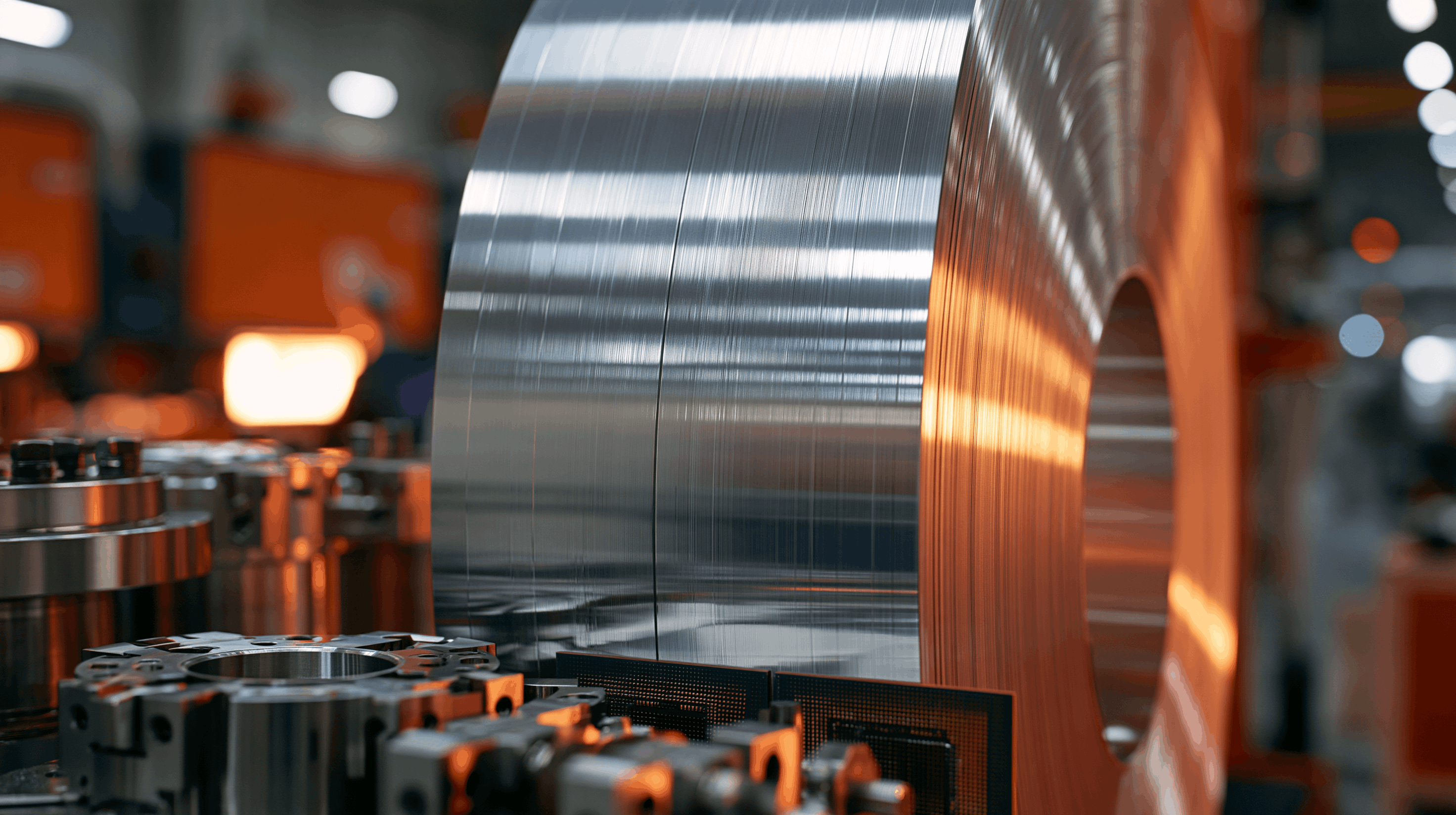
Nickel-chromium-molybdenum (Ni-Cr-Mo) alloys have been an integral part of the metallurgical industry since the early 1930s, and this year we mark 100 years since their appearance. Let us review their history, evolution, and modern innovations in their production.
Before nickel-based materials, in particular Ni-Cr-Mo, leading scientists and engineers worked on the composition of nickel-molybdenum alloys. In 1921 a patent was obtained for a range of nickel-molybdenum compositions, which became the starting point for developing alloys with high corrosion resistance and strength. In 1924 the first alloy (Ni-Mo) with 60% nickel and almost 30% molybdenum was obtained.
The main advantage of these alloys is resistance to various acids, including hydrochloric, sulfuric, acetic, and phosphoric. However, despite their resistance, these materials are not recommended for oxidizing environments or in the presence of iron and copper salts that can form when HCl (hydrochloric acid) contacts Fe and Cu. This is because under such conditions nickel tends toward premature corrosion failure.
Before World War II nickel-based alloys were widely used in supercharger turbine blades in aircraft engines to improve performance and increase power. Over time they were replaced by other superalloys, but their importance in industry remained undisputed.
In the 1970s the alloy’s chemical composition was modified, in particular reducing silicon and carbon content. This raised thermal stability and corrosion resistance. Composition adjustment also significantly reduced the tendency to form carbides at grain boundaries, which became especially useful in the heat-affected zone after welding, where mechanical properties must be preserved.
Today, amid growing need for import substitution, PZPS actively develops new nickel-chromium and nickel-molybdenum-chromium heat-resistant and heat-resistant materials. Recent successes in producing alloys KhN78T and KhN53BMTYU (analogue of NN 718) show that developments in this area continue and yield results.
Among products manufactured by PZPS, nickel is also the main component of a number of other materials:
In addition, nickel is used as one of the main alloying elements in alloys with specified elastic properties 40KhKhNM and 36NKhTYu and in materials with a specified temperature coefficient of linear expansion 29NK, 36N, 42N.
For a century nickel alloys have remained an important, indispensable element of modern industry, continuing to develop and adapt to new requirements and challenges of the time.
To purchase nickel-based materials and other precision alloys, call +7 (812) 740-76-55 or leave requests on the website. Our specialists will contact you and answer all questions in detail.