Modern technologies — from aviation to nuclear power — would be impossible without reliable, strong materials. Their development is the result of many years of scientific work. One of the key figures who determined the development of materials science in the USSR and worldwide was Andrey Anatolyevich Bochvar (1902–1984) — academician of the USSR Academy of Sciences, twice Hero of Socialist Labor, Honored Scientist and Engineer of the RSFSR. He was awarded numerous prizes and titles, including six Orders of Lenin and the Order of the October Revolution. A. A. Bochvar’s works remain relevant today and underlie production of many alloys, including those produced at PZPS.
Andrey Bochvar was born in 1902. After graduating from Moscow Higher Technical School (now Bauman Moscow State Technical University) in 1925 he devoted almost 60 years of his life to science.
In 1935 he defended his doctoral dissertation on crystallization in eutectic systems. This work became a classic: it is still cited in scientific and educational literature.
In 1949 under Andrey Anatolyevich’s leadership, weapons-grade plutonium for the first Soviet atomic bomb (RDS-1) was obtained at Plant “V” (Combine No. 817). For this Bochvar was awarded the title Hero of Socialist Labor.
From 1953 to 1984 the scientist headed the All-Union Research Institute of Inorganic Materials. Under his leadership VNIINM became a leading center for nuclear materials science and achieved outstanding results in developing:
Under Bochvar’s leadership a scientific school in radiation-resistant and superconducting materials was created. He trained dozens of outstanding specialists, including I. I. Novikov, and laid the foundation of the most important directions of Soviet metallurgy and materials science.
Andrey Anatolyevich not only developed theoretical foundations of physical metallurgy but also actively introduced them into industry. His works became the basis for progress in defense, nuclear, and aviation industries.
Bochvar’s rule. He established the relationship between recrystallization onset and melting temperatures of metals on the Kelvin scale. This rule is still used to predict metal and alloy behavior during heat treatment.
Theory of eutectic crystallization. In his doctoral dissertation (1935) Bochvar described mechanisms of eutectic structure formation. This made it possible to approach alloy design in a new way and understand their behavior on cooling more deeply.
Pressure crystallization method. Together with A. G. Spassky he proved the positive effect of pressure on cast part quality, which previously had no strict scientific explanation. In 1936 the scientists developed a casting method minimizing gas evolution and enhancing feeding of blanks. This made it possible to overcome gas porosity and eliminate pores and shrinkage cavities in shaped castings.
The casting method developed by Bochvar and Spassky was widely used in producing tank hulls and aircraft engines during WWII. For this development Andrey Anatolyevich received the Order of the Red Banner of Labor in 1936 and his first Stalin Prize in 1941.
Superplasticity. In 1945 together with Z. A. Sviderskaya he discovered the phenomenon of superplasticity in aluminum and zinc alloys. This made it possible to deform metals without failure at high temperatures and became the basis for creating thin-walled parts of complex shape for aviation and space.
Zinc silumin. In 1942 he created a strong, light alloy used in T-34 tanks and aviation technology. The new material lightened the V-2 tank engine, simplified large-series casting, and during WWII made it possible to sharply accelerate mass production of the legendary “thirty-fours.”
Heat-strength alloys. Bochvar laid the foundations of the structural theory of heat strength, studying alloy behavior under cyclic thermal loads, and developed methods of raising alloy strength at high temperatures.
Plutonium and uranium metallurgy. From 1946 Bochvar led projects in producing metallic plutonium and its compounds, including creating an alloy for a nuclear charge.
Nuclear fuel. He proposed using uranium dioxide (UO₂) as fuel for fast-neutron reactors (for example BR-5).
Structural materials for NPPs. He developed aluminum and zirconium alloys for submarines (“Leninsky Komsomolets”) and the nuclear icebreaker Lenin, as well as cladding of fuel elements (fuel rods) of the first NPPs.
In 1953 under the leadership of A. D. Sakharov and Yu. B. Khariton, A. A. Bochvar took part in developing the world’s first hydrogen bomb (RDS-6), for which he received a second Hero Star.
Bochvar combined fundamental research with solving applied tasks. He introduced a method of blowing metals in the superplastic state that found wide use in aerospace, and developed corrosion-resistant alloys for VVER and RBMK reactors.
Heat-strength alloys are materials that retain mechanical strength and corrosion resistance at temperatures above 600–1200°C. Their key properties:
This is achieved by:
Application:
Bochvar’s research underlay:
Research in this field continues, and developments like those Bochvar led remain relevant for new generations of materials.
PZPS continues the scientific traditions laid by Academician Bochvar. Together with VNIINM named after A. A. Bochvar we successfully developed a domestic analogue of Western Inconel C-276 — a heat-resistant and corrosion-resistant alloy.
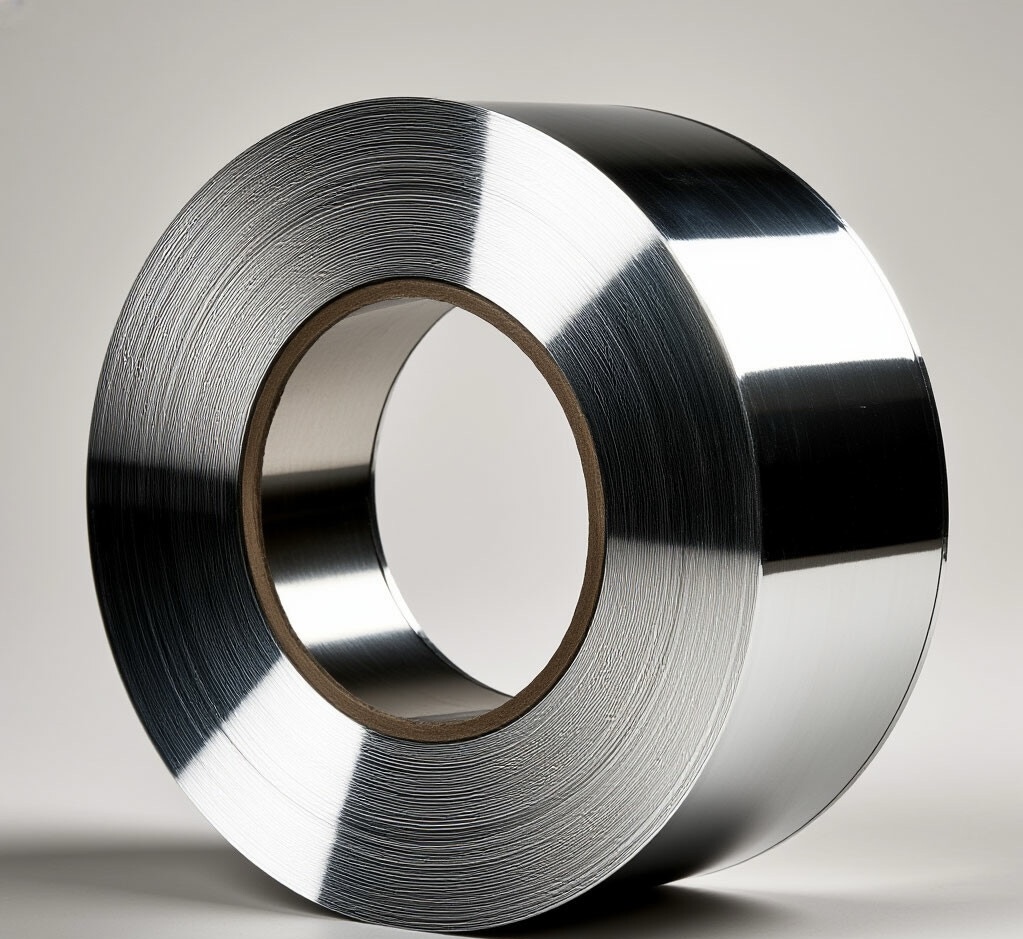
We produce cold-rolled strip of:
Andrey Anatolyevich Bochvar is a name forever written into the history of domestic and world science. His discoveries and developments became the foundation for developing key industries: from nuclear power to aerospace technologies. PZPS is proud to continue his scientific traditions, offering materials that meet the highest requirements of the twenty-first century.