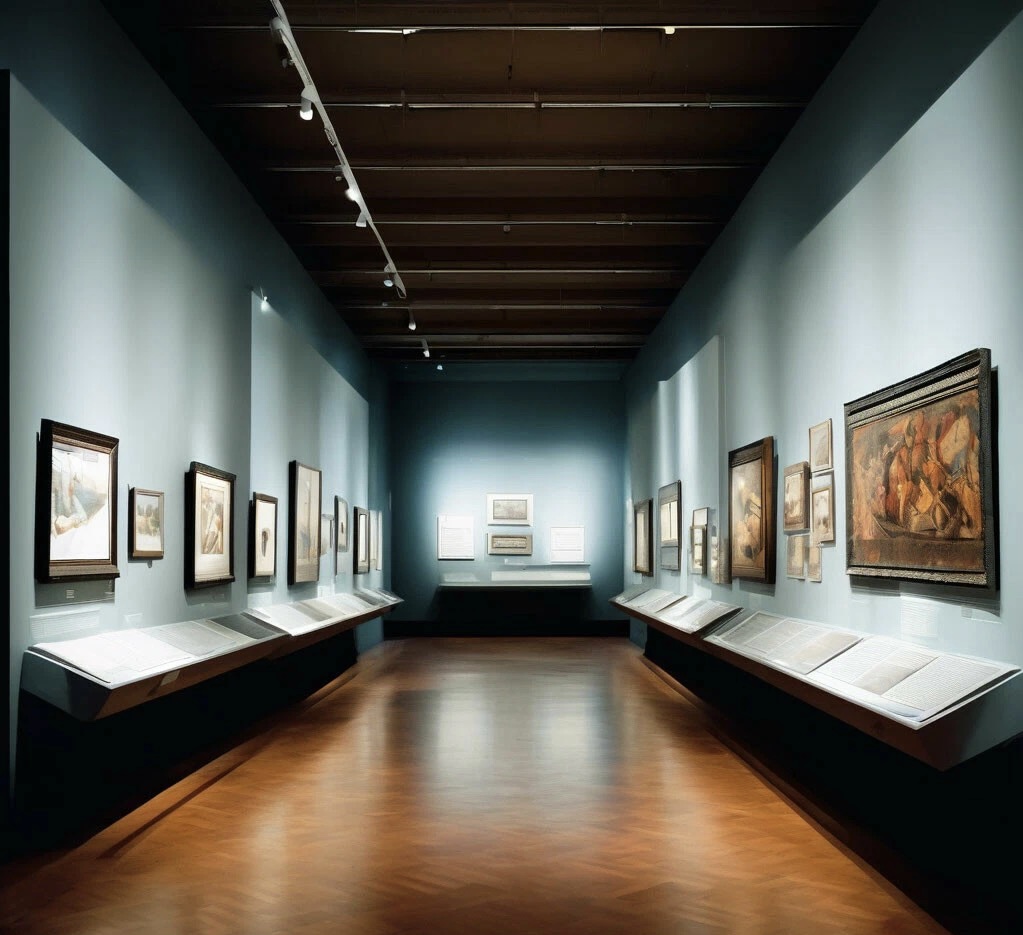
A unique exhibition dedicated to the history of one of the city’s most remarkable industrial sites has opened in Saint Petersburg on Vasilyevsky Island. For a month, residents and visitors can immerse themselves in the past and look at the development of an enterprise whose history spans more than 160 years. The exhibition titled “Time Filter” will run from July 4 to August 4 in the restored building of the former rope shop of the Krasny Gvozdilshchik plant.
On June 21, 1857, the Kuntz–Chopin plant was founded. The enterprise was located on the site of Block V of the Vasilyevskaya part, in the area of today’s 24th and 25th Lines of Vasilyevsky Island. In that period the plant produced high-quality bronze articles. The clocks, candlesticks, floor lamps, and other décor elements it made adorned St. Isaac’s Cathedral, the Winter Palace, and the homes of wealthy Saint Petersburg residents.
In 1875 the plant was renamed the Saint Petersburg Wire and Nail Plant of L. Bergert. Not only the name changed — the scope of activity expanded: additional production lines were commissioned and new technologies introduced. The plant began producing wire and nails, meeting growing demand from the industrial sector.
On June 28, 1918, amid revolutionary change, the plant received a new name — Krasny Gvozdilshchik (“Red Nail Maker”). This name became a symbol of Soviet industrial power and commitment to the working class. The enterprise continued to develop, becoming a key supplier of nails and wire for the country’s needs.
On May 22, 1940, the enterprise changed its name again, becoming the V. M. Molotov Steel-Rolling Wire and Rope Plant. At that time advanced technologies were actively introduced, production capacity and product range grew. The steel-rolling plant became an important element in the country’s postwar recovery and industrialization.
Since 2007 the plant has operated as Saint Petersburg Precision Alloys Plant LLC (PZPS). Drawing on many years of experience and production traditions, PZPS continues to manufacture high-quality products and holds leading positions in the metallurgical industry. The plant has adapted to modern market requirements by introducing innovative technologies and improving production processes.
The rope shop of the Krasny Gvozdilshchik plant, designed by outstanding avant-garde architect Yakov Chernikhov, is one of the brightest examples of Soviet Constructivism. The recently restored building is today recognized as cultural heritage and is an important architectural landmark of Saint Petersburg.
Yakov Georgievich Chernikhov (1889–1951) was a well-known Soviet architect, graphic artist, and educator, one of the outstanding representatives of the Soviet avant-garde. He graduated from the Odessa Art School, where in 1904–1914 he received architectural education.
Yakov Georgievich left a significant mark on twentieth-century architecture. His works are distinguished by an original style and innovative ideas. While working in Leningrad, the famous architect designed buildings and structures and developed curricula for architecture students. Over his lifetime Chernikhov wrote more than 40 books on architecture and graphic design, including Architectural Fantasies (1933) and Construction of Architectural and Machine Forms (1931).
Constructivism is an avant-garde movement in art and architecture characterized by strict forms, functionality, and the use of modern materials such as glass, metal, and concrete.
Among the features of Constructivism are:
Constructivism had a significant influence on such movements as Functionalism, Minimalism, and High-Tech. Despite its strictness and geometric character, this style remains expressive and original, reflecting the spirit of the time and the needs of modern society.
The rope shop building was under restoration for the last three years and has now become a modern business center. The “Time Filter” exhibition offers visitors a unique opportunity to learn the history of this building and its significance for the city.
For the first time, photographs showing everyday life at the plant and its workers will be presented to the general public. Visitors will be able to see the restored building and learn its history through the eyes of people who worked there.
The exhibition is open to visitors:
Viewing is possible only as part of an organized tour group. Free tickets can be obtained on the exhibition website.
The “Time Filter” exhibition is not only a chance to learn about the history of one of Saint Petersburg’s oldest plants, but also an opportunity to see Yakov Chernikhov’s architectural heritage and feel the spirit of Constructivism and its influence on modern architecture. Do not miss the chance to visit this unique event and immerse yourself in history through the prism of time and space.