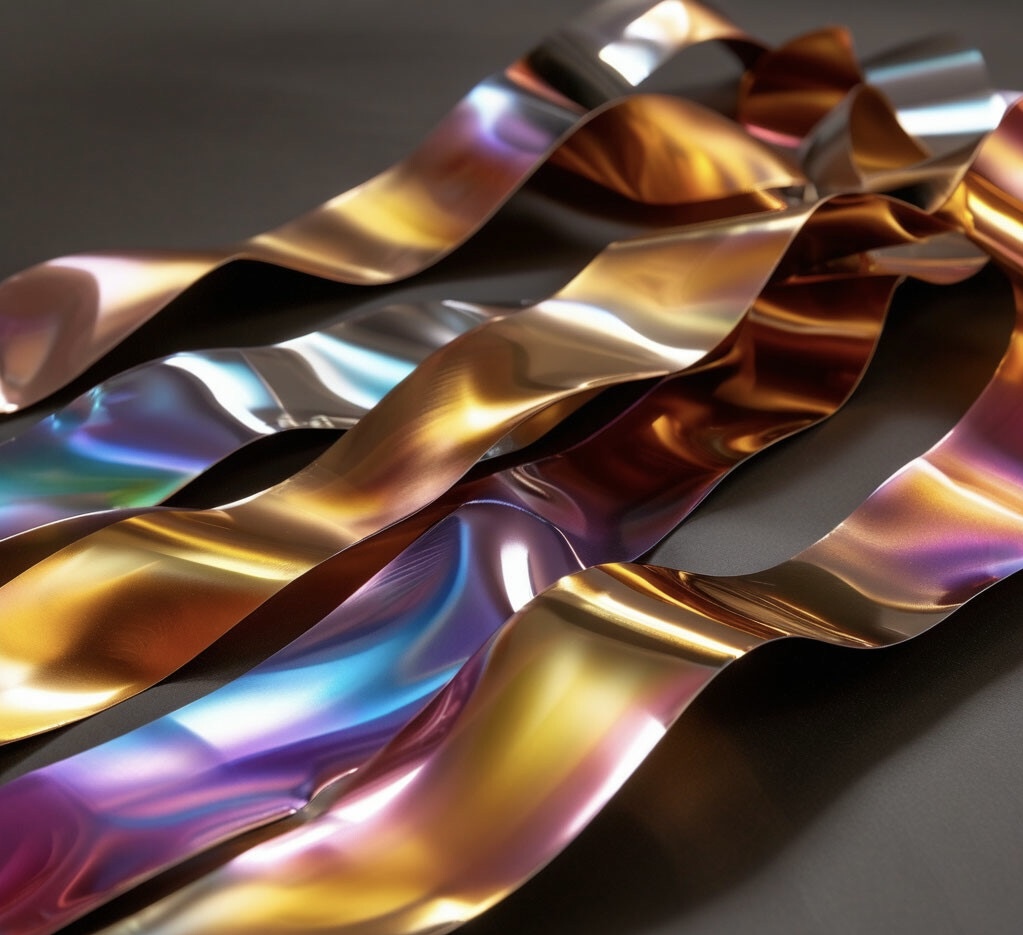
Temper colors are a unique phenomenon observed on the surface of stainless steel after heating or oxidation. This is not merely an aesthetic effect, but an important indicator reflecting the temperature regime and quality of alloy heat treatment. Let’s look in more detail at how temper colors appear, their effect on steel properties, and control methods.
What are temper colors?
Temper colors are interference shades formed on metal due to light reflection from thin oxide films. These films form when metal is heated, and their thickness and density depend on temperature, heating time, and alloy composition. Different colors indicate different treatment temperatures:
- Light yellow — this color usually appears at relatively low steel heating temperatures (about 200–250°C). It arises from very thin oxide layers that weakly reflect light.
- Orange — when temperature rises to about 250–300°C, thicker oxide films begin to form on the steel surface, leading to an orange tint. This color is due to increased oxide layer thickness and a change in its optical properties.
- Red-brown — further temperature rise to 300–400°C causes even thicker oxide layers. The red-brown tint arises from increased intensity of light reflection from these layers.
- Violet — at about 400–500°C oxide layers become still thicker, leading to a violet tint on the material surface. This is related to a change in optical properties of oxide layers and their ability to reflect light of certain wavelengths.
- Blue — the thickest and densest oxide layers form at temperatures above 500°C. Due to maximum light reflection from such layers, a deep blue temper color effect is created.
Temper colors are used to assess stainless steel heating temperature and control the quality of heat treatment of metal products.
How do temper colors form?
The main reason temper colors appear is oxidation of the stainless steel surface. When heated, the metal reacts with oxygen, forming oxide films. Their thickness depends directly on temperature and exposure time, as well as ambient conditions. The thicker the film, the more intensely it can reflect light and create bright colors.
At high temperatures oxidation intensifies. Therefore, to avoid excessive change in steel properties, it is important to carefully control the heat-treatment process.
How does temperature affect alloy properties?
Temper colors are not only a visual indicator but also an important factor affecting steel service characteristics. For corrosion-resistant steels, temper colors may indicate damage to the protective layer — places prone to corrosion. However, reduced resistance to atmospheric effects is not the only consequence of temper colors:
- Reduced strength and reliability. Stainless steel products that have undergone significant changes due to temper colors may lose strength and become less reliable. This is especially important for structures operating under load.
- Change in appearance. Appearance of temper colors affects product appearance, which may be undesirable in some cases. For example, for decorative elements this may be categorically unacceptable.
- Worsening of functional characteristics. Changes in steel properties may worsen product functional characteristics. For example, reduced thermal conductivity negatively affects heat-exchange devices.
At low temperatures oxide films are thin and almost transparent and do not lead to noticeable change in metal surface color. This makes it possible to determine that alloy properties after heat treatment have barely changed. However, when temperature rises oxide films become thicker and denser, reflecting more light and creating bright temper colors, which indicates substantial changes in material service characteristics. Therefore it is important to control steel heating and cooling to minimize unwanted property changes.
How are temper colors controlled and prevented?
To avoid unwanted appearance of temper colors, it is important to follow the main rules for processing stainless steel:
- Controlled heating and cooling. The steel heating and cooling process must be strictly controlled to avoid excessive oxidation and temper color formation. This can be done by precise regulation of temperature and heating time.
- Use of protective coatings. Applying protective coatings to the steel surface prevents oxidation and temper colors. Various materials such as lacquers or enamels may be used as such coatings.
- Observing process technology. In producing and operating stainless steel products, strict observance of process technology helps minimize temper color risk and preserve steel properties.
However, one must not only observe stainless steel heat-treatment rules but also, throughout heating and cooling, monitor appearance of temper colors on the product:
- Visual inspection. Regular inspection of stainless steel product surfaces makes it possible to detect temper colors at early stages. This is the simplest and most accessible control method and does not require special equipment.
- Use of spectrophotometers. These instruments make it possible to accurately measure surface color characteristics and determine presence of temper colors, which is useful for surface quality control in production.
- Temperature control. Using thermometers and pyrometers helps control steel heating temperature, which makes it possible to prevent excessive oxidation and temper color formation.
These methods not only prevent unwanted changes but also ensure high quality of finished products.
Where to buy quality stainless steels?
At PZPS you can buy cold-rolled strip:
- of corrosion-resistant steels of grades 10Kh17N13M3T, 12Kh18N9, 12Kh18N10T, 12Kh18N9SMR;
- of corrosion-resistant heat-strength steel 20Kh13.
Our plant also sells precision alloys with various characteristics: with specified elastic properties and thermal expansion coefficient, hard and soft magnetic materials, steels with high electrical resistivity, and much more. PZPS also provides a number of manufacturing services — from exact determination of customer material chemical composition to development of proprietary alloys and steels. Contact us for consultation and to place an order.