Ductile and brittle fracture are complex processes that depend directly on service conditions, chemical composition, and the mechanical properties of the materials themselves. A deep understanding of the nature of these processes is critically important not only for selecting special steels and precision alloys and their service conditions, but also for processing methods. This knowledge matters not only in design offices when engineering metal structures and specialized equipment, but also at plants that produce materials with different physical and mechanical properties.
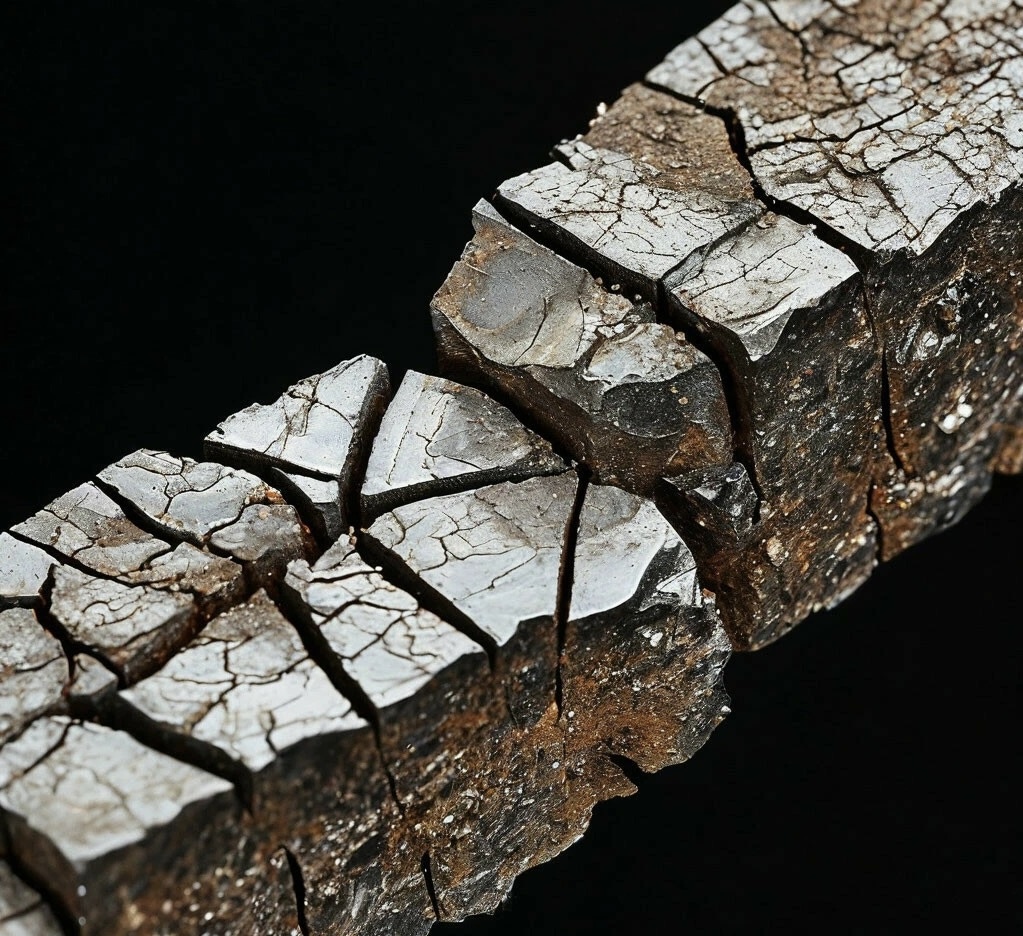
No noticeable plastic deformation is observed in brittle fracture . The process occurs suddenly and rapidly, which makes it extremely hazardous for loaded structures. Brittle fracture usually arises under low temperatures, severe impact loads, or other external factors that reduce the toughness of steel or alloy.
Main signs of brittle fracture:
Under service conditions where impact loads or low temperatures are possible, brittle fracture can lead to catastrophic consequences. Therefore, when designing critical metal structures it is important to account for possible risks and take measures to prevent them.
Brittle fracture consists in ultrafast cracking of steels or alloys under relatively low stresses and without an increase in external load. Once a crack forms in a brittle material, it propagates very rapidly. This is because elastic energy concentrated at the crack tips is released quickly, causing instantaneous cracking. The critical crack size at which failure begins depends on material thickness, its structure, and the presence of localized inhomogeneity (stress concentrators).
Before final rupture of the material in ductile fracture , significant plastic deformation is observed. Compared with brittle fracture, this process is considered safer because the steel structure can absorb a large amount of energy, which slows failure and allows corrective measures.
Features of ductile fracture:
The main mechanism of ductile fracture is linked to irreversible plastic deformations caused by exceeding the maximum allowable stress for elastic elements. As load increases or temperature changes, steel begins to “flow,” stretching until it reaches the critical ultimate strength. Importantly, ductile materials can absorb far more energy before failure than brittle ones, which makes them preferable for structures under long-term loads or elevated temperatures.
Brittle and ductile fracture are not mutually exclusive. The same steels and alloys, depending on the loads acting on them and other external factors, can show both types of behavior.
Service conditions that promote brittle cracking include:
The main factor that reduces metals' ability to deform plastically and increases their tendency to brittle fracture — cold brittleness — is a change in alloy structure when operating temperature decreases. However, this is not true of all materials. For example, alloys of grades 12Х18Н9 and 12Х18Н10Т retain plasticity even at very low temperatures. But most steels become prone to brittle cracking as operating temperature falls. Therefore, when selecting materials for low-temperature service, their characteristics must be studied carefully and appropriate tests performed.
The character of metal fracture is also determined by its internal structure. Materials with different crystal lattices respond differently to external effects.
Another important factor affecting a material's tendency to brittle cracking is grain size. It determines the ductile-to-brittle transition temperature, the metal's yield strength, and its resistance to brittle fracture. Grain refinement increases alloys' and steels' resistance to crack formation and lowers the transition temperature from the ductile to the brittle state. In addition, fracture processes depend strongly on metal structure at the microscopic level. For example, high-carbon steels can show increased brittleness due to large carbide particles that act as crack sources.
The St. Petersburg Precision Alloys Plant produces a wide range of materials for extreme service. Steels and alloys made by PZPS are used in mechanical engineering, electronics, power generation, and other industries where high equipment accuracy and reliability of metal structures are required.
Main PZPS product groups:
The plant's products cover various needs of modern industry. All materials undergo rigorous testing and meet global quality standards. For questions about purchasing precision alloys and special steels, call the phone numbers or leave a request on the website. We will help select solutions that optimally match specific service conditions, taking all technical requirements into account, and ensure high reliability and durability of structures.