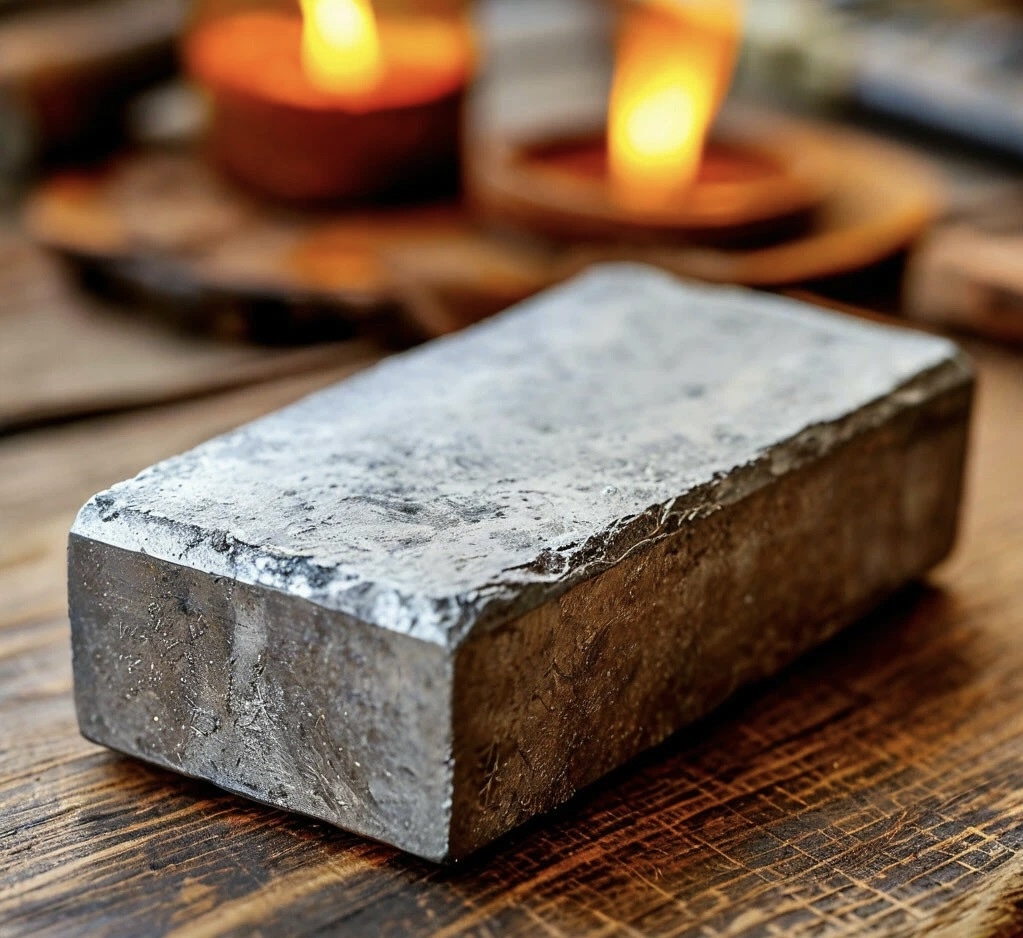
Metals play an important role in modern industry, especially in producing special steels and precision alloys. Elements such as cobalt, molybdenum, and titanium are widely used in melting high-quality materials, giving them the needed physical and mechanical properties. In this article we look at interesting facts about these metals and their role in modern production.
Cobalt: an element with a rich history and a wide range of uses
Cobalt has been known to science for more than three centuries. This metal was discovered in 1735 by Swedish chemist Georg Brandt, who isolated it from the mineral “kobold.” The name comes from the German word “kobold,” meaning “house spirit” or “gnome.”
Interesting facts about cobalt:
- Component of vitamin B12. Cobalt is an important element in vitamin B12, which is needed to maintain normal nervous system function and blood formation.
- Biological role. The human body contains about 1.5 mg of cobalt, most of it concentrated in the liver, kidneys, and muscles. This metal is needed for thyroid hormone formation and normal enzymatic processes.
- Toxic metal. At high concentrations cobalt can be toxic.
- Catalyst in oil refining. Cobalt compounds are used in producing gasoline and other petroleum products as catalysts.
- Making powerful magnets. Cobalt has ferromagnetic properties, i.e., it can be magnetized, making it possible to use it to create ultra-powerful magnets.
- Glass and art industry. Cobalt compounds are used to give glass and paints a blue color.
- Occurrence in nature. In the Earth’s crust cobalt occurs as minerals such as cobaltite, carrollite, glaucodot, and others.
- Silver with a pink tint. Cobalt has a characteristic color that makes it easy to distinguish among other metals.
In addition, it is used in soft magnetic alloys such as 49K2FA-VI (48–50% Co) and 27KKh (26.5–28% Co), which find use in precision electronics and mechanical engineering. In alloys for elastic elements such as 40KKhNM (40% Co, 7% Mo), cobalt provides excellent mechanical properties.
Molybdenum: a metal for high temperatures and critical tasks
Molybdenum was discovered in 1778 by Carl Scheele, who found it as an oxide. In pure form it was first isolated in 1817 by Swedish scientist Jöns Jacob Berzelius. This metal is known for extreme resistance to high temperatures and is one of the most refractory elements.
Interesting facts about molybdenum:
- High melting point. Molybdenum melts at about 2620°C, making it an ideal material for work under extreme conditions.
- Use in incandescent lamps. Thanks to its heat resistance, molybdenum wire is used in incandescent lamps.
- Nuclear power. Molybdenum finds use in producing cladding of fuel elements (fuel rods) for nuclear reactors.
- Chemical industry. Molybdenum compounds are sought after in creating dyes, catalysts, and pigments.
- World production. About 50 thousand tons of molybdenum are produced worldwide each year. The main suppliers are China, the USA, Chile, and Canada.
- Presence in the human body. A person’s daily molybdenum requirement is about 75–250 µg.
- In the natural environment. In nature molybdenum occurs as minerals such as molybdenite, powellite, and wulfenite. They are used to obtain pure metal.
- Greek “roots.” The name “molybdenum” comes from the Greek word for “lead,” because the mineral containing this element was confused with lead ore.
Molybdenum is part of various corrosion-resistant steels such as 10Kh17N13M3T (3% Mo), which are used in aggressive environments. Alloys with molybdenum are used in the chemical industry where high corrosion resistance and heat strength are required. Molybdenum is also included in soft magnetic alloys such as 79NM (4% Mo) and 81NMA (5% Mo), which find use in high-precision technology.
Titanium: strength, lightness, and biocompatibility
Titanium, one of the most abundant elements in the Earth’s crust, does not occur in pure form in nature. This metal was discovered in the eighteenth century, but its industrial production became possible only in the twentieth century. In modern industry titanium has become widespread thanks to incredible strength and corrosion resistance.
Interesting facts about titanium:
- High strength and corrosion resistance. Thanks to these properties titanium is actively used in aviation and space industry, as well as for creating submarines and body armor.
- Use in solar panels. Titanium can absorb light and convert it into electricity, making it useful in producing solar panels.
- Elegance in jewelry. Titanium is used to create jewelry that looks like silver.
- Application in medicine. Titanium plays an important role in creating medical instruments such as scalpels, clamps, and other surgical tools.
- Biocompatibility. Titanium is not a toxic element. It is widely used in medicine to make implants and prostheses thanks to compatibility with body tissues.
- Strength in sports. Titanium’s lightness and strength make it an ideal material for making bicycles, skateboard frames, and other sports equipment.
- Welding in space. Titanium is one of the few metals that can be welded in space, making it an important material for future space missions.
Titanium is actively used in corrosion-resistant steels such as 12Kh18N10T (1% Ti) and 10Kh17N13M3T (3% Mo, 1% Ti), used in aggressive environments. Precision alloys containing titanium, for example 17KhNGT (1% Ti) and 36NKhTYu (3% Ti), find wide use in producing elastic elements that require high strength and durability.
Alloys with cobalt, molybdenum, and titanium produced by PZPS
Precision alloys and special steels used to make high-precision, reliable parts often contain cobalt, molybdenum, and titanium. These metals give steels unique properties:
- adding cobalt improves magnetic characteristics of materials;
- the presence of cobalt and molybdenum raises elasticity and strength of alloys;
- titanium and molybdenum provide corrosion resistance and resistance to aggressive environments.
At the Saint Petersburg Precision Alloys Plant, advanced technologies and modern materials are used when melting steels, thanks to which we can create products with unique mechanical properties. Leave requests on the website or call. Our specialists will help you select optimal materials for any technical tasks requiring high strength, corrosion resistance, and heat strength.