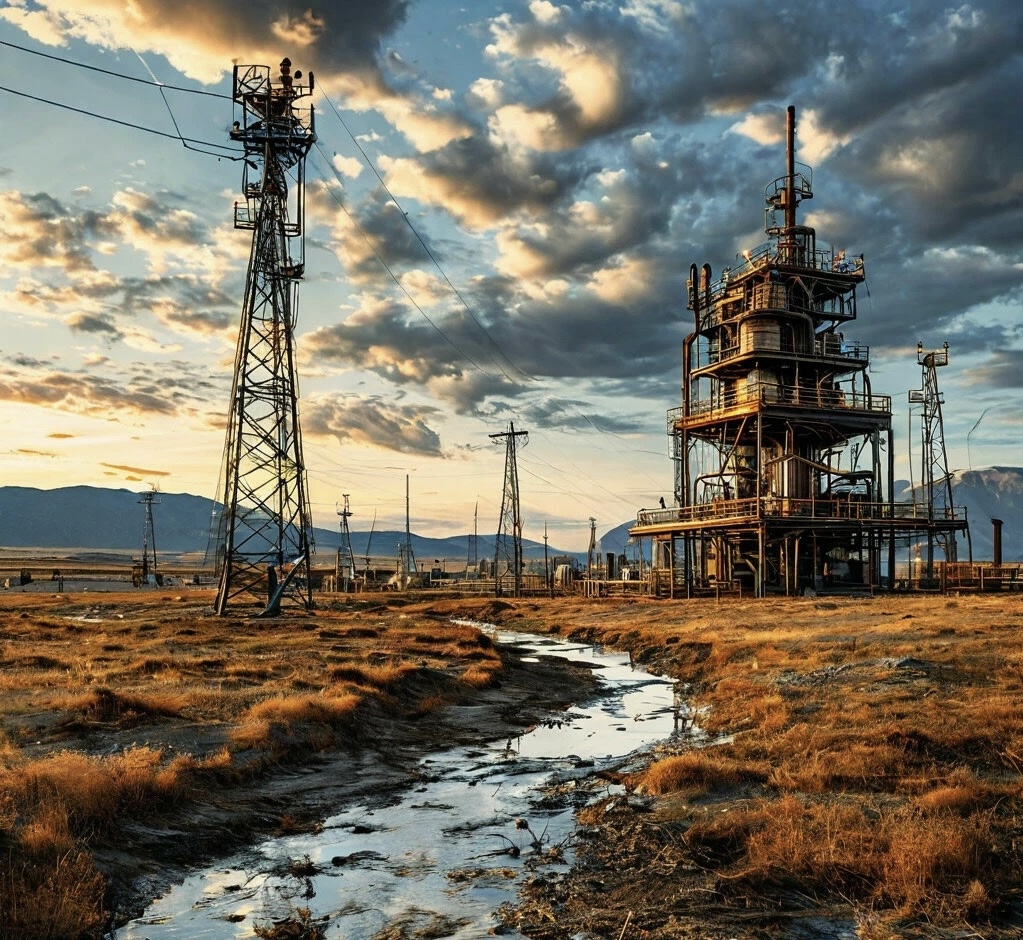
The oil and gas industry places strict requirements on materials that must work in aggressive and extreme conditions. To ensure the necessary reliability and durability, special steels with specified physical and mechanical properties are required — materials able to withstand high pressures, temperatures, and aggressive environments. In this article we will consider the main material requirements, popular steel and alloy grades, and their use in various types of equipment.
Main material requirements
Equipment in the oil and gas industry is exposed to high temperatures (up to +600°C and above), aggressive chemical environments including acids, alkalis, and salts, as well as significant mechanical loads. For reliable operation under such conditions, steels and alloys must have the following characteristics:
- Strength and wear resistance. Materials must withstand mechanical loads of 300 MPa and above. For example, in deepwater drilling, pressure can reach several hundred atmospheres. Using high-strength steels with a yield strength above 600 MPa makes it possible to avoid equipment failures under high loads.
- Resistance to aggressive environments. Contact with hydrogen sulfide and carbon dioxide contained in produced oil and gas causes corrosion. Nickel- and chromium-based alloys such as Inconel 625 and analogues are resistant to stress cracking, which is very important at fields with hydrogen sulfide.
- Heat resistance. Materials must retain mechanical properties at temperatures above 500°C, for example during catalyst regeneration or oil cracking processes. Iron- and nickel-based alloys such as Inconel 718 and analogues retain strength at temperatures up to 700°C, which makes them indispensable in heat exchangers and turbines.
- Corrosion resistance. In aggressive environments such as seawater or acid solutions, materials with increased resistance to pitting and crevice corrosion are required. For example, austenitic steels 12Х18Н10Т and 10Х17Н13М3Т have excellent resistance to various types of corrosion thanks to a high chromium content (up to 18%) and molybdenum (up to 3%).
- Tightness. Equipment operating under high pressure requires reliable seals resistant to chemically active environments. Modern metal and polymer gaskets based on fluoroplastics and graphite are widely used to seal joints.
- Environmental performance. Special materials must prevent leakage of toxic substances and withstand the effects of aggressive oil and gas fractions. For example, when operating equipment in Arctic conditions, not only corrosion resistance matters, but also the ability of materials to withstand prolonged exposure to low temperatures (down to -60°C) without loss of properties.
- Machinability. Good weldability and machinability of steels are very important. Highly alloyed alloys (for example with more than 18% chromium) require special welding regimes to avoid cracking and reduced corrosion resistance of welds. Modern laser and plasma welding technologies make it possible to minimize these risks.
For especially harsh service conditions, additional properties may be required, such as increased vibration resistance or resistance to ultra-low temperatures (down to -160°C). The latter is relevant for heat exchangers at LNG plants and vessels for LNG transport.
Main equipment used in the oil and gas industry
Production, transportation, and processing of oil and gas require various types of equipment, each of which must meet unique requirements. Let us consider the main types of equipment and the materials used to manufacture them:
- Tubing (OCTG) — for lifting oil and gas from wells. Must withstand high pressures and temperatures and be corrosion-resistant. Steels with a high chromium content (13–15%) and nickel (9–12%) are mainly used to manufacture them, as well as internal coatings such as glass enamel or polymers resistant to chemical exposure.
- Casing pipes — reinforce the well walls, preventing rock collapse. Highly alloyed steels with molybdenum additions (for example 13ХФ) provide high strength and resistance to sulfide stress cracking, which is especially important when developing deep wells.
- Wellhead / Christmas-tree equipment — a set of devices for sealing the wellhead, resistant to high pressures and temperatures. Modern materials such as Inconel alloys are used in wellhead equipment to protect against high-temperature corrosion and premature wear.
- Sucker rods — transmit pump motion to lift fluid. Strength and wear resistance are especially important characteristics for them.
- Tanks and vessels — for storing and transporting petroleum products. Materials must be resistant to chemical exposure and temperature fluctuations.
- Pipeline valves — for controlling flows of liquids and gases. Must be tight and resistant to aggressive environments.
- Heat exchangers — apparatuses for transferring heat between media at different temperatures. Heat resistance and corrosion resistance are important. Nickel-based alloys (ХН78Т, Х20Н80) ensure stable operation at temperatures above 1000°C.
- Column equipment and reactors — for refining and separating oil into fractions. Materials must withstand chemical reactions and extreme temperatures. Austenitic steels with a high chromium and nickel content (12Х18Н10Т, 10Х17Н13М3Т) provide resistance to intergranular corrosion and oxidation in aggressive environments.
All these devices, as well as apparatuses for chemical reactions (reactors) and furnaces for heating and heat treatment of feedstock, require special steels to ensure durability and reliable operation in aggressive environments. Compliance of the materials used with the requirements placed on them directly affects the safety, efficiency, and profitability of oil and gas enterprises.
Steels and alloys for oil and gas equipment produced by PZPS
Given the special service conditions, materials for the oil and gas industry must combine resistance to extreme temperatures and various types of corrosion, as well as high strength characteristics. Here are several steel and alloy grades matching industry requirements:
- Corrosion-resistant steels. Grades such as 12Х18Н9, 12Х18Н10Т, 12Х18Н9СМР, and 10Х17Н13М3Т have high resistance to pitting corrosion, making them suitable for pipes and equipment operating in seawater and aggressive chemical environments. Adding molybdenum increases resistance to acid corrosion.
- Heat-resistant alloys. Inconels 625 and 718, analogues of which PZPS produces, as well as alloys 20Х13, ХН78Т, and other chromium- and nickel-based alloys retain their strength characteristics at extremely high temperatures. They are used in oil and gas processing equipment where high heat resistance and oxidation resistance are required.
- Ultra-high-strength steels. For equipment operating under extreme loads, steels with a high vanadium and niobium content are used, providing a yield strength up to 900 MPa. Such alloys are used for deepwater pipelines and highly loaded elements of drilling equipment.
These materials are used to manufacture various oil and gas equipment elements such as:
- Pump and compressor housings — to prevent wear and corrosion.
- Pipes and pipelines — for transporting oil and gas under high pressure and at elevated or reduced temperature.
- Reactor and furnace parts — to increase the durability of equipment operating at high temperatures and in chemically active environments.
- Seals and gaskets — to ensure tightness, protect against leaks, and increase equipment reliability and efficiency.
Using special steels and alloys in the oil and gas industry is a key factor ensuring reliable equipment operation under extreme loads and aggressive environments. PZPS offers a wide selection of products matching the strictest requirements, guaranteeing high material quality and a long service life of equipment.
PZPS not only produces and sells popular alloys for critical applications, but also provides a range of production services. If you need to develop a melting technology for an analogue of a foreign alloy or create innovative products to solve specific production tasks, contact us by phone or leave a request on the website. We will carry out all necessary research and set up production from a trial to an industrial batch.