April 12, 1961 marked a milestone not only for Russia but for the whole world. On that day, for the first time in human history, a spacecraft with a person on board was launched into Earth orbit. Yuri Gagarin, a Soviet pilot-cosmonaut, made his legendary flight on the Vostok spacecraft, opening a new era in space exploration.
The satellite spacecraft launch was conducted under the leadership of:
The launch was successful, and after separation of the last stage of the launch vehicle, Vostok entered free “flight” around the planet. The Earth orbit took 1 hour 48 minutes, after which the spacecraft successfully landed at 10:55 Moscow time at the designated site — in the Saratov Region near the village of Smelovka.
Later, cosmonaut G.S. Titov proposed establishing Cosmonautics Day both in the USSR and worldwide. In November 1968, at a conference organized by the International Aviation Federation, it was decided to declare April 12 World Aviation and Cosmonautics Day. And in April 2011, at a UN General Assembly session, a resolution was signed affirming April 12 as the International Day of Human Space Flight.
From that moment humanity began to dream of distant journeys beyond our planet. But behind those dreams stand thousands of hours of work by scientists, engineers, and metallurgists who develop and create materials able to withstand the harsh conditions of space.
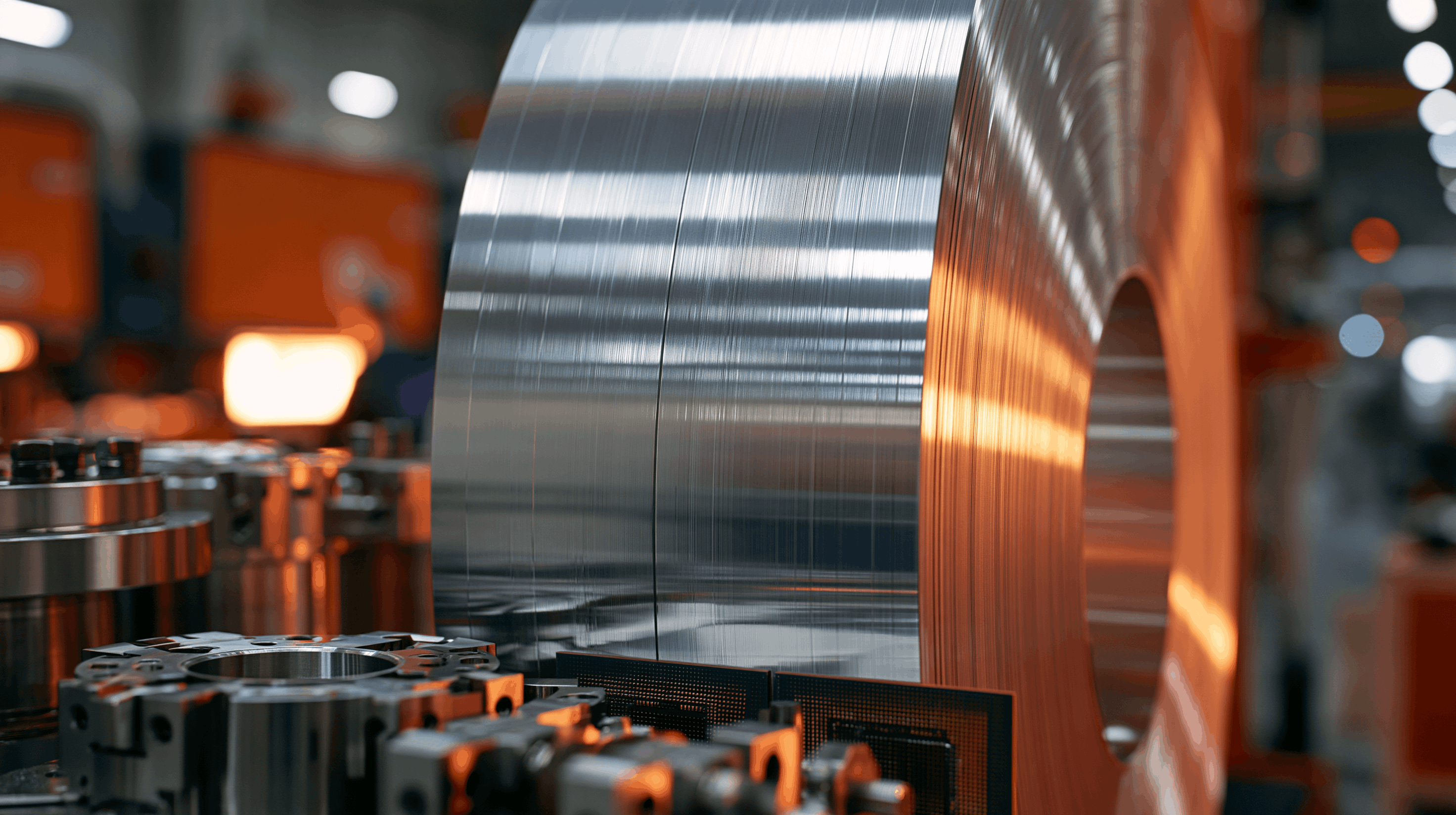
Precision alloys are special materials designed for high-precision devices operating under extreme loads and variable parameters. They are widely used in the aerospace industry thanks to unique properties that ensure reliability and performance of spacecraft. Let’s look at which precision alloys are used in aerospace today.
Precision soft magnetic alloys are indispensable elements of spacecraft electronics. High magnetic permeability and low coercive force make them ideal for magnetic elements and components of control and stabilization systems.
For example, alloys 49K2FA, 27KKh, 50N, 50NP, 79NM are used to make magnetic cores of transformers, inductors, chokes, solenoids, and other devices needed for spacecraft electrical circuits. Soft magnetic precision alloys 80NM and 81NMA are also used for magnetic shielding and sensors for space electronics. They provide reliable protection from electromagnetic interference and stable circuit operation in space, where even minor failures can have catastrophic consequences.
The extreme conditions of open space require materials able to withstand high temperatures, aggressive environments, and elevated mechanical loads. Let’s look in more detail at which alloys are used in the space industry and what is made from them.
Corrosion-resistant materials such as 12Kh18N10T, 12Kh18N9, and 12Kh18N9SMR are used to make engine housings and elements exposed to aggressive environments. These alloys have elevated resistance to corrosion and oxidation, making them ideal for space conditions where many aggressive components may be present.
For example, in Venus rovers many parts are made of corrosion-resistant materials because of the harsh conditions on Venus (temperature 400–500℃, pressure 90 atmospheres).
Heat-resistant materials, for example nickel-based ones, are used to make engine parts exposed to high temperatures. High temperature resistance makes them indispensable under intensive thermal exposure in space.
Heat-strength materials such as KhN78T, as well as analogues of Inconel-type alloys that PZPS continuously develops and produces, are used to make turbine blades of rocket and spacecraft engines. These alloys have high strength at extreme temperatures and resistance to thermal cycling, allowing them to operate under intensive heat.
Precision materials of grades 29NK, 36N, and 42N with a specified thermal expansion coefficient are an integral part of optical systems on spacecraft such as telescopes and satellites. Their dimensional stability under temperature change ensures focusing accuracy of optical systems in space, where temperature swings can be significant.
Precision alloys play a key role in the modern aerospace industry as essential components in designing and manufacturing spacecraft. Their unique physical and chemical properties ensure reliability, efficiency, and safety of space systems even in the most extreme conditions. Thanks to continuous improvement of these materials, space research continues to advance, opening new horizons and opportunities for humanity.
The PZPS research center is ready to offer a material and technical base for developing new alloys and production technologies, and to assist in implementing promising projects in the space industry. We invite all interested parties to cooperate and suggest calling +7 812 740-76-87 or leaving a request on the website. Our specialists are ready to answer your questions and describe cooperation terms in detail. Working together, we can make an important contribution to aerospace development and ensure progress and innovation in space research.