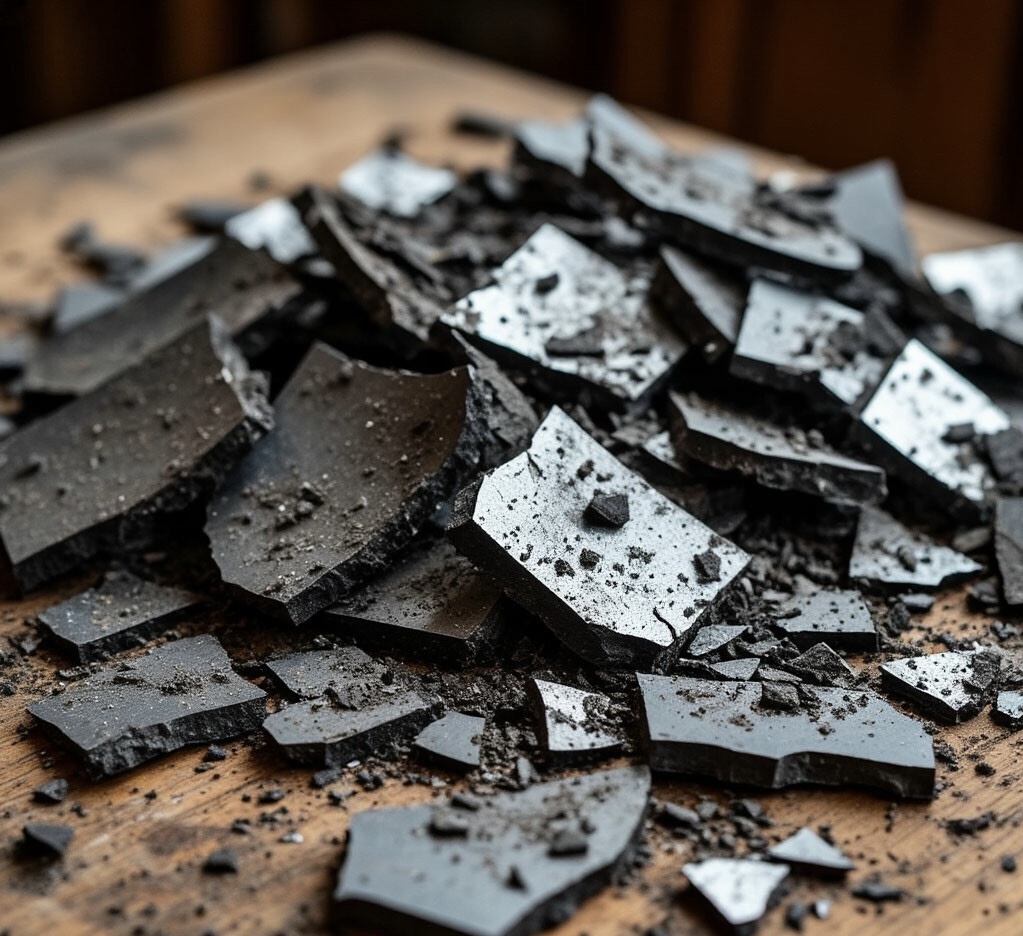
Hot shortness (red brittleness) in metals is a hazardous phenomenon in which a metal loses ductility and becomes brittle when heated to red-hot temperatures (approximately 600–1000°C). In this temperature range the metal is especially vulnerable: even a minor external effect can cause microcracks and lead to structural failure. This can occur both during hot working (forging, rolling) and during the operation of products at elevated temperatures.
The problem of hot shortness is especially relevant in metallurgy and mechanical engineering, where the reliability and durability of materials directly affect the safety of equipment and structures. Understanding the causes of this phenomenon and methods for preventing it can significantly improve product quality.
Main Causes of Hot Shortness
Hot shortness is caused by both the metal's chemical composition and its internal structure. Let's look at the key factors contributing to its occurrence.
Harmful impurities
Certain chemical elements significantly reduce the ductility of metals at high temperatures:
- Sulfur (S): one of the main factors behind hot shortness. It forms a brittle compound with iron — iron sulfide (FeS) — which, when heated, precipitates along grain boundaries, reducing ductility and promoting crack formation.
- Phosphorus (P): forms brittle compounds with iron and further reduces ductility at high temperatures, increasing the risk of failure during deformation.
- Oxygen, nitrogen, carbon, and other elements: contribute to the formation of oxides, nitrides, and carbides that degrade the metal's microstructure.
Structural features
The metal's structure and crystal lattice defects also affect a material's susceptibility to hot shortness:
- Structural heterogeneity: uneven distribution of phases and impurities can locally alter the metal's properties, reducing its ductility and increasing its brittleness.
- Defects in the crystal lattice: vacancies, dislocations, and other imperfections disrupt the movement of atoms and dislocations in the metal, which in turn reduces its ductility and increases its tendency to crack.
Temperature and deformation conditions
Temperature conditions and deformation rate also play an important role in the occurrence of hot shortness:
- Temperature range: hot shortness usually appears when a metal is heated to certain temperatures, which can vary depending on the alloy's structure and composition. Within this temperature range, the metal becomes more brittle and prone to cracking.
- Deformation rate: at high processing speeds, the metal doesn't have time to relax and adapt to changes. This prevents uniform stress distribution, increasing the risk of cracks and other defects forming.
Thus, eliminating hot shortness requires an integrated approach at all stages of production.
Methods for Combating Hot Shortness in Metals
To prevent hot shortness, it is important to carefully control the metal's chemical composition and optimize its structure and processing parameters in order to improve ductility and reduce the tendency to crack at high temperatures. The main measures are listed below.
Chemical composition control
One of the main ways of combating hot shortness is strict control over the metal's chemical composition. This includes:
- Reducing sulfur and phosphorus content: since sulfur and phosphorus are the main culprits behind hot shortness, it is important to minimize their content in the metal. This is achieved by using high-quality raw materials and modern melting and refining methods.
- Control of other impurities: in addition to sulfur and phosphorus, it is necessary to monitor the content of other elements, such as oxygen, nitrogen, and carbon, which can also affect hot shortness.
- Adding alloying elements: introducing alloying additives can improve the metal's ductility and reduce its susceptibility to hot shortness. For example, manganese binds sulfur into less harmful compounds, improving ductility.
Optimization of heat treatment
A properly selected heat treatment technology can substantially change the metal's structure and increase its ductility:
- Annealing: heating the metal to a certain temperature and then slowly cooling it helps relieve internal stresses, improve the microstructure, and increase the metal's ductility.
- Normalizing: heating the metal above its upper critical point and then air-cooling it helps produce a more uniform metal structure with improved mechanical properties.
Process techniques for metalworking
The following measures are used to reduce the risk of cracking during hot deformation:
- Deformation rate control: reducing the speed of mechanical processing (forging and rolling) allows the metal to adapt better to changes and reduces the risk of crack formation.
- Temperature regime optimization: maintaining a safe temperature range during processing helps avoid conditions under which hot shortness can occur.
- Modifying additives: introducing small amounts of rare-earth elements can improve the metal's microstructure and strength characteristics, reducing its susceptibility to hot shortness.
Modern approaches to controlling the structure and composition of metals make it possible to virtually eliminate hot shortness when process discipline is maintained.
The Role of PZPS in Producing High-Quality Materials
Special attention is paid to the problem of hot shortness in the production of precision alloys — special materials with a precisely controlled chemical composition and unique physical and mechanical properties.
Precision alloys are widely used in high-tech industries: aerospace, electronics, medicine, and precision mechanical engineering. They can have magnetic or superconducting properties, increased strength, and other specific characteristics.
Even minimal amounts of harmful impurities (sulfur, phosphorus, oxygen, nitrogen) can significantly degrade the mechanical properties and magnetic characteristics of precision alloys. That's why PZPS implements a whole set of measures to ensure consistent alloy quality:
- Strict control of chemical composition: high-precision analytical methods are used to determine the content of all elements in the alloy, including harmful impurities. This makes it possible to produce materials with strictly controlled chemical composition.
- Use of pure raw materials: high-quality raw materials with low impurity content are used to produce precision alloys.
- Modern melting and refining technologies: various methods are used, including vacuum melting, which help minimize the amount of harmful impurities and compounds.
- High precision of production processes: all stages of production, from melting to final processing, are carefully monitored to ensure alloy quality.
Limiting the content of harmful impurities in precision alloys makes it possible to achieve high performance characteristics, reliability, and durability of products made from these materials.
At PZPS, you can purchase cold-rolled strip made from precision alloys of the following grades:
- Soft magnetic alloys: 49К2ФА-ВИ, 27КХ, 50Н, 50НП, 79НМ, 80НМ, 81НМА.
- Alloys for elastic elements: 40КХНМ, 17ХНГТ, 36НХТЮ.
- With increased electrical resistance: Х15Ю5, Х23Ю5, Х23Ю5Т, Х20Н80Н, Х15Н60Н.
- With stable CTE (coefficient of thermal linear expansion): 29НК, 33НК, 36Н, 42Н.
All products are manufactured in accordance with strict quality standards and can be adapted to the customer's specific technical requirements.
Contact us to order cold-rolled strip made from precision alloys or to get advice on metallurgical processing. Our specialists will answer your questions in detail and help you choose the best solutions for even the most complex projects.