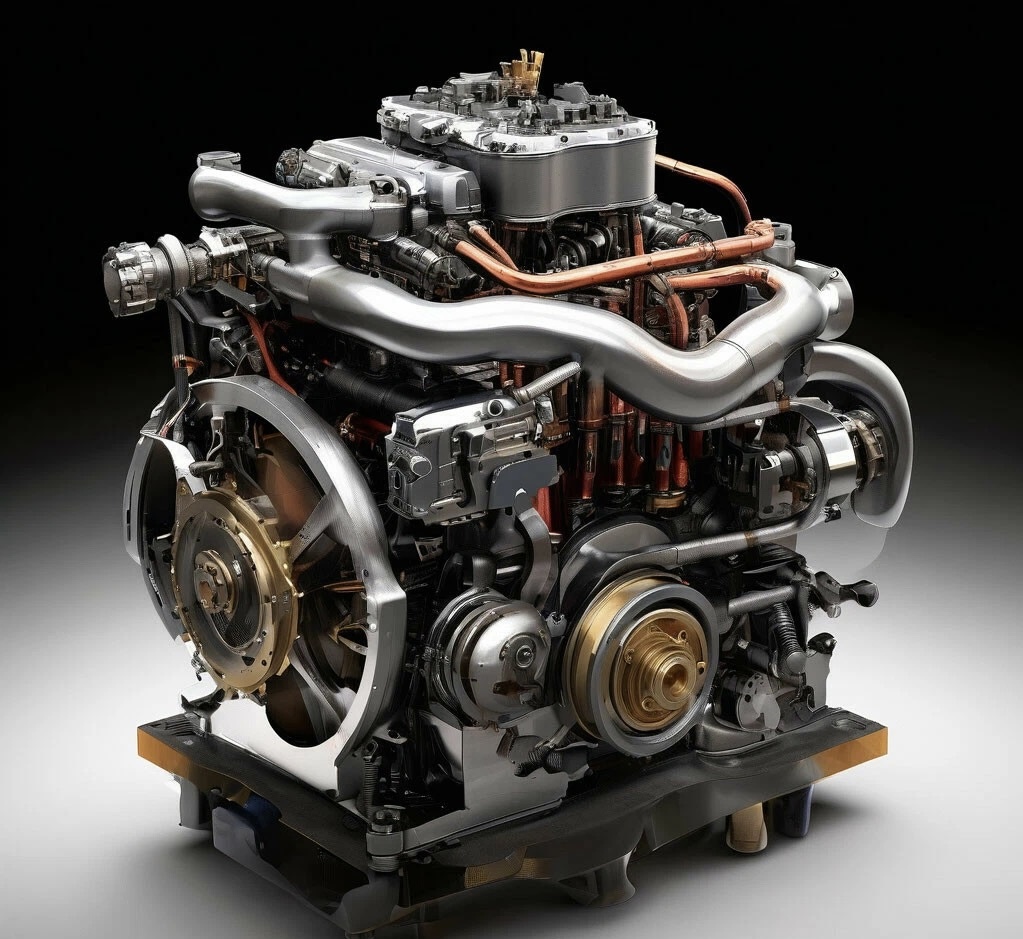
Modern engines — whether internal combustion engines (ICE) or gas turbine engines (GTE) — operate under high temperatures and significant mechanical loads. The durability, efficiency, and reliability of these units depend directly on the materials used in their construction. Let us look at the main types of alloys and steels used in ICE and GTE and why choosing the right option matters.
Materials for internal combustion engines
An internal combustion engine is a type of heat engine in which the chemical energy of fuel is converted into mechanical work.
The main ICE components include:
- Cylinders — hollow metal elements that provide the working space for fuel ignition. They are usually made of strong, wear-resistant metals.
- Pistons — moving elements that travel inside the cylinders and transfer the force from fuel combustion to the crankshaft, causing it to rotate.
- Crankshaft — a rotating part that converts the reciprocating motion of the pistons into torque.
- Connecting rods — connect the pistons to the crankshaft.
- Valves — regulate the supply of the air–fuel mixture into the cylinders (intake valves) and the exhaust of combustion gases (exhaust valves).
- Ignition system — initiates fuel ignition by a spark generated when an electrical pulse is supplied to the spark plugs.
- Lubrication and cooling systems — protect the unit from overheating and wear and prevent mechanical damage during operation of moving ICE parts.
ICE operation is based on combustion of a fuel–air mixture in the cylinder, which causes gas expansion and moves the piston. A fuel–air mixture is fed into the combustion chamber, compressed by the piston to top dead center, and ignited by the spark plug. As a result of ignition the gases expand, forcing the piston downward to bottom dead center. When that point is reached, the piston's energy is transferred through the connecting rod to the crankshaft, setting it in motion. At the same time exhaust gases leave the cylinder chamber through the exhaust valve, and the cycle repeats. For this process to run efficiently and reliably, special alloys are used in the engine.
Main materials used in ICE:
- Cast iron. Often used for cylinder blocks and cylinder heads. The material is known for high strength and wear resistance, which is especially important for parts exposed to high temperatures and pressures.
- Aluminum and its alloys. Pistons, connecting rods, and valves are often made of aluminum alloys. Aluminum is valued for low weight and adequate strength, which helps reduce engine mass and improve dynamic characteristics while maintaining structural reliability and durability.
- Copper alloys. Thanks to high thermal conductivity, copper and its alloys are ideally suited for cooling systems, in particular radiators and piping. Copper is also corrosion-resistant, which extends the service life of such elements.
- Steel. Steel alloys are used for key mechanical assemblies such as crankshafts and camshafts. Steel is characterized by increased strength and hardness, ensuring high wear resistance of components operating under continuous loads.
Using each of these materials helps maintain optimal ICE performance under high temperatures, heavy loads, and wear during service. For example, improving thermal conductivity or reducing the weight of individual components can lower fuel consumption and improve overall engine characteristics.
Materials for gas turbine engines
GTEs are widely used in aviation, power generation, and other industries where high power and reliability matter. The operating principle of these engines is based on converting energy released during fuel combustion into mechanical work or jet kinetic energy (thrust). A key requirement is the ability of materials to withstand extreme temperatures and loads faced by engine parts.
The main GTE parts include:
- Compressor — compresses air before it is fed into the combustion chamber.
- Combustion chamber — where the fuel mixture burns and hot gases are formed.
- Turbine — converts gas energy into mechanical work.
- Nozzle — discharges gases from the engine, creating jet thrust.
The operating principle of a gas turbine plant is based on continuous fuel combustion at constant pressure. Air entering the compressor is compressed and directed into the combustion chamber. Fuel is also fed there, mixes with air, and burns, forming hot gases. These gases expand and rotate the turbine, which is connected to the compressor and nozzle. The nozzle directs the gases into the environment, creating the reactive force that propels the turbine.
Main materials used in GTE:
- Heat-resistant steels and nickel-based alloys. These materials are used to manufacture parts operating at extreme temperatures, such as turbine blades and combustion chambers. Nickel alloys have high thermal resistance, corrosion resistance, and fatigue strength, allowing them to retain their properties even at temperatures above 800°C.
- Titanium alloys. Widely used for parts where lightness and high strength matter — for example turbine disks. These alloys are characterized by low density and corrosion resistance, which is especially important when operating in aggressive environments.
Material selection for gas turbine engines is driven by the need to withstand high thermal and mechanical loads. Therefore nickel- and titanium-based alloys are indispensable in modern GTE designs.
Special steels and alloys produced by PZPS: resistance to corrosion and high temperatures
For both categories of engines it is critically important to use corrosion-resistant, heat-resistant, and high-temperature materials. In modern mechanical engineering the following have proven themselves well:
- Corrosion-resistant steels and alloys (10Kh17N13M3T, 12Kh18N9, 12Kh18N10T, 12Kh18N9SMR, and others) — prevent corrosion damage that can lead to premature wear of parts. Their use extends engine service life and reduces repair and maintenance costs.
- Heat-resistant steels and alloys — used to manufacture components operating at temperatures up to 1250°C, such as combustion chambers and exhaust valves. Heat resistance allows materials to retain their properties even under prolonged exposure to extreme temperatures.
- High-temperature steels and alloys such as 20Kh13 and KhN78T — used for parts operating at high temperatures and mechanical loads (for example turbine blades and compressor disks). Inconel-family alloys (625, 718, and C-276), analogs of which are produced at PZPS, are among the best in high-temperature strength and are widely used in aviation and power generation.
Using high-quality steels and alloys in internal combustion engines and gas turbine plants significantly increases their service life, reduces the frequency of maintenance, and improves overall equipment reliability. Introducing such materials also helps improve fuel efficiency, which is especially relevant for modern vehicles and power plants.
Partnership with the Saint Petersburg Precision Alloys Plant
PZPS offers a wide range of high-quality high-temperature, corrosion-resistant, and heat-resistant steels and alloys for internal combustion engines and gas turbine plants. We guarantee high product quality and reliability standards that meet world requirements.
Alloys produced by PZPS offer:
- resistance to high temperatures;
- increased strength under intense mechanical loads;
- corrosion resistance in aggressive environments;
- lightness and high specific strength.
For detailed information on available materials and to order products, contact us. Our specialists will help select optimal solutions for your production!