How one person laid the foundation of metallography in Russia
Pavel Petrovich Anosov (1796–1851) was a Russian engineer, metallurgist, inventor, and the first scientist in Russia to apply a microscope to study the internal structure of metals. His discoveries and developments became the foundation for the establishment of metallography — the science of metal structure — and laid the groundwork for the subsequent development of domestic metallurgy.
Anosov was born in Tver in the family of a mining officer. From childhood he was surrounded by an atmosphere of technical thinking and interest in production. After graduating from the St. Petersburg Institute of the Corps of Mining Engineers (now — Empress Catherine II St. Petersburg Mining University), Pavel quickly showed himself as a talented and purposeful specialist.
Anosov began his professional activity at the Zlatoust Metallurgical Plant. Already in 1821 he became manager of the enterprise and remained in that post until the end of his life. It was here that the scientist conducted his most important experiments and observations, many of which were significantly ahead of their time. The goal of the research was not simply to improve product quality, but to understand the very nature of metal — what determines its strength, plasticity, and wear resistance.
Anosov developed and introduced new methods of processing metals and alloys, which raised product quality and production efficiency. His work in materials science and metallography laid the foundation for the development of these sciences in Russia.
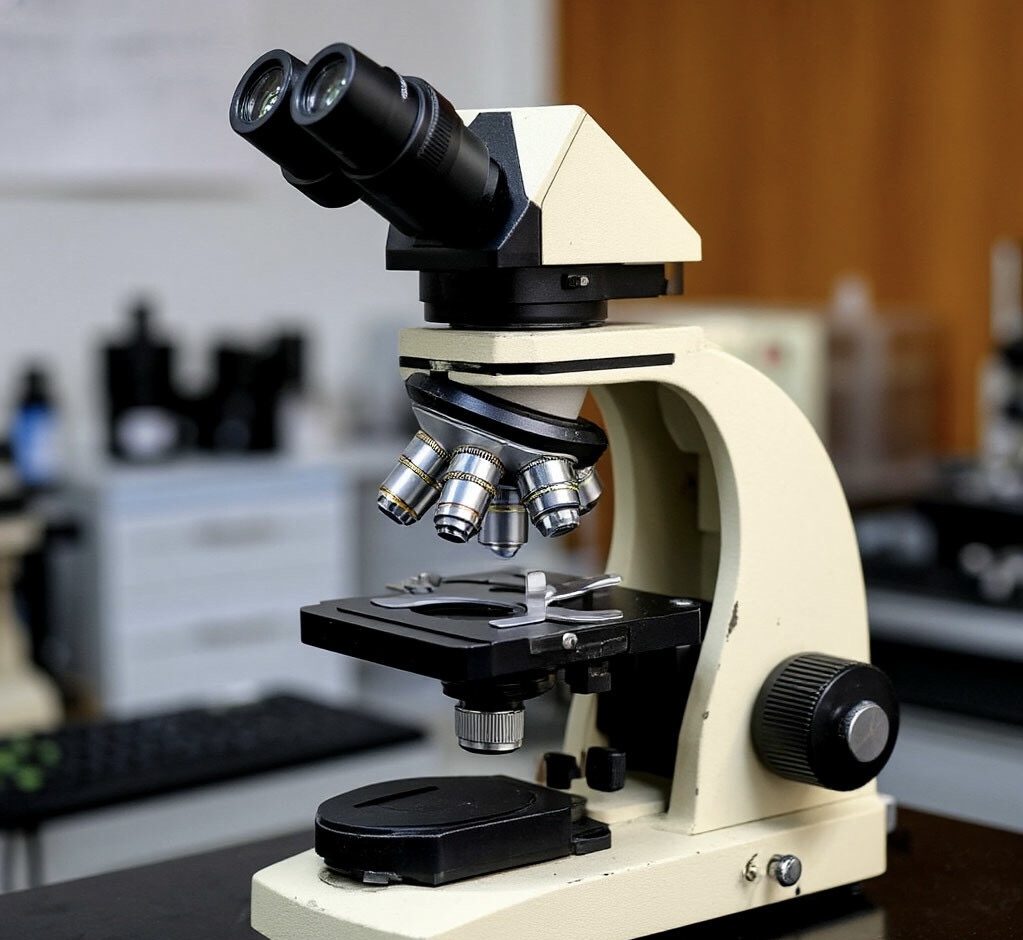
In 1831 Anosov did what today seems obvious but at the time was a revolution: he was the first in the world to apply a microscope to study the structure of steel — a polished surface etched with acids. The goal was to determine the characteristic structure of Damascus (bulat) blades obtained by the method he developed.
This method was unprecedented in world practice: before him metal structure was considered homogeneous and not amenable to detailed investigation. Anosov showed that steel has a complex internal architecture — grains, phases, boundaries, defects. His studies of bulat made it possible to establish the characteristic structure of blades and understand which technological techniques affect their properties.
For world science this step was unprecedented. English scientist Henry Sorby first used a microscope to study metals only in 1864, thirty years later.
Working at the Zlatoust plant in 1830–1835, Anosov established a direct dependence between steel structure and its mechanical properties. This became the starting point of metallography in Russia.
The foundations of scientific metallurgy in Russia were developed by D. K. Chernov, who discovered the dependence of steel properties on temperature regimes: he formulated the laws of metallurgy and described crystallization mechanisms. But the foundation for these studies was laid precisely by Anosov.
Anosov studied in detail the influence of temperature, heating and cooling rates, and alloying elements on steel properties. He developed processing methods that made it possible to raise strength, wear resistance, and other mechanical characteristics of materials.
Pavel Petrovich worked equally carefully through all production stages — from melting and forging to heat treatment, grinding, and etching. At the same time he accounted for the economic side, asserting that the bulat steel he obtained was not inferior to English steel and was not more expensive than it.
One of Anosov’s high-profile achievements was recreating legendary bulat. Ancient masters left behind only blades and the mystery of their origin. Using the knowledge of his time and his own observations, Anosov succeeded in reproducing bulat steel with high strength characteristics and a unique surface pattern.
His approach was comprehensive: he studied not only melting, but also forging, heat treatment, grinding, and etching — all stages affecting the final quality of the blade.
Pavel Petrovich contributed to developing technologies for obtaining cast steel with elevated uniformity and strength. He understood that impurities play a critical role in forming metal properties and systematically studied their influence.
The scientist established that:
At the same time he was cautious: he considered most alloying additions unsuitable for producing bulat, but recognized their value in other applications. These achievements found use in arms making, mechanical engineering, and other industries where special materials were required.
Metallography is the science of the microstructure of metals and alloys based on microscopic analysis. It makes it possible to:
Anosov became a pioneer of this approach. His work showed that metal properties are determined by its internal structure, and therefore they can be changed by controlling process technologies.
Pavel Petrovich discovered an important law — the dependence of metal properties on its crystal structure. He introduced the concept of macrostructure and developed a method of macroetching.
Studying steel microstructure, P. P. Anosov proposed new quenching and tempering regimes that made it possible to substantially raise hardness and wear resistance. He essentially laid the foundations of an engineering approach to creating alloys with specified properties.
Metallography remains a key method of material research. Thanks to it:
Pavel Petrovich Anosov proved that metal is not merely a piece of iron, but a complex material obeying the laws of nature that can be studied, understood, and improved. His work became an example of how scientific curiosity and engineering thinking can change an entire industry and lay the foundation for future discoveries.
Anosov was not only an engineer, but a researcher in the full sense of the word. He could combine a strict scientific approach with a practical vision of production tasks. Even half a century after his death the scientist was criticized for having “too far outpaced his time” and therefore not been understood by contemporaries. Many of his ideas gained recognition only decades later.
At the St. Petersburg Precision Alloys Plant metallographic studies are applied at every production stage — from billet to finished strip. This makes it possible to guarantee property stability and product compliance with strict technical requirements.
The plant produces cold-rolled strip from the following types of precision materials:
Today Anosov’s legacy continues to live in laboratories, at plants, and in lecture halls. His name stands alongside the pioneers of world metallurgy, and his methods still underlie technologies that determine the quality and reliability of modern products.