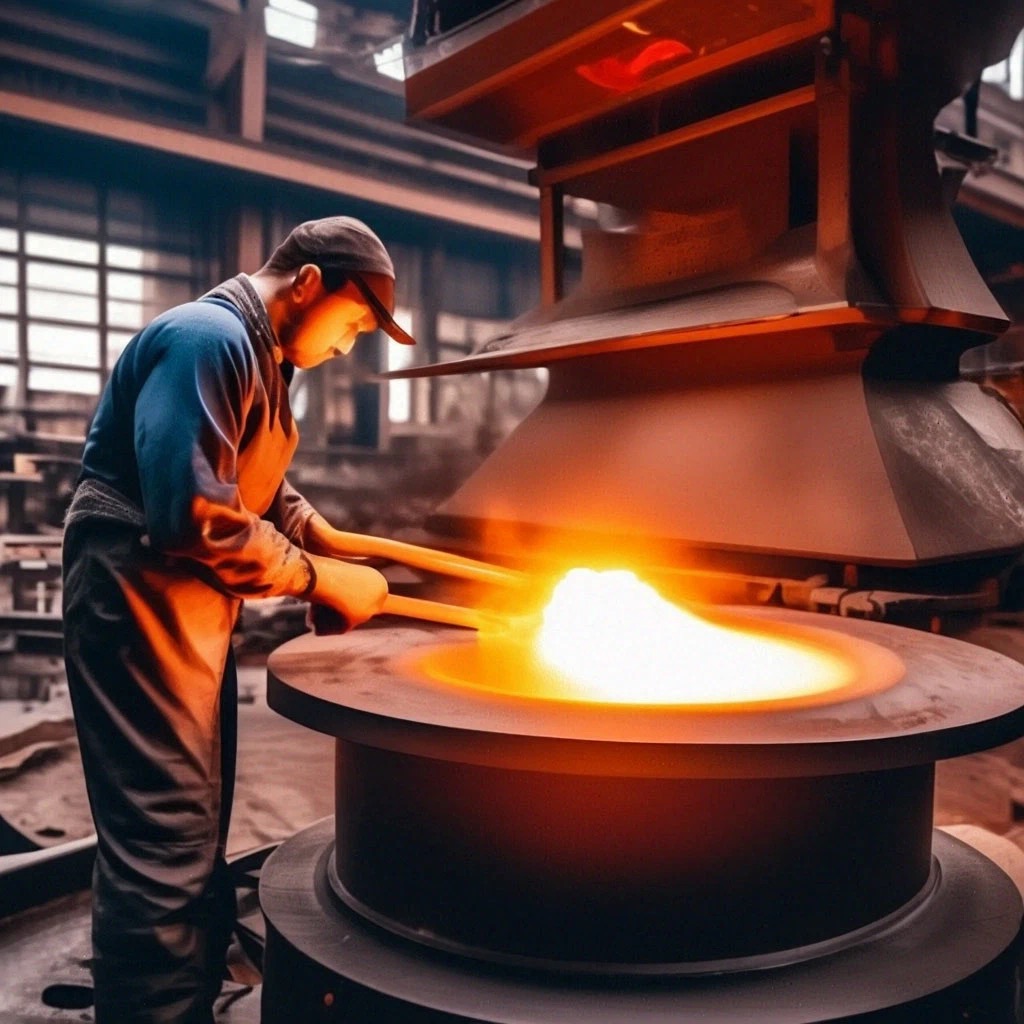
Deoxidation of metals, also known as deoxidation, is a metallurgical process aimed at improving material quality. It makes it possible to reduce iron from oxides and helps remove oxygen — a harmful impurity that negatively affects mechanical properties of steels and alloys. The term “steel deoxidation” is used in narrow metallurgist circles and is a synonym of “metal reduction.”
Methods of deoxidizing steels and alloys
Deoxidation is carried out by acting on the metal with elements that have a higher ability to react with oxygen than the base metal. This effectively binds oxygen and removes it from the material. Such an approach ensures stable mechanical and physical properties of steels and alloys.
Metals are reduced by one of the following methods:
- Precipitation deoxidation. This method provides for using substances such as silicon, aluminum, and manganese that have high affinity for oxygen. They react with oxygen, forming oxides that are removed from the melt.
- Electroslag remelting (ESR). This is a method of purifying steels and alloys from non-metallic inclusions such as sulfur by melting the material in a slag bath.
- Extraction or diffusion deoxidation. Here the amount of oxygen in the metal is reduced by slag action; chemical elements such as carbon, silicon, and aluminum are used as deoxidizers.
- Vacuum-carbon deoxidation. This process involves purifying metals of oxygen under vacuum conditions, where carbon shows pronounced oxidizing properties.
- Treatment with synthetic slags. This method is used to reduce sulfur and oxygen content in the material. Deoxidation occurs in an arc furnace using slag containing Al2O3 and CaO.
Deoxidizing precision alloys is important for ensuring high quality and accuracy of products from these materials. Oxygen remaining in the alloy structure can cause pores and other defects in the metal structure, which may worsen its mechanical and physical properties.
Classification of steels by deoxidation method
Steel can be classified by degree of deoxidation, which affects its mechanical properties and ease of processing:
- Killed. Full degree of deoxidation has been carried out. Characterized by uniform chemical composition throughout the billet and therefore identical properties throughout the ingot. After pouring it is not prone to gas formation during solidification.
- Semi-killed. Medium deoxidized state. Requires additional processing because gas bubbles remain in the upper part of the ingot. Such defects are usually eliminated during rolling. An example of semi-killed steel is alloy 08PS.
- Rimmed. Weakly deoxidized state, as in alloy grade 08KP. Has uneven chemical composition across the cross-section, but enjoys great popularity in various industries thanks to its low cost.
Proper deoxidation reduces the likelihood of undesirable defects in products and ensures elevated reliability of products made from precision alloys.
Alloys produced at PZPS
At PZPS precision alloys are melted in vacuum furnaces; accordingly, deoxidation is also carried out in vacuum, making it possible to obtain high-quality precision alloys:
- with specified elastic properties (17KhNGT, 36NKhTYu, 40KhKhNM);
- with specified TCLE (29NK, 36N, 42N);
- hard magnetic (EP-298, 13NKhM);
- soft magnetic (27Kh, 49K2FA-VI, 50N, 50NP, 79NM, 80NM, 81NMA);
- with high electrical resistance (Kh15Yu5, Kh15N60N, Kh20N80N, Kh23Yu5, Kh23Yu5T).
Besides melting steels and alloys, our company provides a range of production services — from developing new technological solutions to releasing industrial product batches. For cooperation and purchasing precision materials with required physical-mechanical properties, call +7 (812) 740-76-55 or leave a request on our website. Our specialists will contact you and answer your questions in detail.