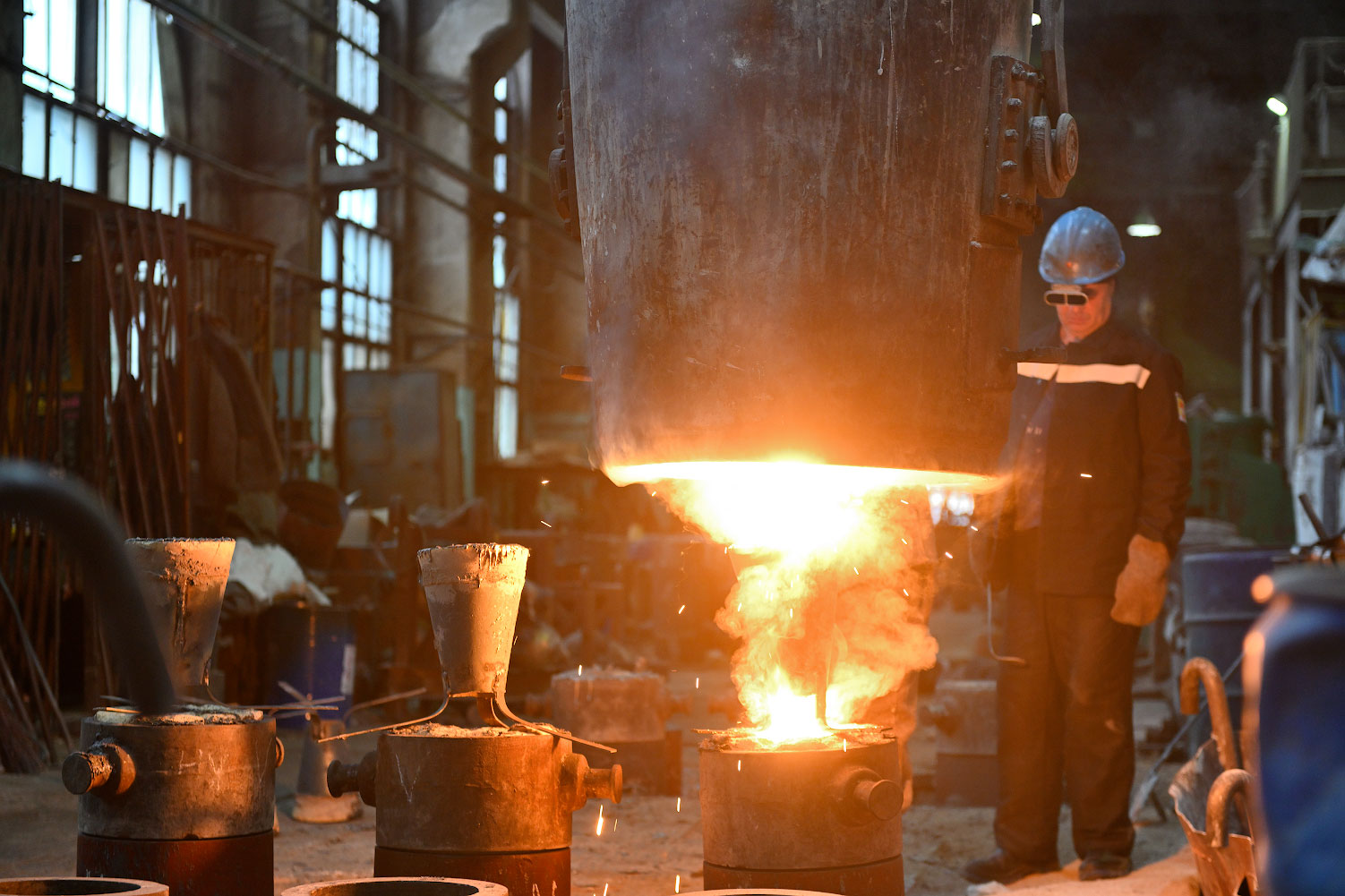
Steel casting is a process in which molten metal is poured from a ladle into molds or ingot molds to produce ingots. This stage of metallurgical production is of critical importance, since the final condition and characteristics of the finished product depend directly on its quality.
Casting speed
The optimal casting speed ensures uniform filling of the molds, preventing the formation of defects. If the process proceeds too quickly, this can lead to cracks and porosity. Excessively slow casting risks the formation of shrinkage cavities.
Steel temperature
For the steel to have good fluidity and completely fill the mold, its temperature must be within approximately 1500–1600°C. Overheating the steel promotes oxidation of the metal and can lead to defects.
Protection against oxidation
During the casting process, it is extremely important to protect the steel from interaction with atmospheric oxygen in order to avoid the formation of oxides. Protective gases or special refractory coatings are used for this purpose, minimizing the steel's contact with air.
If casting process requirements are not observed, defects that significantly degrade quality can occur in the finished metal. The most common include:
Casting into ingot molds
Casting steel into ingot molds is one of the traditional methods, in which liquid metal is poured into special cast-iron molds (ingot molds). Ingot molds can be of various sizes and configurations, depending on the required properties and parameters of the ingots.
Features of casting into ingot molds:
The advantages of casting steel into ingot molds include the ability to obtain ingots of various sizes and shapes, as well as relatively low equipment costs. However, this casting method requires more time and labor compared to other methods, such as continuous casting. In addition, casting into ingot molds can result in certain defects, such as cracks, porosity, and shrinkage cavities.
Casting into ingot molds can be performed in two main ways:
Top pouring
With this method, liquid steel is poured directly into the top of the ingot mold. This method makes it possible to obtain ingots with a cleaner surface, since as the metal stream falls and strikes the bottom of the mold, it is freed from non-metallic inclusions.
This casting method is used at PZPS for the production of high-quality precision alloys, such as:
In addition, this makes it possible to obtain other high-quality materials:
The materials presented above are widely in demand across various industries due to their unique physical and mechanical properties and compliance with modern quality standards.
Siphon casting
In siphon casting, liquid steel flows from the ladle into the ingot molds from below through a system of channels, which allows several molds to be filled simultaneously. Thanks to the simultaneous filling of several ingot molds, the productivity of the process is significantly increased.
Features of siphon casting:
Among the advantages of the siphon method are the ability to fill several ingot molds simultaneously and the high productivity of the process. However, this casting method requires complex preparation and careful control, and also has a higher cost due to the price of the equipment used and the labor required to keep it operational.
Continuous casting
In continuous casting, liquid metal is poured into a mold — a water-cooled, bottomless ingot mold — where primary solidification occurs. The billet, whose core remains liquid, is then withdrawn from the mold and enters the secondary cooling zone, where it finally solidifies. After this, the billet is cut into measured lengths and sent for further processing. Before casting begins, a temporary bottom called a starter (dummy) bar is installed in the mold.
Continuous casting has a number of advantages compared to casting into ingot molds:
However, continuous casting also has some disadvantages:
This casting method is best suited for producing commodity-grade steels in the form of billets with standard sizes and shapes.
St. Petersburg Precision Alloys Plant (PZPS) specializes in the production of high-quality steels and alloys, and also provides a range of production services. The plant has a modern production base and qualified personnel, and strictly monitors the compliance of its products with current standards, which guarantees the stable quality of the materials produced.
Among the plant's products are alloys with unique magnetic, elastic, and corrosion-resistant properties, making PZPS a reliable partner for enterprises in various industries. For cooperation inquiries, please contact us at the phone numbers listed or leave a request. Our specialists will call you back and answer your questions in detail.