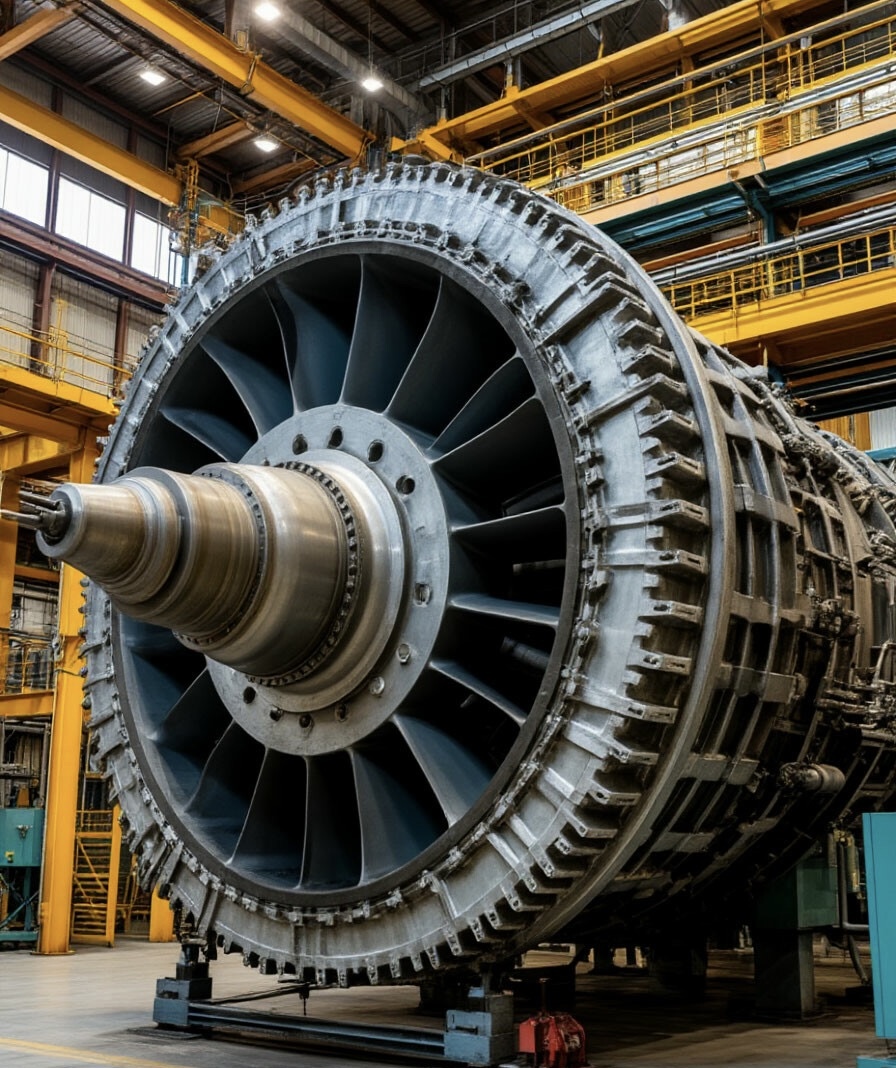
In a world of extreme temperatures, aggressive environments, and extreme mechanical loads, ordinary structural steel gives up after the first hours of service. Cryogenic systems, petrochemical reactors, gas-turbine blades, and nuclear power components need metal with a completely different “character” — able to keep its integrity where standard materials fail.
But how do you avoid confusion in the terminology? Why are corrosion resistance, heat resistance (scale resistance), and high-temperature strength fundamentally different properties rather than synonyms?
Why these properties are not interchangeable
Many engineers and buyers wrongly assume that if an alloy is “stainless,” it automatically performs well when heated. That is a dangerous misconception that can lead to catastrophic outcomes. For example, classic austenitic steel 12X18N10T holds up excellently in acids, yet at 650°C it starts losing strength rapidly. Conversely, a heat-resistant alloy may have poor resistance in sulfuric acid or seawater. To choose correctly, you need to understand the mechanisms behind each property.
Corrosion resistance — armor against chemical attack
Corrosion resistance is a metal’s ability to resist degradation in contact with an aggressive environment: acids, alkalis, seawater, atmospheric moisture, combustion products, and salt solutions. The key protection mechanism is passivity: a thin, dense, self-healing oxide film forms on the surface and blocks further oxidation.
Protection mechanism: the role of chromium
The main “hero” of corrosion resistance is chromium (Cr). At a chromium content of at least 10.5–12%, a protective Cr₂O₃ (chromium(III) oxide) film only 1–3 nm thick forms on the alloy surface. This film has a unique property: after mechanical damage (a scratch or abrasive wear) it instantly regenerates in the presence of oxygen.
Application areas
Corrosion-resistant steels are indispensable in:
- the chemical industry — pipelines, reactors, and heat exchangers for aggressive media;
- food and pharmaceutical production — equipment contacting food acids and disinfecting solutions;
- shipbuilding and offshore platforms — fasteners, pipelines, and structures exposed to seawater;
- cryogenic engineering — vessels and pipelines for liquefied gases operating down to −196°C.
Important nuances: not all stainless steel is equally useful
- Austenitic steels are absolute leaders in acid resistance thanks to high nickel (8–14%), but they are sensitive to chlorides. In seawater or chloride-bearing media, pitting and intergranular cracking can develop.
- Ferritic steels are less expensive and resist oxidizing environments well, but they weld more poorly and tend to brittle fracture at low temperatures.
- Duplex steels combine austenitic and ferritic structures, delivering both high corrosion resistance and strength, especially in chloride-bearing environments.
Heat resistance — fighting temperature
Heat resistance (or scale resistance) is a material’s ability to resist gas corrosion — oxidation at high temperatures in gaseous media (air, combustion products, steam). Here the main enemy is not mechanical load, but oxygen diffusion into the metal that forms multilayer oxide scale.
Protection mechanism: barrier oxides
Above 550°C ordinary steels oxidize intensively: oxygen penetrates the porous FeO film, and the process accelerates by a parabolic law. Heat-resistant alloys form dense, thermally stable oxide films on the surface:
- Cr₂O₃ — the main protective layer in chromium-bearing steels, effective up to 1000–1100°C;
- Al₂O₃ — an aluminum film protects up to 1300°C and higher, but makes the material brittle at room temperature;
- SiO₂ — a silicon film improves resistance in low-oxygen environments.
Temperature limits and applications
Heat-resistant steels withstand 1000–1150°C without critical scale formation, yet their mechanical strength at those temperatures may be low. They are intended for unloaded or lightly loaded service:
- muffles and trays of heating furnaces;
- exhaust systems and exhaust manifolds;
- furnace conveyors and retorts;
- pyrometer tubes and protective screens.
Key alloying elements
To raise heat resistance, steels are alloyed with chromium (15–30%), aluminum (up to 6%), silicon (up to 3%), and rare-earth metals that improve oxide-film adhesion to the base metal and prevent spalling during thermal cycling.
High-temperature strength — creep resistance and long-term strength
High-temperature strength is a metal’s ability to carry mechanical load at elevated temperature for a specified time without fracture or unacceptable deformation. Here microstructure and strengthening mechanisms matter as much as — or more than — chemistry alone.
Process physics: why metal “flows”
On heating, atoms in the crystal lattice diffuse intensively — moving spontaneously in all directions. Without obstacles to dislocation motion, grains begin to slide relative to one another — creep appears. The part deforms slowly but irreversibly: it “flows.”
Ways to raise high-temperature strength
- Solid-solution strengthening. Introducing molybdenum (Mo), tungsten (W), and cobalt (Co) atoms into the austenite lattice creates local stress fields that hinder dislocation motion. This is the basis of all iron- and nickel-based heat-resistant alloys.
- Precipitation (intermetallic) strengthening. During heat treatment, microscopic intermetallic particles such as γ′-phase Ni₃(Al, Ti) or MC carbides (TiC, NbC) precipitate in the austenite matrix. Particles 10–100 nm in diameter “lock” grain boundaries and block dislocations, retaining strength up to 1100°C.
- Microalloying with boron and rare-earth metals. Additions of boron (0.01–0.05%) and cerium (0.03–0.1%) strengthen grain boundaries and prevent grain-boundary sliding — one of the main creep mechanisms at high temperature.
Key high-temperature strength characteristics
- Long-term strength — the stress that causes specimen fracture after a given time (100, 1,000, or 10,000 hours) at a given temperature.
- Creep limit — the stress at which creep strain reaches a set value (usually 1%) in a given time.
A systems approach to material selection
Remember: stainless steel is not always heat-resistant, and a heat-resistant alloy can rust almost instantly in seawater. Only a systems analysis of environment, load, temperature, and service life guarantees equipment durability.
When selecting a material, always ask yourself four questions:
- What temperature will exist in the contact zone?
- What surrounds the part — gas, liquid, or vacuum?
- What mechanical load acts — static, dynamic, or cyclic?
- What service life is required — hundreds or tens of thousands of hours?
Answers to these questions let you choose a material that will not fail under the most extreme conditions.
PZPS supplies corrosion-resistant, heat-resistant, and high-temperature steels and alloys, including:
- Corrosion-resistant heat-resistant steel grade 12X18N9T — an austenitic chromium-nickel steel with titanium. It combines good corrosion resistance with moderate high-temperature strength. Used for parts operating up to 600°C in oxidizing environments: pipelines, fittings, and boiler equipment components.
- Structural cryogenic steel grade 12X18N10T — a versatile austenitic alloy with elevated nickel. It resists dilute nitric, acetic, and phosphoric acids, alkalis, and salts. It works under pressure from −196°C to +600°C; with aggressive media, up to +350°C. Indispensable in cryogenics, food processing, and chemical engineering.
- Corrosion-resistant steel grade 10X17N13M3T — a highly alloyed austenitic steel with molybdenum and titanium. Used for parts in strongly aggressive media at elevated temperature: sulfuric and acetic acids, chloride solutions, and seawater. Molybdenum (3%) greatly improves pitting and crevice corrosion resistance, making it ideal for chemical reactors.
- Corrosion-resistant heat-resistant steel grade 20X13 — a martensitic chromium steel with elevated carbon (about 0.16–0.25%). It combines high hardness and wear resistance with good corrosion resistance in mildly aggressive media. Used for turbine blades, bolts, nuts, and cracking-unit fittings for long service up to 500°C.
- Heat-resistant alloy grade XN78T — a nickel austenitic superalloy with high chromium and titanium. It belongs to precipitation-hardened alloys with γ′ phase Ni₃(Al, Ti). It retains high long-term strength up to 1100°C. Used for the most critical gas-turbine parts, jet-engine combustion chambers, and nuclear reactor components.
In addition, other grades of corrosion-resistant, heat-resistant, and high-temperature steels and alloys can be developed and produced for specific operating conditions.