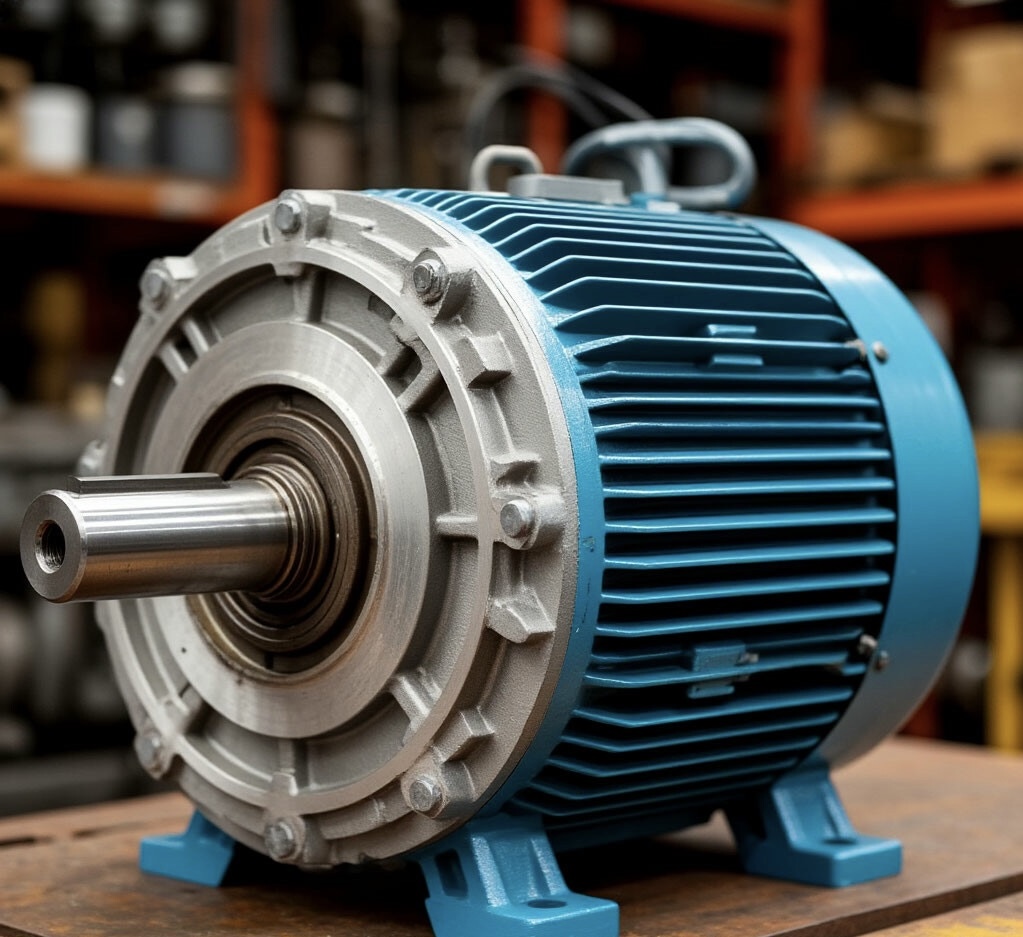
Modern mechanical engineering places ever stricter requirements on materials. Ordinary structural steels are far from always equal to this mission. Specialty steels and precision alloys take the lead — materials with carefully calculated and guaranteed properties.
One of the leading manufacturers of such materials is Petersburg Precision Alloys Plant (PZPS). Its products are the basis of thousands of articles: from miniature sensors to industrial giants.
Precision alloys are indispensable even in space technology: they ensure dimensional stability and magnetic properties of instruments operating under sharp temperature swings and radiation exposure. Without them, navigation systems and satellite electronics cannot be created.
The history of PZPS began in 1857, when a metallurgical plant was founded in St. Petersburg that later became one of the pillars of Russian industry. From its earliest years the enterprise focused on producing high-quality metals needed for rapidly developing mechanical engineering.
In the Soviet period the plant was a critically important link in the country’s industrial complex. Alloys without which the following could not have developed were created here:
aviation and cosmonautics;
instrument making and electronics;
the defense industry.
Today the enterprise’s name reflects the essence of its work: “precision” (from French précis — “exact”) — metal with guaranteed parameters that behaves predictably under any conditions.
The secret of PZPS’s success lies in combining tradition with constant technology renewal.
Modern melting methods. The plant uses vacuum induction melting. This method removes harmful impurities from the metal — sulfur, phosphorus, and non-metallic inclusions. The cleaner the metal, the better its properties.
Multi-level quality control. Every batch undergoes thorough checks: from chemical-composition analysis to microstructure and mechanical-property studies. Thanks to this, engineers who order PZPS products can be confident: the material exactly matches the stated parameters.
A systems approach to production. The plant combines classical metallurgical methods with digital control and automation systems. This reduces the risk of errors, saves resources, and makes it possible to produce large volumes without loss of quality.
That is why PZPS products are valued by engineers: they are predictable, stable, and guarantee results in the most demanding projects.
Each class of alloys solves its own specific tasks.
They are sought where metal is constantly exposed to high temperature, pressure, and aggressive media. Applications: power generation, chemical industry, oil and gas sector, medicine.
Martensitic-class steel grade 20Kh13. Used in power-plant engineering and furnace building to manufacture turbine blades, fasteners, and fittings for cracking units. Retains properties at temperatures up to 500℃.
Austenitic-class steels of grades 12Kh18N9, 12Kh18N10T, 10Kh17N13M3T. Provide high resistance to corrosion and oxidation; used in parts operating up to 600℃, and in contact with aggressive media — up to 350℃.
Nickel-based heat-resistant alloy grade KhN78T. Withstands extreme temperatures — up to 1100℃. Used to manufacture parts requiring maximum heat resistance.
Such materials extend the service life of turbines, furnaces, and pipelines, reduce accident rates, and make it possible to avoid costly repairs. These alloys are a strategic foundation of power generation, petrochemistry, and mechanical engineering.
It is this group of materials that sets the plant apart among many metallurgical enterprises. Here the issue is not merely strength or corrosion resistance, but specific engineering tasks where magnetic, electrical, or elastic properties matter.
Soft magnetic alloys
49K2FA-VI, 27KX — used in transformers, magnetic amplifiers, rotors, and stators of electrical machines;
50N, 50NP, 79NM, 81NMA — used in transformer cores, chokes, relays, and magnetic circuits, as well as for screens that protect against electromagnetic radiation.
Their quality determines the efficiency of electric motors, the stability of relay operation, and the accuracy of measuring instruments.
Alloys with a controlled linear thermal expansion coefficient
29NK, 33NK, 36N, 42N — used in electronics and instrument making. They are needed to create precision pairs where part dimensions must remain stable under temperature fluctuations.
In electronics, alloys with a controlled CTE are used, for example, for vacuum-tight seals where ideally matched expansion of materials is required.
Alloys with high electrical resistivity
Kh15Yu5, Kh23Yu5, Kh23Yu5T, Kh20N80N, Kh15N60N — used to manufacture heating elements in industrial and household furnaces, rheostats, and other electric heating devices.
Their stability ensures precise temperature control and energy efficiency of equipment.
With controlled elastic properties
40KhNM, 36NKhTYu, 17KhNGT — ensure high accuracy and stability of sensitive elements: springs, diaphragms, and instrument parts.
It is alloys with controlled elastic properties that make it possible to create mechanisms requiring millimeter (and sometimes micron) accuracy.
Each of these alloys solves highly specialized tasks, but together they form a complete arsenal of materials for mechanical engineering. Thanks to this, PZPS can meet the needs of the most diverse industries — from heavy industry to high-precision instrument making.
Why do engineers choose the products of this particular plant? There are several reasons.
High and stable alloy purity. Fewer impurities mean greater strength and durability. Even a small reduction in sulfur or phosphorus content can extend part service life by years. This directly affects the reliability of turbine blades and heating elements.
Stability of properties. Every batch strictly complies with GOST or TU. Engineers can be confident: if one batch passed testing, the next will behave the same. This eliminates production risks and reduces scrap.
Optimization of processing. Predictable structure and properties give technologists the ability to:
select rolling, welding, and heat-treatment regimes precisely;
reduce scrap rates at every stage;
save time and resources;
raise productivity.
Example: if an alloy behaves the same during quenching or welding, an engineer can set optimal parameters immediately instead of spending time and metal on selecting regimes.
PZPS materials simplify the work of technologists, make it possible to create reliable products, improve production efficiency, and protect against losses associated with accidents and scrap.
Choosing an alloy is a strategic decision on which the reliability and economic efficiency of a project depend.
Start with a precise technical specification. Define mechanical and physical properties, operating temperature, and service environment. State the required service life. The more detailed the specification, the easier it is to select the right alloy.
Do not cut corners on a critical assembly. The cost of the material in a product is usually small, but the reliability of the entire structure depends on it. Failure of a single part due to poor-quality material can stop a conveyor or an entire plant — and that means millions in losses.
Use the expertise of PZPS specialists. Plant engineers will help you choose the optimal alloy, advise on processing regimes, and point out possible risks. Consultation saves time and reduces the likelihood of errors already at the design stage.
The right alloy choice is always a strategic decision. It requires a balance between technical requirements, cost, and service conditions.
Three golden rules for selecting a material:
Formulate the task clearly.
Do not economize on reliability.
Trust professionals.
Only then can you be confident that the product will operate without failures and that the production line will not stop because of a small but critically important part.
The plant’s products are not merely metal but the foundation of engineering solutions. Behind every steel and alloy grade stand decades of experience, scientific developments, and modern technologies that turn feedstock into a high-tech material. These alloys work where there is no room for error: in power generation, mechanical engineering, instrument making, medicine, and even space technology.
Under a course toward import substitution and technological sovereignty, the role of such enterprises grows many times over. Using PZPS alloys means investing in the reliability, durability, and competitiveness of domestic mechanical engineering. This is not merely a material choice — it is a choice of a development strategy based on quality and confidence in the future.