In the world of modern technologies industry constantly evolves, providing enterprises with new tools for improving production processes. One of the key development directions becomes introduction of additive technologies, in particular 3D printing, into production processes. In this article we will consider differences between additive technologies and traditional production, identifying their advantages and disadvantages.
Additive technologies: innovations in production
Additive manufacturing (or 3D printing) is an innovative approach in which a product is created by layering material layer by layer in accordance with a digital model. The process is carried out using a 3D printer and data from STL files obtained from a computer model (CAD).
Advantages of this technology include:
- Fast and flexible production setup — 3D printing makes it possible to easily configure and change technological process parameters, which speeds up creation of new products and prototypes.
- Material savings — unlike traditional production where material may undergo excess processing, additive technologies make it possible to apply material only on necessary sections. This reduces consumption and minimizes the amount of waste.
- Efficiency in producing complex shapes — additive technologies make it possible to create high-precision parts and products of complex geometry with account of specific needs of each client.
Among disadvantages of additive manufacturing the following are distinguished:
- Limited productivity — the additive manufacturing process, although innovative, usually requires more time compared with traditional technologies. This may become a limiting factor for mass production.
- High equipment costs — investments in equipment for additive manufacturing may be substantial, especially for creating large and high-precision products. This creates barriers for small enterprises and startups.
- Material limitations — at present the choice of materials for additive manufacturing compared with traditional is limited. Some materials may be difficult to use in the additive process or not possess the necessary properties.
Traditional production: established methods
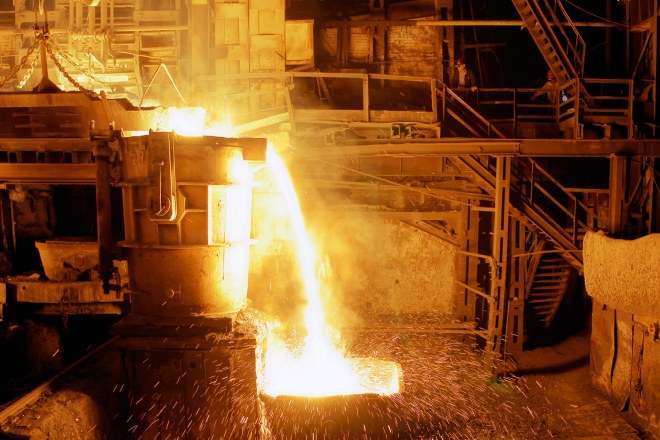
Traditional technologies are an industry oriented toward manufacturing products in large volumes using mechanical processing and standard production methods. Examples of traditional methods are injection molding, forging, milling and turning, manufacturing parts on CNC machines. These processes make it possible to create mass-purpose products with high speed and efficiency.
Advantages of traditional production include:
- High productivity — traditional methods possess high efficiency, which makes it possible to mass-produce products and ensure a high volume of manufactured products.
- Wide choice of materials — traditional production provides for use of a large number of various materials, which makes it possible to choose the best solutions for a specific product.
- Economic efficiency — use of molds and standard production lines reduces production costs. In addition, compared with additive manufacturing, traditional is cheaper in terms of initial costs for purchasing equipment.
Disadvantages of traditional production:
- Limited flexibility — technological processes of traditional production are less flexible in terms of changing or configuring for new market requirements, which makes it less adaptive.
- High storage costs — traditional production requires significant space for storing large volumes of finished products, which leads to additional expenses for organizing and maintaining a warehouse.
- Limited ability to create complex geometry — forms and tools used in traditional production do not always make it possible to manufacture parts of complex shapes, including with curved internal channels or thin walls. This limits production of exclusive products and elements with specific geometry.
Comparison and prospects
Both approaches have their unique characteristics and application areas. Traditional production remains the preferred choice for mass release of standard products requiring high enterprise productivity. Additive manufacturing is becoming ever more popular in spheres where individual solutions, complex geometric shapes, and fast changes in the production process are important.
In the future one can expect a synthesis of these methods when manufacturers will use hybrid approaches combining advantages of both technologies to achieve maximum efficiency and flexibility in production.
Role of PZPS in integrating traditions and innovations
The main product of PZPS — cold-rolled strip from steels and precision alloys — serves as a basis for traditional production processes. These materials find wide application in various industries where high strength and accuracy are required.
However the research center operating at the enterprise expands the range of the plant’s capabilities. Specialists are ready to help with research for companies introducing innovations in the form of 3D printing. This allows PZPS to remain competitive and adaptive to modern market requirements. Such a flexible and balanced approach is the key to a successful transition into the future where traditional and additive technologies will complement each other and create a sustainable foundation for development.