More than 70% of all chromium mined goes to metallurgy. This material is part of many precision alloys, stainless steels, and other alloyed metals.
Chromium is a chemical element with atomic number 24 and symbol Cr in the periodic table. It has high corrosion resistance and hardness, as well as resistance to elevated temperatures. When added to molten metal it increases hardenability, reduces grain size, and makes the alloy more resistant to oxidation in high-temperature service.
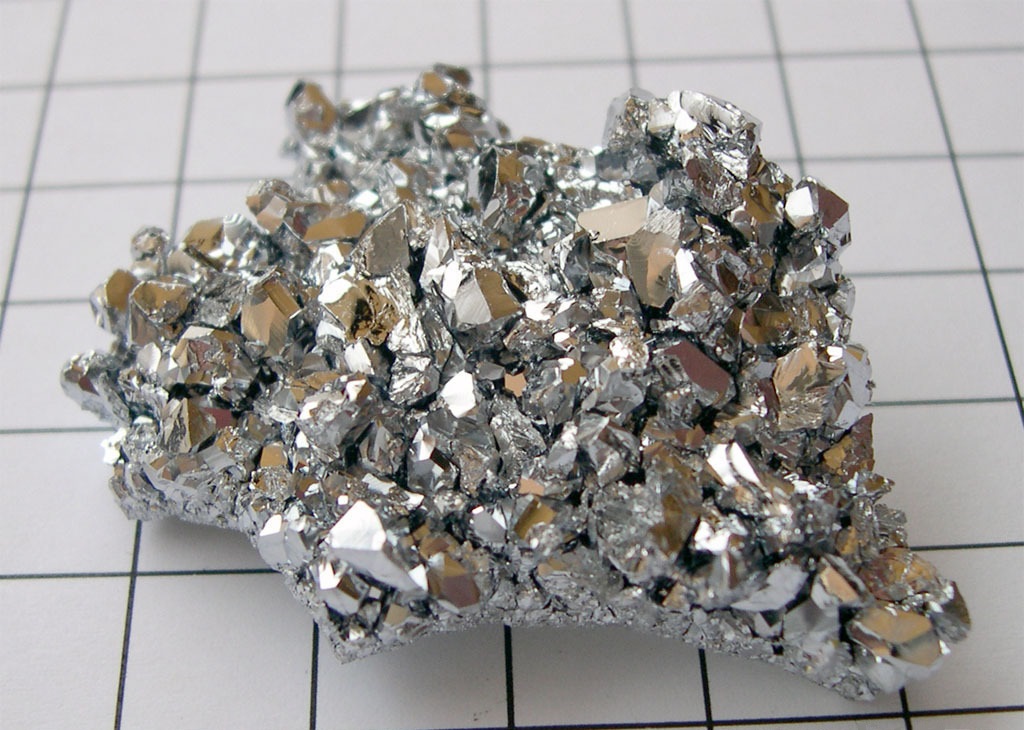
Metallic chromium is obtained by combining Cr with other chemical elements: silicon, aluminum, iron, carbon, copper. The material has a characteristic bluish-gray shade and silvery luster. It has low specific weight, elevated ductility and strength. It can resist deformation under pressure while retaining structure and shape. It is resistant to sharp temperature swings and prolonged elevated temperatures. It is not subject to corrosion. It melts at T ≈ 2400 °C.
It is metallic chromium that is used to alloy precision steels and other metals and makes it possible to obtain a special oxide film on them that prevents material oxidation in aggressive environments. It is widely used in producing alloys with elevated electrical resistance: Kh15Yu5, Kh15N60-N, Kh20N80-N.
Metallic chromium is a versatile, useful material combining high strength, resistance to extreme conditions, and many other unique properties. It is considered an indispensable element in modern industry. It is part of the following materials:
Chromium is an element that has played and continues to play an important role in the world of precision alloys. Its specific properties — corrosion resistance, high-temperature resistance, and ability to form protective films — make it an indispensable component in industries that require high reliability and durability of materials used. Introducing chromium into alloys makes it possible to create high-quality products that meet the high demands of the precision materials market.