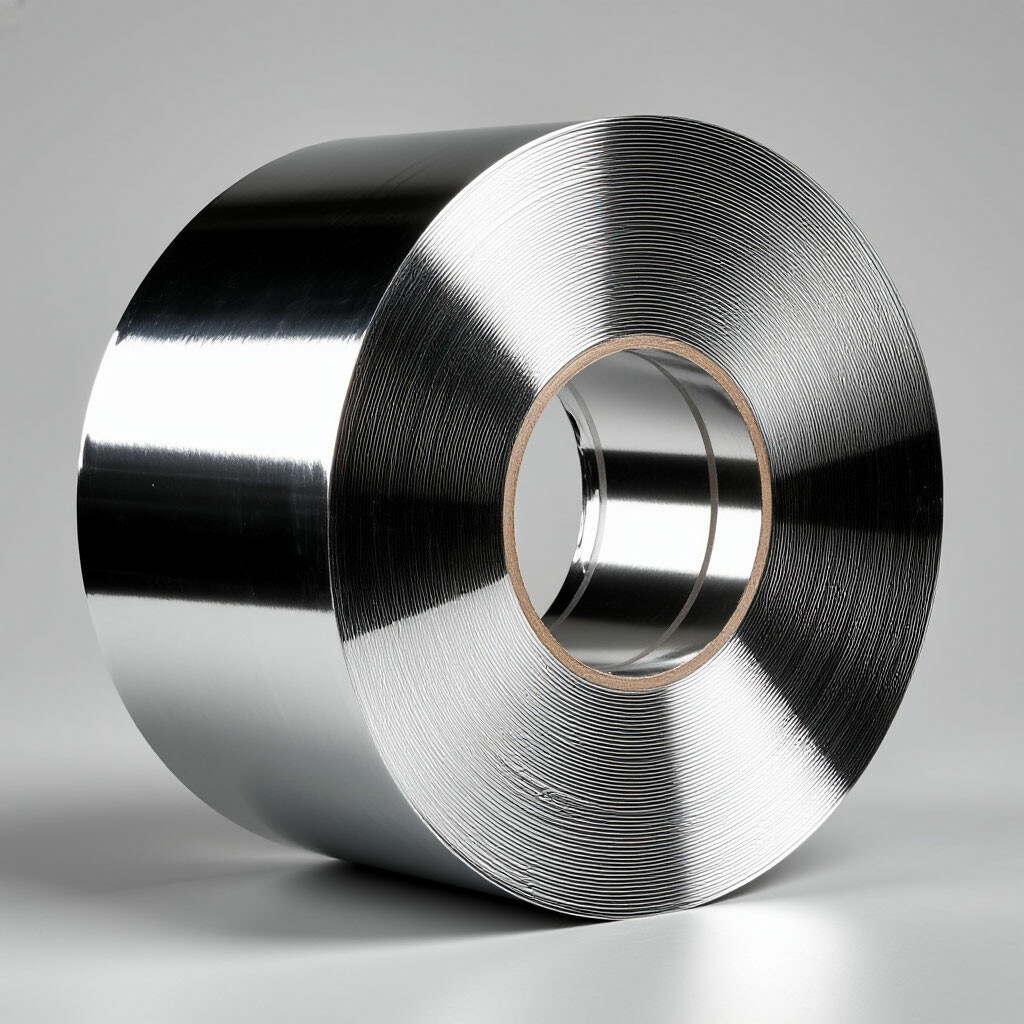
Production of precision alloys is a technologically complex, strictly regulated multi-stage process in which there are no «random» operations. At every stage — from selecting raw materials to issuing a quality certificate — requirements of regulatory documentation, process instructions, and the production control system apply. The ultimate goal of the entire cycle is unchanged: to ensure stability of chemical composition, physical and mechanical properties, microstructure, and geometric parameters of the finished rolled product.
Petersburg Plant of Precision Alloys implements the full cycle of metal processing: from melting and casting to plastic deformation, heat treatment, packaging, and shipment to the customer. Below is the sequential story of one ingot that travels from charge to finished product.
Any precision alloy begins not in the furnace but with precise selection of starting components. An error at this stage cannot be compensated by rolling or heat treatment — therefore charge preparation is a critically important stage.
The technological process starts at the electric steelmaking section. Charge materials of strictly regulated chemical composition are selected in accordance with the process instruction. The following are used:
pure metals (nickel, iron, chromium, cobalt);
ferroalloys;
master alloys.
Before loading, mass is controlled, each batch is identified, and material grades are confirmed. These operations are necessary to ensure the specified chemical composition and reproducibility of alloy properties across different heats.
Particular attention is paid to material purity and impurity content, especially sulfur, phosphorus, and gas-forming elements.
Melting is performed in open and vacuum induction furnaces. Vacuum treatment of the melt makes it possible to:
reduce gas content (oxygen, nitrogen, hydrogen);
decrease the proportion of non-metallic inclusions;
increase purity and homogeneity of the future ingot structure.
After reaching the specified temperature and completing refining, samples are taken for express analysis. At this stage it is especially important to confirm that the chemical composition meets regulatory documentation requirements, since it determines phase composition, corrosion resistance, and magnetic/thermal characteristics of precision alloys.
After composition is confirmed, the melt is poured into molds. As a result an ingot is formed that is:
marked;
assigned an identification heat number;
transferred to the next processing stage.
Here the metal receives its «passport»: traceability of products at all subsequent stages depends on marking — right up to shipment to the customer.
If an ingot is metal in a «raw» state, forging is the first step toward forming a quality semi-finished product. At this stage the task of structural reprocessing of the metal is solved, not merely a change of shape.
Ingots are heated to forging-range temperatures and transferred to a forging hammer. The temperature regime is chosen to ensure material plasticity and prevent:
crack formation;
overheating and grain growth;
surface oxidation beyond the allowable level.
Hot forging performs several fundamental functions at once:
breaks down the cast structure;
eliminates shrinkage porosity;
forms a structure characteristic of deformed metal.
As a result the ingot is converted into a rectangular-section forging suitable for subsequent rolling.
It is important to note: forging lays the foundation for future uniformity of properties along length and cross-section, which is critical for precision alloys.
After forging the metal already has a deformed structure, but to obtain the required dimensions a hot rolling stage is needed. Here the metal acquires the «geometry of a semi-finished product» on which cold deformation is subsequently performed.
Forgings are heated in furnaces and fed to a hot rolling mill. During multi-pass deformation the following occurs:
reduction of cross-section;
increase in rolled length;
further working of the metal structure.
Hot rolling forms intermediate dimensions of the rolled stock that becomes the blank for cold rolling.
From a technological standpoint hot rolling ensures:
reduction of structural inhomogeneity;
improvement of macrostructure;
improved processability of the material before cold passes.
Cold rolling is the key stage when the metal acquires not only final dimensions but also a significant part of the required performance characteristics.
Cold rolling is performed on cold rolling mills in several passes. This process ensures:
high accuracy of geometric dimensions;
formation of the required thickness;
improvement of surface quality;
achievement of the specified strength and hardness level.
In practice cold rolling makes it possible to obtain thicknesses down to hundredths of a millimeter — provided strict control of regimes and quality of intermediate operations.
During cold deformation, deformation strengthening (work hardening) occurs, accompanied by:
increase in strength;
reduction in ductility;
accumulation of internal stresses.
To keep the metal capable of further deformation, intermediate heat treatments are provided by the process specification. Heat treatment performs several tasks:
relieves internal stresses;
restores plastic properties;
stabilizes structure before subsequent passes.
Repeated alternation of cold deformation and heat treatment makes it possible to achieve:
the required thickness;
specified mechanical properties;
geometric stability of the product.
Even perfectly executed rolling does not complete the process: finished products must confirm compliance with the order. At this stage metal ceases to be a «technological object» and becomes a commercial unit with documented characteristics.
Finished products undergo inspection for compliance with order requirements. As part of acceptance the following types of control are performed:
checking geometric dimensions;
assessing surface quality;
property testing;
microstructure control.
It is important that control is aimed not only at detecting defects but also at confirming reproducibility of batch parameters — a key requirement for precision alloys.
Based on acceptance results a quality certificate is issued, including:
actual chemical composition data;
actual property data.
Preservation and packaging are performed in accordance with requirements that exclude:
corrosion;
mechanical damage during transport;
distortion of geometry and damage to the surface.
After packaging products are marked, moved to the warehouse, and prepared for shipment to the consumer.
The path from charge materials to shipped products is not merely a sequence of operations. It is a system in which every stage is technologically linked to the previous one and determines the result of the next. For precision alloys it is especially important that quality is formed not at one «key» section but along the entire route: from selecting pure metals to final packaging.
That is why the full processing cycle at a single enterprise provides a fundamental advantage: stability of composition, structural homogeneity, and reproducibility of properties are ensured.