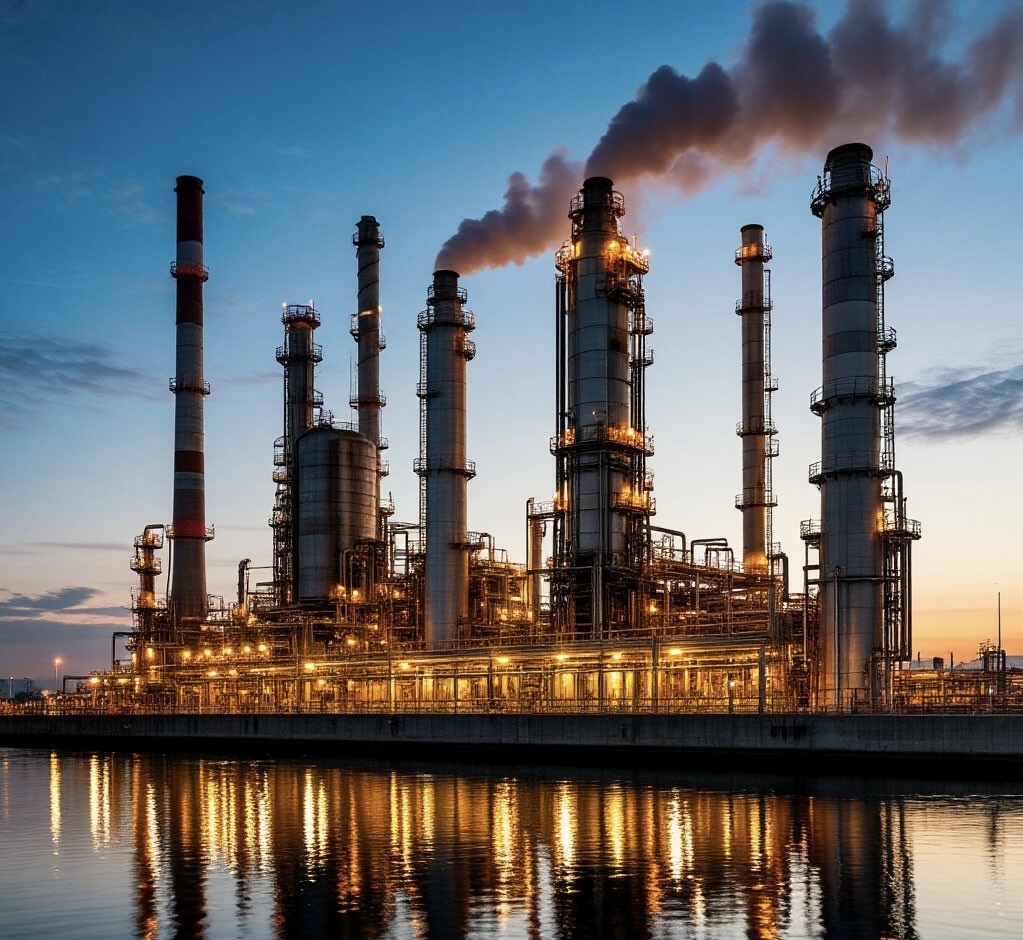
The modern chemical industry is characterized by the intensive use of highly corrosive media - acids, alkalis, chlorides, oxidizing agents, organic solvents. The reliability and durability of process equipment directly depend on the correct choice of construction materials. In such conditions, the use of corrosion-resistant steels is a necessary condition for ensuring industrial safety, minimizing operational risks and meeting standards.
What makes steel corrosion resistant?
Before moving on to classification and applications, it is important to understand what kind of steel becomes "stainless».
The main mechanism of stability is the formation of a passivating film that protects the metal from destruction. This film is formed due to alloying elements, primarily lame (Cr). When the chromium content exceeds 13%, a dense oxide film forms on the surface of the steel, which prevents further oxidation.
Main alloying elements:
- Chromium (Cr) - the main element that forms the passive film.
- Nickel (Ni) — improves ductility, corrosion resistance and resistance to low temperatures.
- Molybdenum (Mo) — increases resistance to pitting and crevice corrosion, especially in environments containing chlorides.
- Manganese (Mn) - replaces nickel in economical grades, but reduces ductility.
Why corrosion-resistant steels are important for the chemical industry
The use of corrosion-resistant steels in chemical production simultaneously solves several important problems:
- Protection from aggressive environments. Acids, alkalis, salts and other chemicals destroy most common construction materials. Stainless steels, thanks to the addition of alloying elements, allow you to safely work with concentrated acids (hydrochloric, sulfuric, nitric), alkalis, ammonia, heavy metal salts, and organic solvents.
- Increased equipment service life. Conventional carbon steels break down in a matter of months. Stainless steels last several times longer. This is critical in continuous production environments.
- Guaranteed security and fault tolerance. Leakage of acid or alkali due to corrosion can lead to fire, explosion, poisoning, pollution. The use of stainless steels reduces the risk of accidents, protects personnel and prevents environmental pollution.
- Reduced costs. The higher cost of corrosion-resistant steels pays off through increased equipment life and reduced repair and replacement costs.
- Compliance with technical standards. Many industry standards (GOST, ASTM, ISO) directly require the use of corrosion-resistant steels in aggressive environments.
Thus, the resistance of structural materials to chemical influences becomes not just an advantage, but a necessity.
Basic requirements for materials in the chemical industry
To operate successfully under chemical attack conditions, steels must simultaneously meet a number of requirements:
- Chemical and corrosion resistance. The material must retain its properties when in contact with acids, alkalis, salts and other active substances, as well as in mixed media at elevated temperatures and pressures.
- Mechanical strength. The material must have sufficient strength to withstand increased pressure, vibration, dynamic and static loads, including shock, vibration and thermal influences.
- Chemical inertness. Steels for the chemical industry must be resistant to reactions with substances with which they come into contact. This is especially important to prevent corrosion and material degradation.
- Heat resistance and heat resistance. Many processes in the chemical industry occur at temperatures above 400°C, which requires maintaining the properties of the material without structural degradation.
- Environmental safety. Materials must not emit toxic components during operation and disposal.
- Economic efficiency. When choosing a material, it is important to consider not only the purchase price, but also the total cost of ownership, including equipment life and maintenance costs.
These requirements form the criteria for selecting a specific steel grade for each technological process.
Types of corrosion-resistant steels and their characteristics
The variety of operating conditions has led to the creation of a large number of grades of stainless steels, which can be classified according to several criteria.
By structure:
- Austenitic steels - the most common and universal. Contain chromium (about 18%) and nickel (from 8 to 13%). They have high ductility, strength, and excellent weldability. They are used in reactors, pipelines, valves, heat exchangers, and vessels.
Examples: 12Kh18N9, 12Kh18N10T, 10Kh17N13M3T. - Martensitic steels - characterized by high hardness, strength and wear resistance. They are used for the manufacture of cutting tools, elastic elements, fittings and other parts operating under high loads.
Example: 20Kh13. - Ferritic steels - Cheaper than austenitic ones, but less resistant to acids. They weld well and are resistant to intergranular corrosion at moderate temperatures. They are used to make tanks, pipes, apparatus casings and other structures that are not subject to high mechanical loads.
- Two-phase (ferritic-martensitic) steels - combine the properties of ferritic and martensitic steels. They are used for the manufacture of equipment that requires high ductility and strength, as well as increased corrosion resistance (for example, when working with chlorinated media).
By main alloying elements:
- Chromium steels - contain chromium as the main alloying element, provide protection against corrosion due to the formation of a chromium oxide film on the surface.
- Chrome-nickel steels - The addition of nickel improves ductility, impact resistance and resistance to pitting.
- Chromium-manganese steels - economical option by replacing nickel with manganese. They are used where lower ductility and corrosion resistance are acceptable.
By purpose:
- General purpose corrosion resistant steels - used in various industries for the manufacture of parts operating in aggressive environments. For example, for pipes, vessels, fittings.
- Heat resistant steel - are able to work at high temperatures (over 600°C), maintaining their structure and properties.
- Heat-resistant steels — retain mechanical properties during long-term operation at high temperatures.
Application of corrosion-resistant steels in the chemical industry
Each type of steel finds its application depending on operating conditions.
Austenitic steels
Used for the production of equipment and pipelines in contact with aggressive chemicals such as acids, alkalis and salts.
Examples:
- production of reactors, heat exchangers, tanks for storing and processing chemicals;
- manufacturing of pipelines and other equipment for transporting acids and alkalis;
- creation of elements of pumping systems and fittings with high corrosion resistance.
Brands: 12Kh18N10T, 10Kh17N13M3T — have excellent resistance to intergranular corrosion.
Martensitic steels
Suitable for use under conditions of increased loads and wear due to high strength and hardness. In the chemical industry they are used for the manufacture of:
- cutting tools, pump blades, shafts and other products requiring high strength;
- springs and other wearing parts operating under dynamic loads;
- elements of equipment that are subjected to high mechanical loads and must maintain their properties during constant contact with aggressive environments.
Brand: 20Kh13 - Widely used due to its hardness and wear resistance.
Ferritic steels
They are characterized by good weldability and high ductility. Used for the production of welded structures and vessels that are not subject to high mechanical loads.
Application examples:
- welded chemical storage tanks;
- pipelines and vessels for moderately aggressive environments;
- equipment components for which high ductility and corrosion resistance are important.
Effective operation of chemical plants in aggressive environments requires a systematic approach to the selection of materials based on calculated and experimental data, standards and practical experience.
Corrosion-resistant materials produced by PZPS
The St. Petersburg Precision Alloys Plant offers a wide range of products, meeting the requirements of the chemical industry. The product line includes:
- Austenitic steels:
- 12Kh18N9 — general purpose stainless steel;
- 12Kh18N10T — resistant to intergranular corrosion, used in welded structures;
- 10Kh17N13M3T - alloy with the addition molybdenum for work in particularly aggressive environments.
- Martensitic steel:
- 20Kh13 - excellent combination of hardness and corrosion resistance, suitable for work under high loads.
- Special alloys:
- 40KKhNM — a precision alloy with specified elastic properties for parts with high requirements for accuracy and resistance to deformation;
- KhN78T - a heat-resistant nickel alloy that retains its properties at temperatures up to 1000°C.
PZPS produces products in the form of cold-rolled strip, which ensures high geometry accuracy and uniformity of properties. To order products, call +7 812 740–76–57 or leave application on the website. Our specialists will contact you and help you select the material that meets your production requirements.