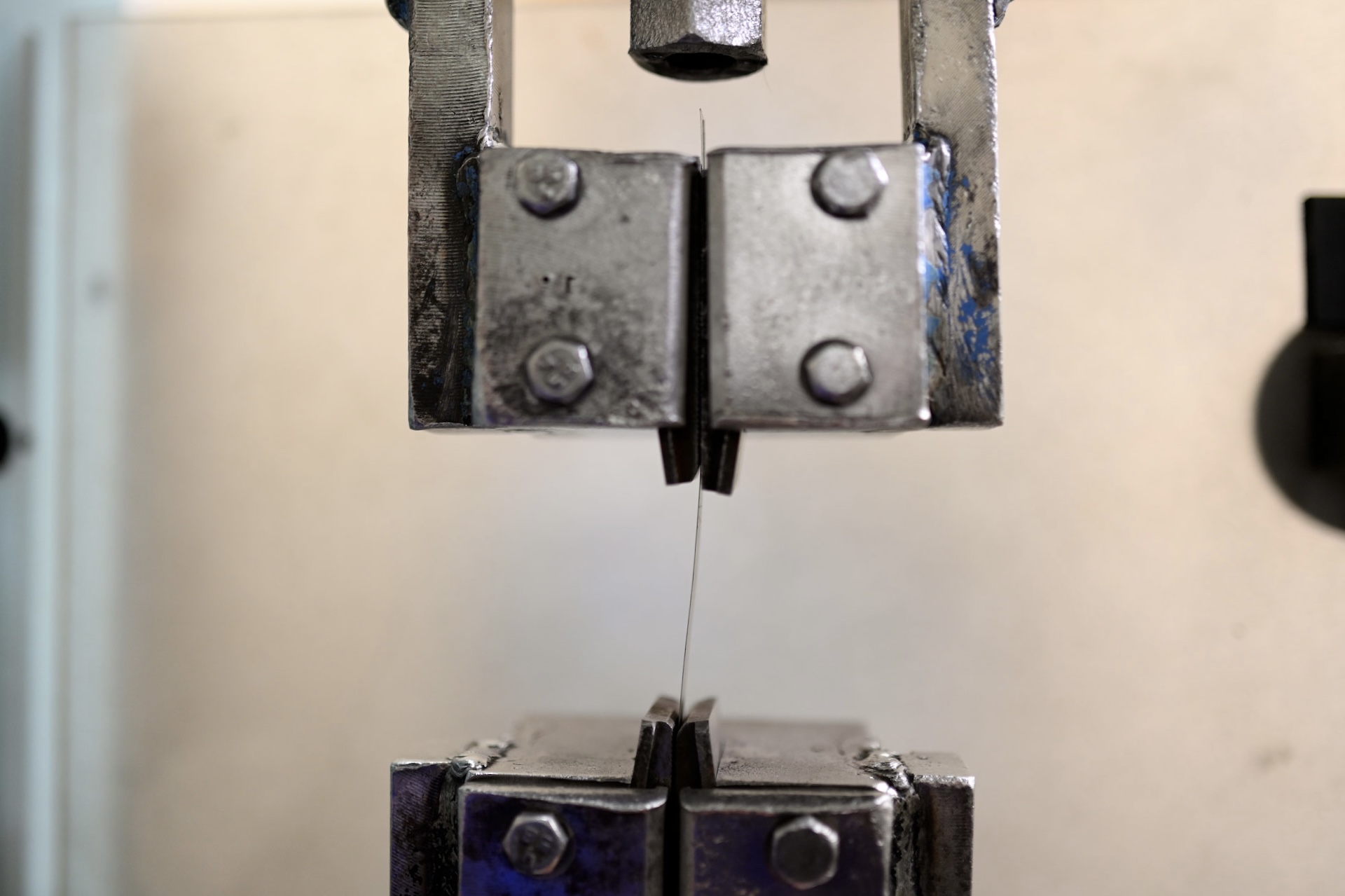
The ability of materials to withstand various loads without failure and deformation is determined by their mechanical properties. When choosing steels, precision alloys, concretes, brick, glass, and other materials for industrial and construction projects, engineers and designers are guided by exactly these characteristics, which makes it possible to guarantee reliability, durability, and safety of structures and devices.
The main mechanical properties are hardness, strength, plasticity, elasticity, and impact toughness. These parameters help select ideal materials for various tasks, ensuring strength and reliability in areas such as civil and industrial construction, space industry, aviation, and mechanical engineering. In this article we look at the main mechanical properties and their practical significance.
Hardness determines a material’s resistance to penetration by a harder body. This property is especially important for machine and mechanism parts, in particular gears and bearings, which must have high hardness to ensure long service life. Hardness measurement methods by Brinell, Rockwell, and Vickers help engineers choose materials with optimal characteristics.
From hardness measurement results one can judge the quality of heat treatment performed, as well as the degree of work hardening of metal as a result of cold rolling. Hardness values are especially important for carbon tool steels U8A and U10A.
Strength is a material’s ability to resist failure under external loads. There are various kinds of strength:
Strength is measured in megapascals (MPa) and assessed by the maximum load a material can withstand without failure.
Plasticity characterizes a material’s ability to deform without failure and restore shape after load removal. Main plasticity parameters:
Optimal plasticity values are especially important for strip of steels and alloys from which parts are later made by stamping:
High plasticity is important for materials subject to stamping, forging, and rolling.
Elasticity — a material’s ability to restore shape after deformation. The modulus of elasticity (Young’s modulus) shows the amount of deformation under a given stress. Imagine a spring: Young’s modulus will show how strongly it deforms under load and how quickly it recovers.
Elasticity is especially important for spring steels such as 60S2A, 65G, 70S2KhA, and precision alloys used in elastic elements, for example 40KKhNM, 36NKhTYu, 17KhNGT.
Impact toughness — a material’s ability to absorb and dissipate energy under sudden impact load. It characterizes how much energy a material can absorb before it cracks or fails. High impact toughness makes it possible to effectively resist failure on impact while retaining structural integrity and material functionality. This matters for structures and equipment operated where sudden mechanical effects are possible, for example in automobile parts, sports equipment, and protective coatings. Impact toughness is often measured with a pendulum impact tester, which makes it possible to assess material reliability and safety under extreme service conditions.
Modern technologies require steels and alloys able to withstand extreme service conditions. One of the key properties of such materials is heat strength, which makes it possible to retain mechanical properties and resist deformations under high temperatures. Heat-strength and heat-resistant materials are widely used in aviation, power generation, and chemical industries, where various structural elements are subject to significant temperature and mechanical loads.
Heat strength is determined by two main parameters:
Heat-strength alloys based on nickel, chromium, and molybdenum, as well as ceramic materials and composites that combine advantages of various components, have:
The Saint Petersburg Precision Alloys Plant produces high-quality strip of various heat-resistant and heat-strength materials such as 20Kh13 and KhN78T, and also produces foreign analogues Inconel 625, Inconel 718, and Inconel C-276. Thanks to exceptional mechanical characteristics and high reliability, these materials are widely used in various industries.
PZPS also provides services for developing new steels and alloys and their production technologies, and studies modern trends in the metallurgical industry. For cooperation contact us by the phones listed or leave a request on the website. Our specialists will answer in detail all questions about the plant’s products and services.