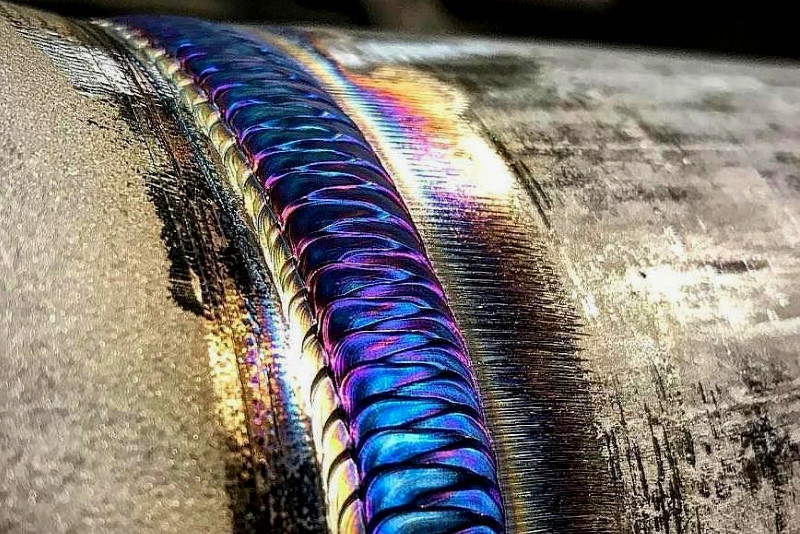
The quality of a welded joint is influenced not only by the performer’s experience, consumables, and equipment but also by the physical-chemical characteristics of the metal being welded.
Weldability of precision alloys and steels is divided into technological and physical. The former determines how the metal will react to welding and whether it will allow creating a continuous joint matching service requirements. The latter characterizes the material’s ability to form interatomic bonds at the boundary of the base and deposited metal.
How weldability of steels and precision alloys is assessed
Material weldability is a complex multifactor property that depends on the metal’s ability to enter chemical reactions, spatial arrangement of its atoms and ions, and amounts of carbon and other impurities.
Main assessment criteria:
- sensitivity to thermal action — indicates grain growth as well as structure changes of metal in the weld and the heat-affected zone of welding; affects strength and ductility of the finished structure or part;
- resistance to hot crack formation — indicates the ability of precision steels and alloys to withstand high temperatures without forming internal defects;
- tendency to form oxide films — depends on chemical activity of the metal; oxidizability at heating places hinders the welding process;
- resistance to cold crack formation — characterizes possible formation of welded joint defects when weld seams cool;
- tendency to form pores — may reduce strength of the continuous joint and hinder creating a hermetic seam.
Besides main indicators, the level of residual stresses and internal deformations of welded materials and products and quality of weld seam formation are also taken into account.
Which alloying additions affect weldability
Carbon plays a determining role in forming steel properties and the possibility of its processing, including welding. Alloys with low and medium C content weld well. Metals containing more than 0.35% of this chemical element require certain welding technologies. The higher the carbon content, the greater the probability of crack formation and other quenching structures in near-weld zones, and pores in the weld body.
There are also other alloying additions that affect material weldability:
- nickel — positively affects ductility, strength, and corrosion resistance, and also improves weldability; however when welding materials with high nickel content additional protection is needed preventing burnout of this chemical element on interaction with oxygen;
- chromium — although it raises corrosion resistance and strength characteristics of metals, at content above 0.3% it may cause appearance of rust at the welded joint place;
- manganese — when present above 1.8% makes steel stronger and harder, which leads to crack appearance on heating; if manganese content is more than 11%, electrodes with Mn must be used for welding;
- titanium — raises strength and impact toughness, improves material weldability, can soften quenching phenomena and prevent formation of chromium carbides, which is especially important when working with chromium-containing metals;
- silicon — at concentration from 0.8% to 1.5% may hinder welding by creating fluid oxides and promoting slagging of the seam;
- sulfur and phosphorus — when content of one of them is above 0.05% they cause formation of iron sulfide, which promotes crack appearance when the welded joint cools.
It is important to take into account content of these impurities and take corresponding measures when welding steel in order to ensure a quality and reliable joint.
Weldability groups of precision and other alloys
The main method of determining the degree of material weldability includes manufacturing samples on which beads are deposited. After mechanical, chemical, and heat treatment the obtained samples undergo ultrasonic and magnetic flaw detection, mechanical tests for bending, tension, hardness, and impact toughness, and other kinds of research. The results obtained are assigned to one of four groups:
- Good weldability — a material is considered well weldable if cracks do not form during welding. Examples of steels: 20880, 20895, 27KKh, 08KP, St20.
- Satisfactory weldability — cracks arise as a result of cooling the welded joint in an aqueous medium but are absent when cooling in air. Examples: 12KhN3A, 20KhGSA, 30KhM, St35.
- Limited weldability — this means that to prevent crack formation during welding it is necessary to preheat the material to 100–150°C and then cool it in air. Some steel grades: 12Kh18N9, 20Kh2N4MA, 30KhGSA, St45.
- Poor weldability — steels require special technological welding techniques and significantly higher preheating (to 300°C and above) to avoid crack formation, as well as heat treatment after creating the welded joint. Alloy examples: 50KhGA, 60S2A, U8A, St70.
Petersburg Plant of Precision Alloys releases steels with different weldability levels. If you want to learn more about the presented materials and also select the most suitable alloy for implementing your project, call us or leave requests on the website. Our engineers will contact you and answer all questions in detail.