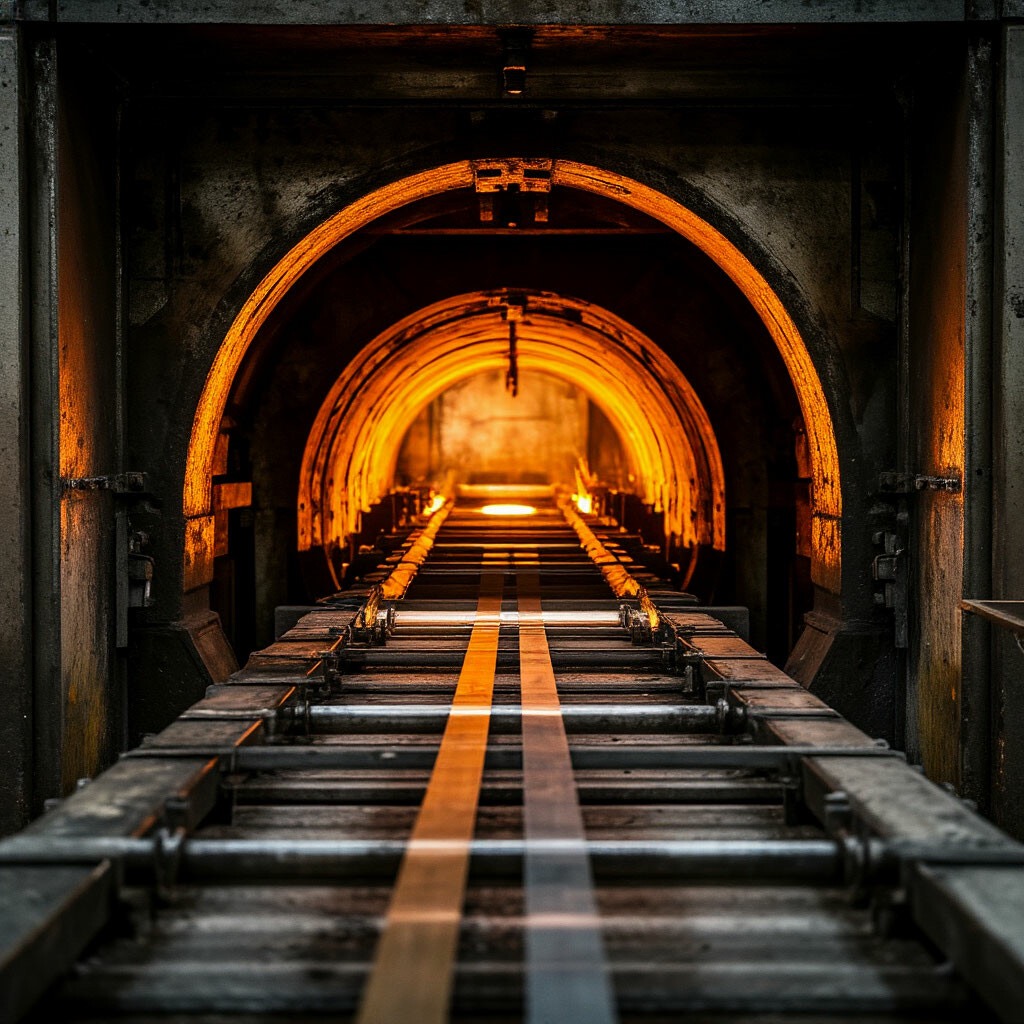
Heat treatment is not merely heating and cooling steel. It is controlled transformation of the metal’s internal structure on which product strength, plasticity, wear resistance, and service life depend. At this stage the metal as if “acquires character,” but the slightest deviation from the regime can distort the result. Overheating, cracks, warping, or loss of hardness often become the cause of costly scrap.
To avoid such consequences it is important to understand the nature of defects, their technological roots, and effective prevention paths. This article systematizes the main heat-treatment defects, analyzes causes of their occurrence, and examines modern engineering methods of combating them.
Heat-treatment defects are conventionally divided into several groups. Such classification makes it possible to identify fault causes faster and build a systemic quality-control strategy.
This group is related to changes in metal microstructure under incorrect temperature exposure. Main types include:
Structural defects directly determine product performance and require strict control of heating and cooling regimes.
The physics of the phenomenon is related to thermal stresses and phase transformations. Under non-uniform heating or cooling different part areas expand and contract unequally.
In practice deformations are especially critical for:
As a result, bending, twisting, ovality, and residual stresses are possible that worsen product accuracy and durability.
The surface is the first line of metal contact with the environment, so it is most vulnerable during heating.
Main types:
Surface defects not only worsen material properties but also increase the volume of subsequent machining.
Understanding causes is the key to preventing problems. It is convenient to divide them into technological and production factors.
The most common causes:
Even one incorrectly chosen parameter can start a chain of unwanted transformations in the metal structure.
These include:
Equipment stability and blank quality are as important as a correct process regime.
Modern metallurgy practice shows: preventing a defect is always cheaper than eliminating it. Proven technical solutions are given below.
To exclude overheating the following are used:
Eliminating consequences: overheating is corrected by normalizing or recrystallization annealing; burning is an irreversible defect — the product is to be scrapped.
A set of measures includes:
Correction: straightening in hot or cold state with subsequent stress relief.
To minimize oxidation the following are used:
Eliminating defects: a shallow decarburized layer is removed mechanically; with significant defect depth, carburizing with subsequent heat treatment is applied.
Main measures:
Correction: quench cracks are a scrap defect; only remelting is possible.
Engineering solutions:
Correction: repeated heat treatment with accelerated cooling.
Modern production is moving from “fighting defects” to preventing them. An effective system includes:
Such a strategy turns heat treatment into a fully controlled process.
Heat-treatment defects are not an inevitability but a consequence of disrupted technology. Preventing them requires a deep understanding of process physics, modern equipment, and production discipline. Where temperature is under control, metal fully reveals its potential.
The Saint Petersburg Precision Alloys Plant applies a full set of modern heat-treatment technologies. This makes it possible to produce cold-rolled strip with guaranteed stable mechanical properties and high surface finish.
At PZPS you can buy cold-rolled strip of:
Thanks to strict heat-treatment control, plant products stably meet requirements of aviation, instrumentation, and medical industries.