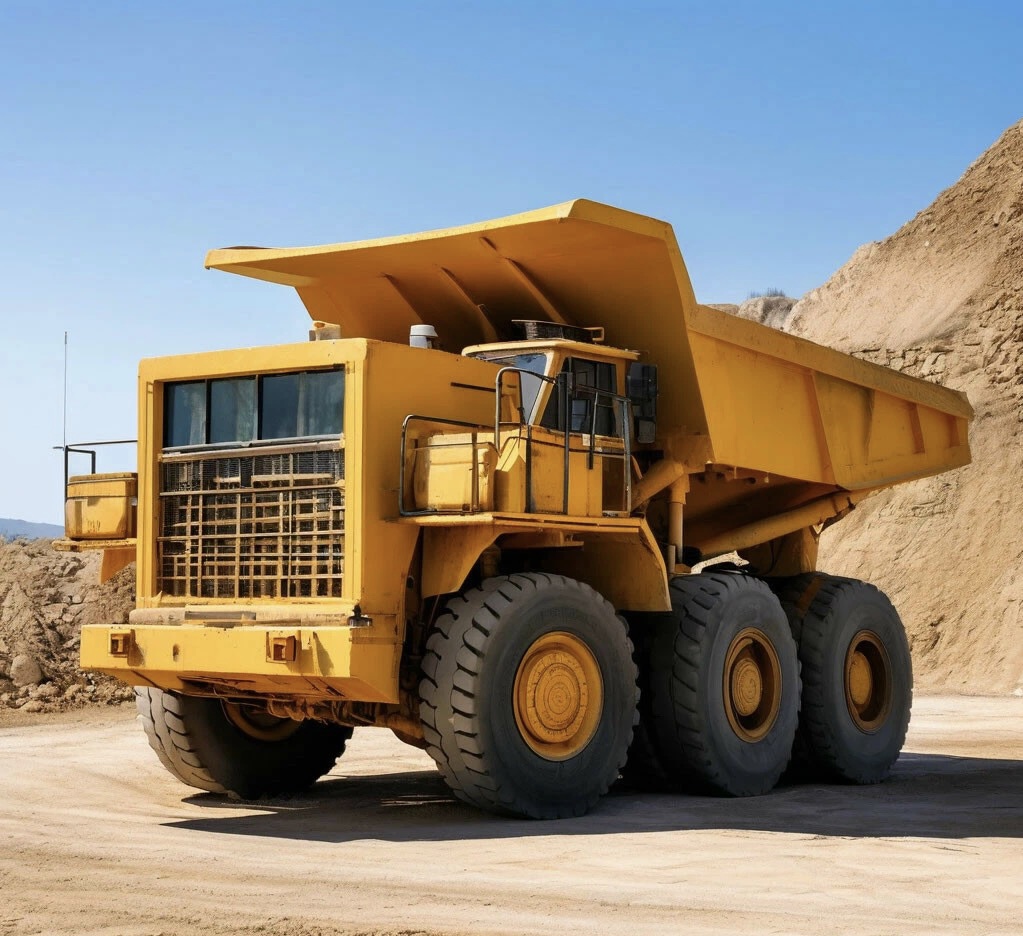
Mining, as one of the most important sectors of the economy, constantly seeks to introduce the latest technologies and materials to improve the efficiency and safety of its processes. Among the key materials that support this are precision alloys. These are high-quality alloys with controllable physical properties such as electrical resistivity, coercive force, magnetic permeability, and others. In this article we look at how precision alloys are used in mining — from surveying instruments to ore beneficiation equipment.
Geodetic and mine surveying work is an integral part of the mining industry. Specialized instruments are used for accurate measurement and control of geometric parameters of mine workings, quarries, and underground structures. These include levels, theodolites, total stations, GPS receivers, and laser scanners. All of them help surveyors do their work with high accuracy.
Main surveyors’ tools:
Using mine surveying instruments makes it possible to monitor the stability of quarry and dump slopes and perform other mining industry tasks.
To ensure measurement stability and accuracy in mine surveying instruments, the following precision alloys are widely used:
Using these alloys improves measurement accuracy, reliability, and instrument durability, which is especially important for mining safety.
In mining, excavators and bulldozers are widely used for ore extraction and transport. High accuracy and reliability of these machines’ hydraulic systems are achieved by using precision alloys in elements such as valves, pistons, and cylinders. Alloys 36NKhTYu and 40KKhNM are widely used to make these parts.
Alloys 36NKhTYu and 40KKhNM have high strength and elasticity, making them ideal for mining machines operating in harsh climates.
Numerous sensors and measuring systems are used to monitor various parameters in mining. Their manufacture requires precision materials with exact electrical and magnetic characteristics. One such group of materials is permalloys.
Permalloys (50N, 50NP, 79NM, 80NM, 81NMA) — a group of nickel–iron alloys with high magnetic permeability. Used for transformer cores, inductor coils, and other devices that require high sensitivity to magnetic fields.
Precision alloys play a key role in producing magnetic separators, whose operation is based on separating materials by magnetic properties.
In separator operation, a mineral mixture containing magnetic and non-magnetic particles is fed onto a moving belt or into a water stream. A powerful electromagnet or permanent magnet is located under the belt or under the water surface. Magnetic particles are attracted to the belt surface or rise in the water stream, while non-magnetic particles continue moving. Magnetic particles are then separated from the belt or captured from the water stream by special devices.
In manufacturing magnetic separators the following are used:
Using these alloys in magnetic separators ensures high separation accuracy, which significantly improves ore beneficiation efficiency.
Precision alloys occupy an important place in mining, ensuring high accuracy, reliability, and efficiency of various equipment and instruments. At PZPS you can purchase a wide range of precision alloys for various industries, including mining. Our plant also provides a full set of manufacturing services — from technology development to pilot and serial production. Contact us by phone at +7 (812) 740-76-74 or leave a request on the website. We will ensure high product quality for projects of any complexity and professional support at every stage of cooperation!