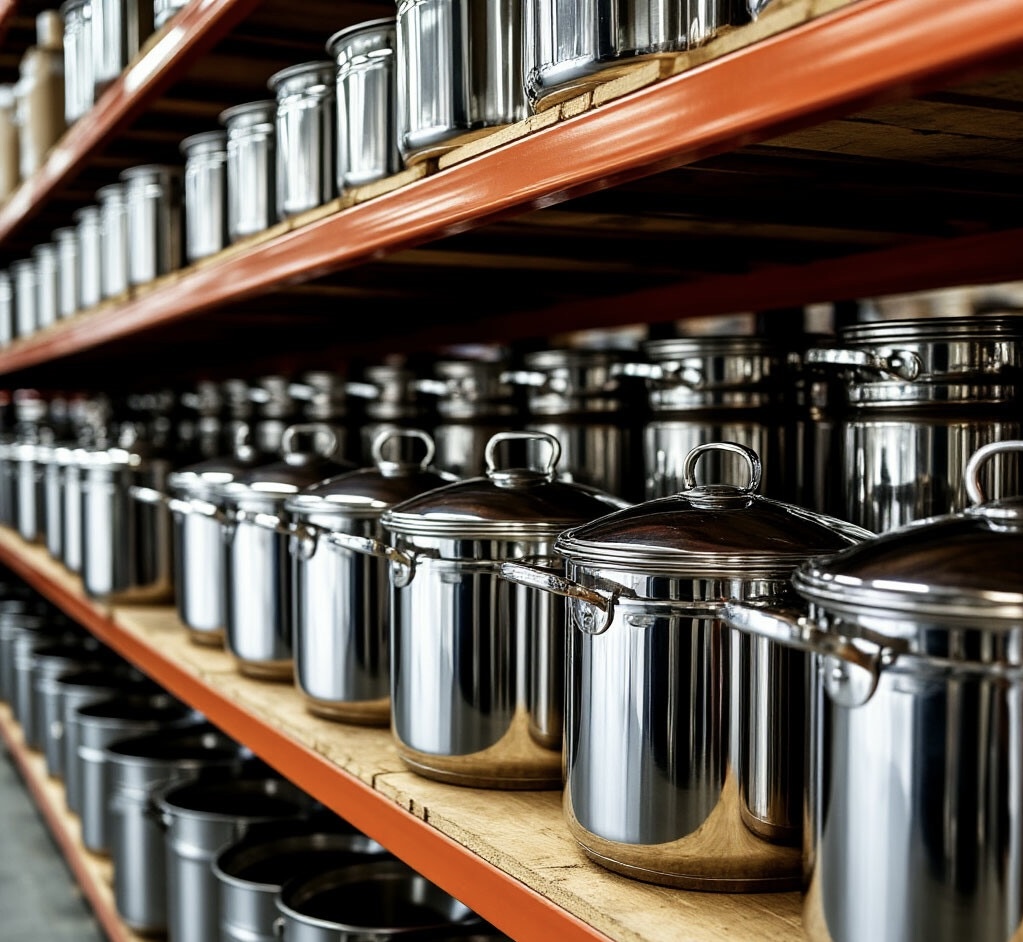
The primary material for equipment and tools used in food production is steel. High corrosion resistance, long service life, and compliance with sanitary requirements make it indispensable feedstock for food-industry enterprises. Let us consider the main advantages of using steel in this sector.
The smooth surface of steel makes it easy to clean and disinfect, which is especially important for meeting sanitary standards. Unlike porous materials, metallic materials do not absorb contamination and do not promote bacterial growth. In addition, food-grade alloys do not release harmful substances on contact with food products, which makes them safe to use.
On the surface of austenitic steels and other alloys with elevated nickel and chromium content, a protective oxide film forms that hinders corrosion. High corrosion resistance makes it possible to use such materials in high-humidity conditions and in contact with aggressive media (acids and alkalis) that are often found both in food products and in cleaning agents.
Thanks to high wear resistance, steel products are considered among the most durable. This is especially important for industrial equipment and tools that are subjected to significant loads and intensive use. Cutting mechanisms and conveyor systems made of quality steel serve for years and do not require replacement.
Steel is easy to process: it can be cut and welded, and cast and stamped products can be made from it. This allows manufacturers to create parts and tools of complex shape to tight tolerances, which is especially important for high-productivity equipment.
Stainless alloys retain their color and luster throughout the service life. An attractive appearance makes them popular materials for tableware and other kitchenware that must combine functionality and aesthetics.
In the food industry only certified alloys are used that have passed conformity assessment against domestic and international standards. This allows manufacturers to guarantee a high level of safety and reliability of finished products.
In the long term, steel is an economically advantageous material, regardless of initial cost, thanks to its durability and low operating costs. Unlike plastic and aluminum counterparts, steel products do not require frequent replacement and retain their service properties even under intensive use.
They have become widespread in food sectors thanks to resistance to various forms of corrosion and ease of maintenance. They are classified by microstructure:
Stainless steels are used to manufacture vessels for storage and transport of food products, pipelines, cutting equipment, and packaging and processing machines.
High-alloy grades usually contain such chemical elements as nickel, manganese, and molybdenum, which improve mechanical properties and corrosion resistance. To enhance service characteristics these steels are also subjected to additional heat treatment, in particular quenching and tempering.
High hardness and resistance to aggressive media have made these materials popular for equipment that experiences high loads in service. Alloy carbon steels are used to manufacture moving assemblies and mechanisms of conveyors, presses, and crushers.
For operation in extreme conditions various alloys are used, including:
Specialty alloys are used to manufacture heat exchangers, reactors, and equipment for high-temperature processing and operation in aggressive media.
Food-sector enterprises use not only alloy steels and specialty alloys. Equally popular in this industry are:
The choice of a specific steel type depends on service conditions, equipment requirements, and economic factors.
Using materials with insufficient corrosion resistance can lead to contamination of products with metals and their compounds. For example:
Therefore, when selecting materials for food equipment, kitchen utensils, and tools it is important to ensure that finished products comply with sanitary requirements and established quality and safety standards.
For this area austenitic, ferritic, and martensitic stainless steels are usually used; they offer ease of maintenance and elevated corrosion resistance. For products subjected to high mechanical loads, alloy carbon grades characterized by elevated hardness and strength are also used.
From stainless steel and alloy grades manufacturers make knives, grinders, mixers, dispensers, cutting and packaging conveyor mechanisms, packaging molds, and other products that must be hygienic and corrosion-resistant.
These products are made predominantly from stainless alloys, for example grades 12Kh18N9 and 12Kh18N10T. In addition, for individual parts where high corrosion resistance is not required, carbon steels may be used.
These materials are used to manufacture kitchen tools: knives, forks, spoons, ladles, graters, and other products that require high strength and durability. They are also used to produce pots, pans, baking sheets, and other vessels exposed to high temperatures and requiring corrosion resistance.
Corrosion- and heat-resistant steels and alloys are used in systems for transporting liquids and bulk products that require high hygiene and corrosion resistance. In addition, these materials are used in the manufacture of tanks, cisterns, vessels, and other containers that preserve product quality.
Petersburg Precision Alloys Plant offers a wide range of corrosion-resistant materials, including:
Using quality steels and alloys from PZPS ensures durability, safety, and efficiency of food equipment. Contact us for reliable solutions for your business.