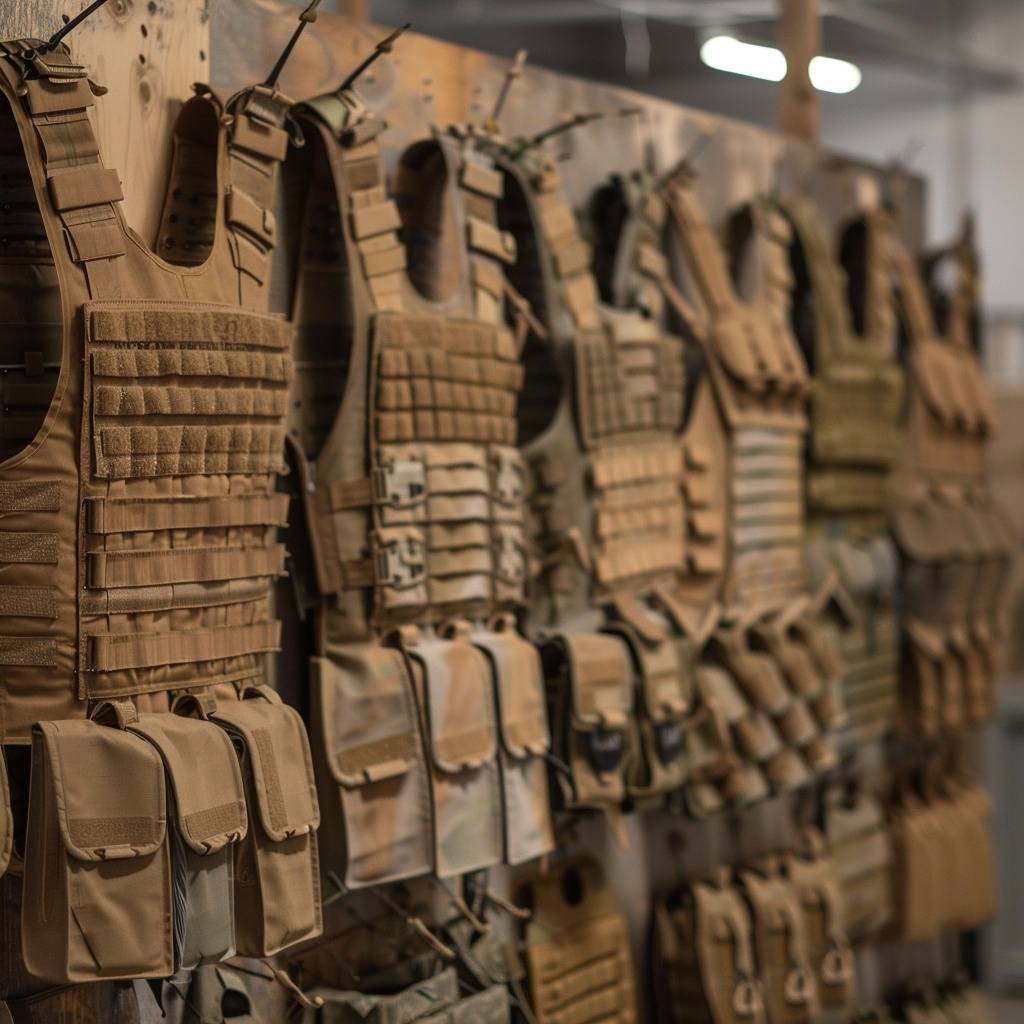
A bulletproof vest is a most important element of personal protection ensuring safety in the face of the threat of firearm and fragment wounds. Modern bulletproof vests consist of several layers of materials, and the main one is metal plates. They are manufactured from various alloys, each adapted to certain service conditions. At PZPS we have set up production of high-quality steel strip of grade 40Kh13 used to create plates matching the strictest safety requirements.
Requirements for metal plates for bulletproof vests
Strict requirements are imposed on metal plates for bulletproof vests that determine their effectiveness and reliability in field conditions:
- Corrosion resistance. Bulletproof vests are often used under elevated humidity conditions, therefore metal plates must be resistant to corrosion.
- Strength and hardness. They must withstand the effect of bullets, fragments, and other damaging elements without deformation and destruction.
- Lightness and flexibility. Metal plates must be relatively light and sufficiently flexible to ensure comfort and freedom of movement of the user.
- Conformity to protection standards. Metal plates must match the established GOST R 50744-95 class that determines their protection level, i.e. ability to stop bullets of various calibers and fragments.
- Compatibility with other materials. If a bulletproof vest consists of several material layers (for example metal plates and aramid fibers), then metal plates must combine well with these materials, ensuring overall integrity of the structure.
- Possibility of manufacturing complex shapes. To improve ergonomics and increase protection area, plates must readily undergo mechanical processing and forming. This makes it possible to create products of complex shape with account of anatomical features of a person.
- Cost. Cost of metal plates must be acceptable for mass production of bulletproof vests.
Metal plates for bulletproof vests must combine high strength, corrosion resistance, and lightness to ensure maximum protection level with minimal restrictions on user comfort.
Main materials used in bulletproof vests
Depending on protection level and requirements for weight and comfort, various materials are used in bulletproof vests:
- Steel. This is a traditional material for manufacturing bulletproof vests. Steel plates ensure high strength and hardness but may be heavy and less convenient for long wearing.
- Titanium. Titanium alloys ensure high strength at relatively low weight, which makes them an ideal material for manufacturing elite bulletproof vests. However high cost limits their mass application.
- Aluminum. Aluminum alloys are used in bulletproof vests thanks to their lightness. Although in strength they are inferior to steel and titanium alloys, they may be effective for protection from some kinds of firearms.
- Kevlar and other aramid fibers. These materials are often used in combination with metal plates to create composite armor. Aramid fibers ensure protection from fragments and bullets, and metal plates raise overall strength of the structure.
- Ceramics. Ceramic plates withstand hits of bullets and shrapnel. They can be used in combination with other materials to raise the protection level.
Choice of material for metal plates in bulletproof vests depends on the balance between protective properties, weight, comfort, and cost, which makes it possible to find an optimal solution for different tasks and service conditions.
Steel 40Kh13: advantages and disadvantages
One of the main materials for releasing armor plates is alloy 40Kh13. This steel grade is used in producing bulletproof vests in cases where elevated strength and corrosion resistance are required.
Among advantages of steel 40Kh13 one distinguishes:
- high strength and hardness ensuring protection from impacts and punctures;
- corrosion resistance thanks to which a bulletproof vest can be used under elevated humidity conditions;
- relatively low weight compared with other steel grades;
- lower cost compared with titanium alloys.
Despite the fact that alloy 40Kh13 is one of the widespread materials for manufacturing metal plates for bulletproof vests, it still has some disadvantages:
- lesser ability to stop bullets compared with other steel grades;
- higher cost compared with some other steels.
Production of strip from steel 40Kh13 at PZPS
Petersburg Plant of Precision Alloys produces strip from steel 40Kh13 of width from 3 to 250 mm and thickness from 0.005 to 4.0 mm.
PZPS offers not only high-quality metal strip for producing armor plates but also a wide range of steels and alloys for other application areas, as well as various production services including heat and mechanical treatment to ensure optimal characteristics and performance of your products. Our specialists are always ready to help you choose the needed material with account of all technical requirements and service conditions. Contact us at the listed phones or leave a request on the website — we will gladly help you in releasing products matching the highest standards of quality and safety.