Rolling production is an integral part of the metallurgical industry, creating a wide range of metal products, from sheets and bars to tubes and beams. At the heart of this type of production lies the rolling process, in which metal is subjected to compression and thinning between rotating rolls of rolling mills. In this article we will consider the main stages of rolling, features of rolling mills, and also the significance of rolling in the metallurgical industry.
Rolling production has a number of features that make it important and in demand in the metallurgical industry:
Rolling is the most widespread method of forming metal under pressure. The amount of rolled metal produced by metallurgical enterprises is one of the most important assessments of the development level of the metallurgical industry in a country.
The rolling process is sequential compression and stretching of metal using rotating rolls. It occurs on special devices called rolling mills. The rolling scheme is shown in Figure 1, where:

Figure 1 - Rolling scheme
First stage: blank
At the initial stage metal semi-finished products are fed between the rotating rolls of the mill. The blank may have various shapes and sizes, but during processing its length increases and its height decreases.
Second stage: rolling
Carried out by compressing metal between rotating rolls. This leads to a change in blank sizes and shape. The degree of reduction is determined by the formula (H−h)/H·100%.
Third stage: product formation
As a result of the rolling process the metal acquires a new shape and sizes. Depending on the rolling mill configuration and process parameters, various kinds of rolled products can be obtained: tubes, sheets, strips, bars, and others.
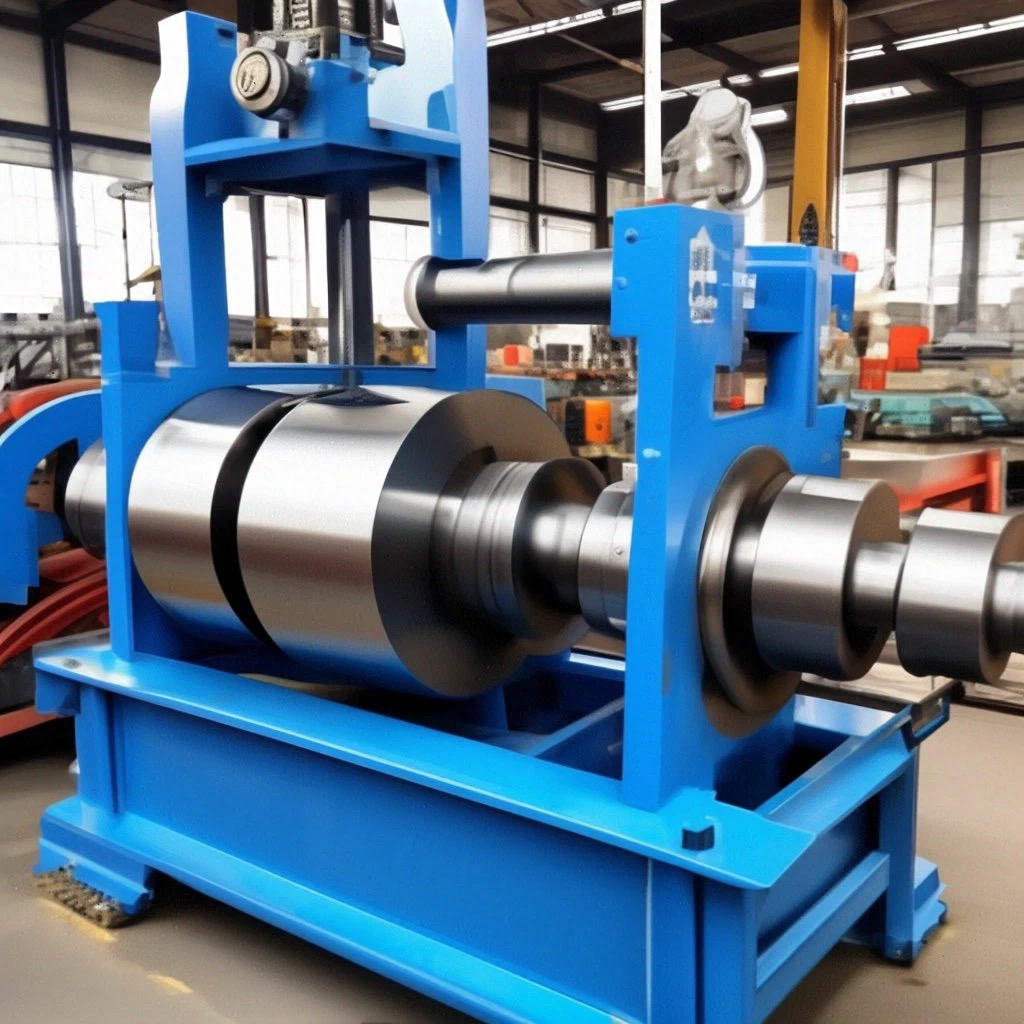
A device in which metal is crushed and thinned by rolling it between rotating rolls is called a stand. A rolling mill consists of several stands equipped with specialized auxiliary devices and connected to each other.
Rolling mills differ in design and purpose. The main types of rolling mills include:
Depending on the state in which the processed metal is, mills may be either hot or cold rolling.
PZPS is equipped with a unique strip hot-rolling mill with capacity up to 600 tonnes per month of hot-rolled strip of width from 80 mm to 250 mm and thickness from 2.0 mm to 4.0 mm. At the customer’s request hot-rolled strip up to 16 mm thick can be manufactured.
PZPS is also equipped with high-productivity cold-rolling mills with capacity up to 600 tonnes per month.
By sheet thickness one distinguishes:
At PZPS thin sheet rolled products can be obtained in the thickness needed by the customer. Production of especially thin (micron) strip up to 5 μm thick is also possible. For ordering and purchasing hot-rolled and cold-rolled strip and sheets of needed sizes, call +7 (812) 740–76–55 or leave requests on the website. Our employees will contact you and answer all questions in detail.