Electromagnetic radiation surrounds us everywhere - from radio signals to industrial equipment. In such conditions, protection against electromagnetic interference (EMI) becomes especially important. One of the most effective solutions remains the Faraday cage - a design whose operating principle was discovered back in the 19th century. Modern shielding technologies are being improved through the use of precision alloys with unique physical and chemical properties. In this material, we will consider the structure and principle of operation of a Faraday cage, the requirements for materials for its manufacture, and modern precision alloys that are ideal for these purposes.
Electromagnetic interference and the role of the Faraday cage
EMFs pose a serious threat to precision electronics, communication systems and critical equipment. Their sources can be any devices connected to the power supply and located nearby: laptops, magnetic stirrers, potentiostats, climate chambers, telephones, antennas, etc. Interference distorts the measurement results, introducing significant noise into the signal.
A Faraday cage effectively protects the interior from EMF due to its ability to block external electromagnetic fields. The effectiveness of shielding directly depends on the properties of materials - primarily their electrical conductivity, magnetic permeability and structural integrity.
History of invention: from experiment to industrial standard
The Faraday cage was created in 1836 by the outstanding English physicist Michael Faraday. While studying the effects of electricity and magnetism on conductive materials, he discovered that a closed metal shell effectively blocks external electromagnetic fields.
In one of Faraday's first experiments, he placed an electrometer inside a metal container that was subjected to an external electric field. Despite the applied voltage, the device inside did not detect any changes - this was the first scientific confirmation of the shielding effect.
Since then, the operating principle of the Faraday cage has become the basis of many technologies used in medicine, industry, radio electronics and defense.
Operating principle of a Faraday cage
A Faraday cage is a closed metal shell (solid or mesh) that shields the internal space from electromagnetic influence. Its work is based on the following physical principles:
- Induced surface charge. Under the influence of an external electric field, free charges on the surface are redistributed, creating a counter field that compensates for the external one.
- Eddy currents (Foucault currents). In alternating electromagnetic fields, closed currents arise in conductors, creating an opposite magnetic field, weakening or neutralizing the original one.
- Complete shielding of the internal volume. When the shell is continuous, the waves are reflected and absorbed without penetrating, making the inner zone electrically neutral.
Frequency dependence and design requirements
The effectiveness of shielding depends on the frequency of the external field:
- High frequency waves (radio, microwaves) are effectively blocked by metal shells.
- Low frequency and quasi-static magnetic fields require application soft magnetic materials with high magnetic permeability.
Basic design requirements:
- Shell must be completely closed - slots and holes sharply reduce shielding effectiveness, especially at frequencies above 100 MHz.
- Cell size The mesh must be significantly smaller than the wavelength of the radiation being screened.
- Material used must have good electrical conductivity.
A Faraday cage does not provide absolute protection. Slowly changing magnetic fields can partially penetrate inside - special soft magnetic materials are required to block them.
Application: from medicine to cybersecurity
Shielding technology is used in a variety of areas:
- Telecommunications and radio engineering. Protects sensitive equipment from external electromagnetic interference that can distort signals or cause device malfunctions. This is especially important in dense urban areas.
- Medicine. Protection of patients and medical personnel from exposure to electromagnetic radiation, for example, during MRI diagnostics. Shielding of rooms where high-precision diagnostics and treatment are carried out.
- Scientific research. Creating conditions free from external electromagnetic influences, which is necessary when conducting high-precision experiments in the field of physics, chemistry and other sciences.
- Industry. Protects production equipment from electromagnetic interference caused by high voltage equipment, robotic lines and induction heaters.
- Cybersecurity. Creation of shielded premises (SCIF - Sensitive Compartmented Information Facility) to protect against electronic espionage.
In the modern world, Faraday cages are finding new applications. In data centers, shielded rooms serve to protect servers from electromagnetic interference. IN automotive industry Shielding principles are used to protect electronic control systems.
Examples from everyday life
- Microwave ovens. The metal body and fine mesh on the door prevent microwave radiation from penetrating outside. This is why a cell phone loses signal if you place it in a switched off microwave.
- Aircraft. During the flight, they are regularly struck by lightning, but thanks to the aluminum body, passengers remain safe.
- Bank cards. Special wallets made of metallized fabric provide protection against unauthorized reading.
- Cables. Shielded wires use the principle of a Faraday cage to protect the signal from interference.
- Elevators. The lack of a mobile phone signal in an elevator occurs because the metal cabin blocks radio waves.
Cars are also Faraday cages. The metal body protects passengers not only from rain, but also from electromagnetic influences. True, modern cars with a lot of plastic and glass do not function as a Faraday cage as effectively as older models.
Materials: what is important for shielding
In order for a Faraday cage to perform its functions most effectively, the materials used for its manufacture must have a number of key properties:
- High electrical conductivity. Needed for reflection and distribution of Foucault currents. The most effective are copper, aluminum and alloys based on them.
- High magnetic permeability. Particularly important for low frequency and static magnetic fields.
- Mechanical strength and wear resistance. Relevant for installation, transportation and operation under conditions of vibration, shock loads or corrosive environments.
- Machinability. The material should be easy to cut, bend, weld and other types of mechanical processing without compromising its protective properties.
- Economic feasibility. The balance between cost and protective performance is important for mass production and large projects.
In general, a Faraday cage can be made from any material that can conduct electricity: chicken wire, metal sheets, or coils of wire. It can be of any shape, for example, in the form of a box, sphere or cylinder, and of any size, from very small to huge.
Precision alloys: reliable EMI protection
Precision alloys with high homogeneity, stable physical and mechanical properties and precise chemical composition are ideal for shielding, particularly in applications where high precision and reliability are required. Soft magnetic alloys with high magnetic permeability and low losses are especially effective.
Key Features:
- High magnetic permeability. Promotes effective shielding of electromagnetic fields.
- Low coercivity — the minimum magnetic field strength required to demagnetize the material. Ensures their rapid return to their original state after the cessation of exposure to the magnetic field.
- Low hysteresis losses (magnetization-demagnetization cycle). Important when used in dynamic systems with frequent changes in the magnetic field.
Popular brands of precision shielding alloys:
- 50N. Nickel-iron alloy (50% Fe, 50% Ni). It has high magnetic permeability and increased saturation induction. Suitable for shielding in radio engineering, microwave cameras and radiation safety systems.
- 79NM. Contains 79% nickel, 15% iron and 4% molybdenum. Provides effective shielding of weak alternating magnetic fields. Used in medical diagnostics, instrumentation and military electronics.
- 81NMA. Composition: 81% Ni, 10% Fe, 5% Mo, 3% Ti. The most sensitive alloy with maximum permeability and minimal response to mechanical and temperature influences. Ideal for high-precision screens in the space and nuclear industries.
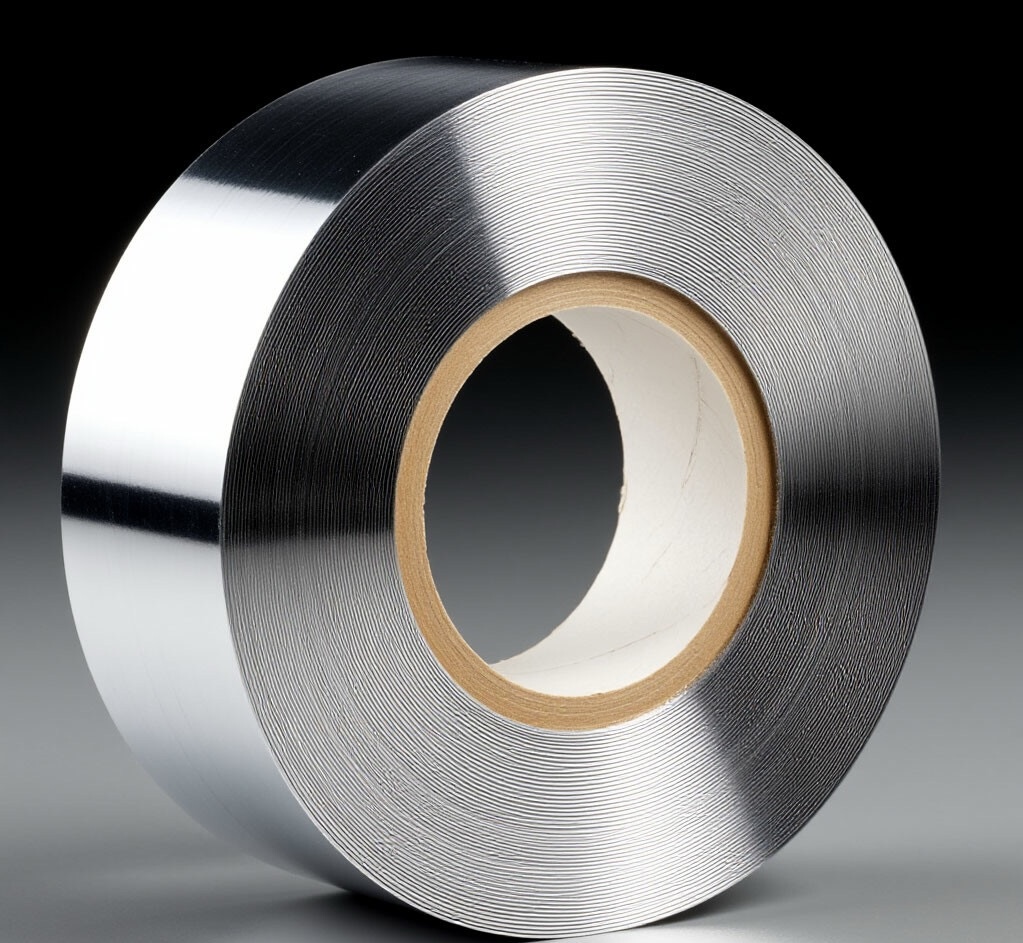
These alloys can be used in the form of thin cold-rolled strips, sheets or finished components, depending on the specific application.
Alloys produced by PZPS
The St. Petersburg Precision Alloys Plant offers cold-rolled strip made of soft magnetic alloys of grades 50N, 79NM, 81NMA, corresponding to GOST and TU. Products are characterized by:
- stable thickness;
- high magnetic characteristics;
- excellent ductility.
In addition, other special materials: heat-resistant, corrosion-resistant, structural steels and alloys for the nuclear and aerospace industries.
Works at factory research center (SRC), equipped with modern analytical, metallographic and measuring equipment. Thanks to its own research and development center, PZPS not only produces alloys according to individual customer requirements, but also participates in the creation of innovative solutions in the field of shielding and electronics.