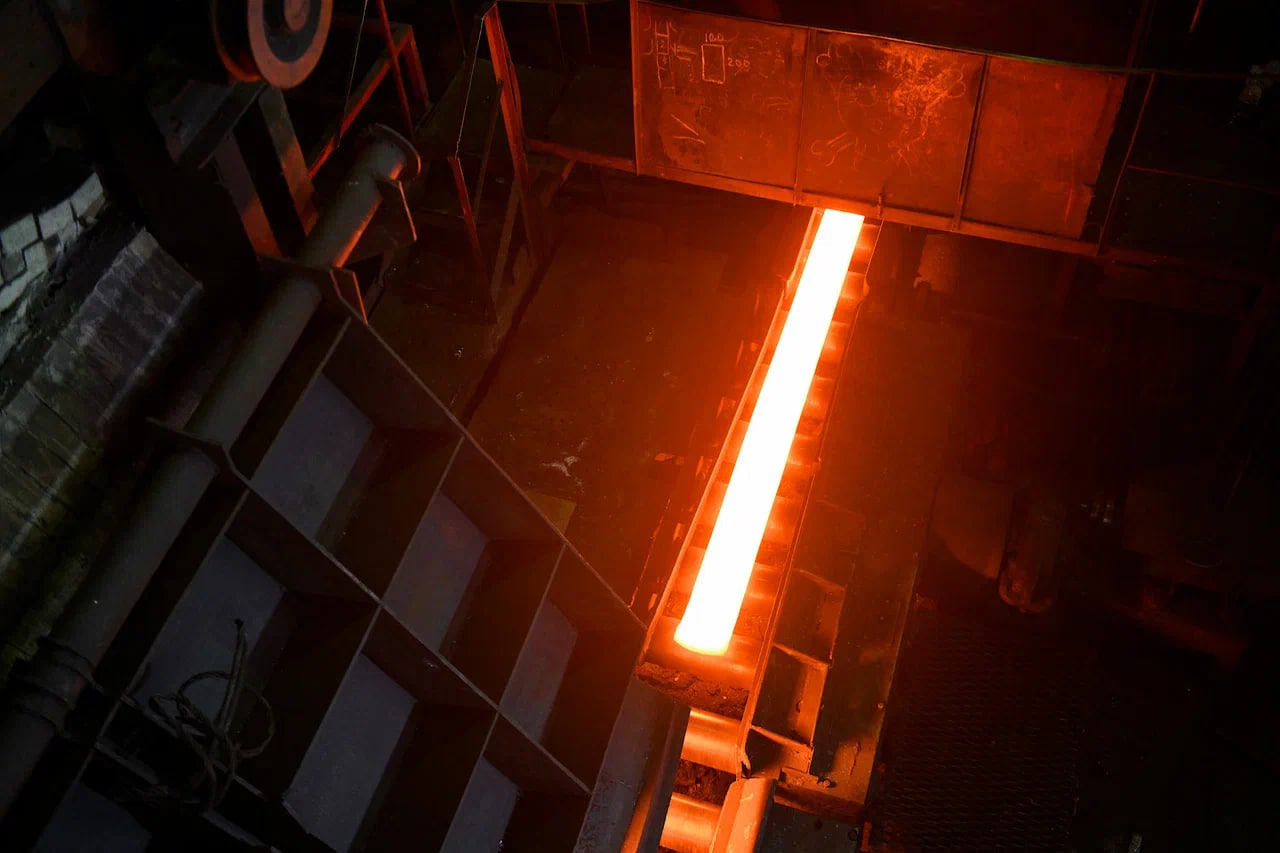
The main goal of anti-corrosion alloying is raising resistance of precision alloys to electrochemical corrosion. This is achieved by adding chromium, nickel, molybdenum, tungsten, titanium, silicon, and other chemical elements to the melted metal. Each of these alloying additions has a certain influence on physical-mechanical properties of steels and, depending on mass fraction and combination with other components, changes alloy structures.
Corrosion resistance characterizes the metal’s ability to withstand rusting in service in aggressive environments. At the same time the rate of corrosion spread depends directly on alloy chemical composition and its physical-mechanical characteristics, as well as on service conditions (working temperature range, mechanical loads, atmospheric factors, and more).
Ordinary (unalloyed) metals without a protective coating are destroyed by moisture and air fairly quickly. However when introducing alloying additions one can not only increase alloy corrosion resistance but also impart new physical-mechanical properties to it such as elevated strength, hardenability, reduced brittleness, heat resistance, etc.
Main alloying components applied to increase corrosion resistance of precision alloys are chromium and nickel. Aluminum, copper, titanium, niobium, etc. may also be used.
For example, steel grade 12Kh18N10T belongs to high-alloyed chromium-nickel alloys and, thanks to the combination of chemical elements in the composition, possesses elevated corrosion resistance. However each of the added components affects only certain anti-corrosion qualities of the metal:
Overall, anti-corrosion alloying may pursue two goals — raising corrosion resistance or converting dangerous local corrosion into less problematic general corrosion. In the first case such chemical elements as chromium, nickel, molybdenum, silicon, and copper are added; in the second — titanium, manganese, tantalum, niobium. In addition, some corrosion-resistant alloys such as the above steel 12Kh18N10T, as well as 12Kh18N9 and 12Kh18N9SMR, have simultaneous protection from both kinds of metal structure destruction. This is achieved by adding several alloying components affecting different anti-corrosion properties of materials.
Alloying of metals may be performed by one of two methods: bulk or surface. In the first case introduction of useful chemical elements into the entire volume of the melted alloy is provided; in the second — only into its surface layer to a depth of not more than 1–2 mm.
The main method of bulk alloying is melting in crucible, induction, arc, plasma, and other furnaces of the base metal with alloying components. However with this method large losses of active chemical elements such as titanium, molybdenum, chromium, etc. are possible. To reduce losses of useful additions master alloys are used — various components making it possible to make the metal melting process more efficient. In nickel alloys aluminum, manganese, zirconium, or zinc act as master alloys.
Surface alloying provides for diffusion saturation of the outer metal layer during its heat treatment (in liquid or gas phase). There is also a solid-phase method consisting in applying alloying components as a layer of required thickness and its subsequent melting to form a new alloy on the surface of the base metal.
The high degree of resistance of alloyed steels to various kinds of corrosion is due to interaction of added chemical elements with external factors. For example, when chromium or nickel is present in the alloy, these elements react with the environment, as a result of which an oxide layer forms on the metal surface that prevents further destruction of steel. Such a surface oxide film acts as a barrier preventing penetration of moisture or oxygen molecules deep into the material. At the same time, when scratches or chips form, it restores very quickly, which does not allow rust to appear at the defect place of the steel surface.
Petersburg Plant of Precision Alloys releases alloyed metals both in accordance with GOSTs and to customer technical specifications. Contact us and we will help select steel that will be the best solution for implementing your project.