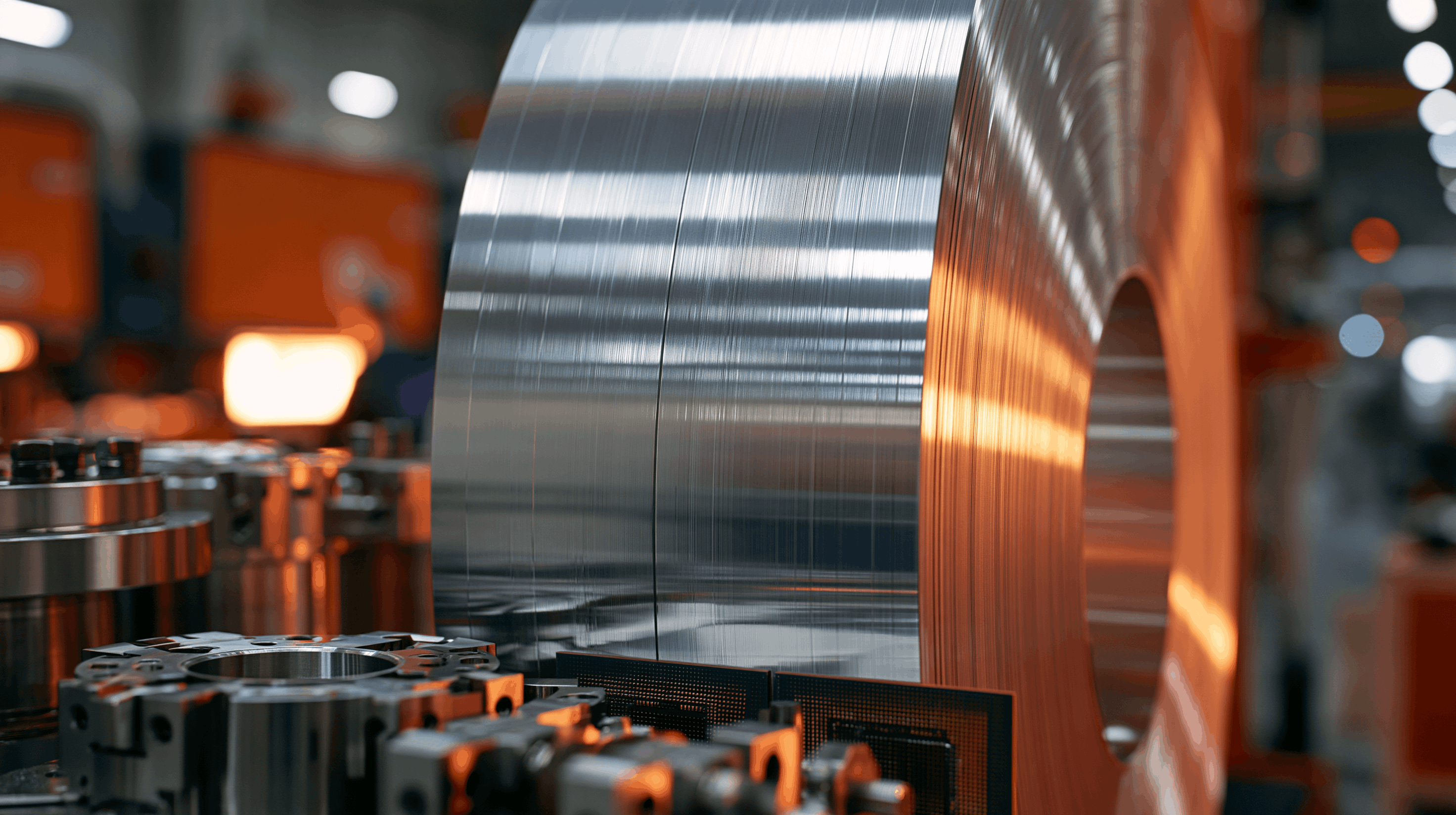
We are pleased to announce that strip produced at PZPS is successfully used as a substrate for second-generation high-temperature superconductors (HTS-2). This is a significant achievement in materials science and technology that underscores our leadership and innovative potential.
Second-generation high-temperature superconductors (HTS-2) are materials able to conduct electric current with minimal resistance at temperatures above −243°C. These complex compounds were discovered in 1986, marking significant progress in physics and materials science. Since then scientists have actively studied these materials and tried to improve their properties.
HTS-2 differ from traditional low-temperature superconductors in the ability to operate at higher temperatures, which makes them much more practical for use in various devices and systems. They are widely used in creating powerful electromagnets for particle accelerators and magnetic resonance imagers, as well as in developing new types of electric motors and generators.
However, despite all advantages, HTS-2 are still at the development stage and require further study and improvement. Scientists work on raising their stability, strength, and other characteristics to make them more accessible and effective for a wide range of applications.
At present research is underway aimed at improving HTS-2 properties, for example raising the critical temperature and improving mechanical strength and ductility. This research is aimed at expanding possibilities for applying HTS-2 in various fields such as energy, transport, medicine, and others.
Heat-resistant and heat-proof materials are used to produce HTS-2 substrates for several reasons:
Overall, using heat-resistant materials in HTS-2 production ensures reliability, durability, and efficiency of superconductors operating at high temperatures and under complex service conditions.
At PZPS a technology was developed and introduced for producing heat-resistant and heat-proof strips analogous to foreign alloys Inconel 625, Inconel 718, and Inconel C-276. After successfully creating a pilot batch of 0.1 mm thick strip with a high surface finish class, we plan to move to releasing industrial product batches. Such a technological breakthrough became possible thanks to the work of the research center operating on the basis of our plant and conducting broad-profile research and development in modern materials.
The PZPS RDC studies new trends in metallurgy and improves technological processes. We finance innovative ideas and actively involve young specialists, teams, and companies in cooperation. The main areas of the center’s activity include:
We invite all interested enterprises and organizations, as well as startups and young specialists, to cooperate! We are open to new partnerships and ready to provide high-quality materials and technological solutions for your projects. Contact us to discuss cooperation opportunities and start joint projects. We are confident that our cooperation will bring significant benefits and become the basis for new achievements and innovations.