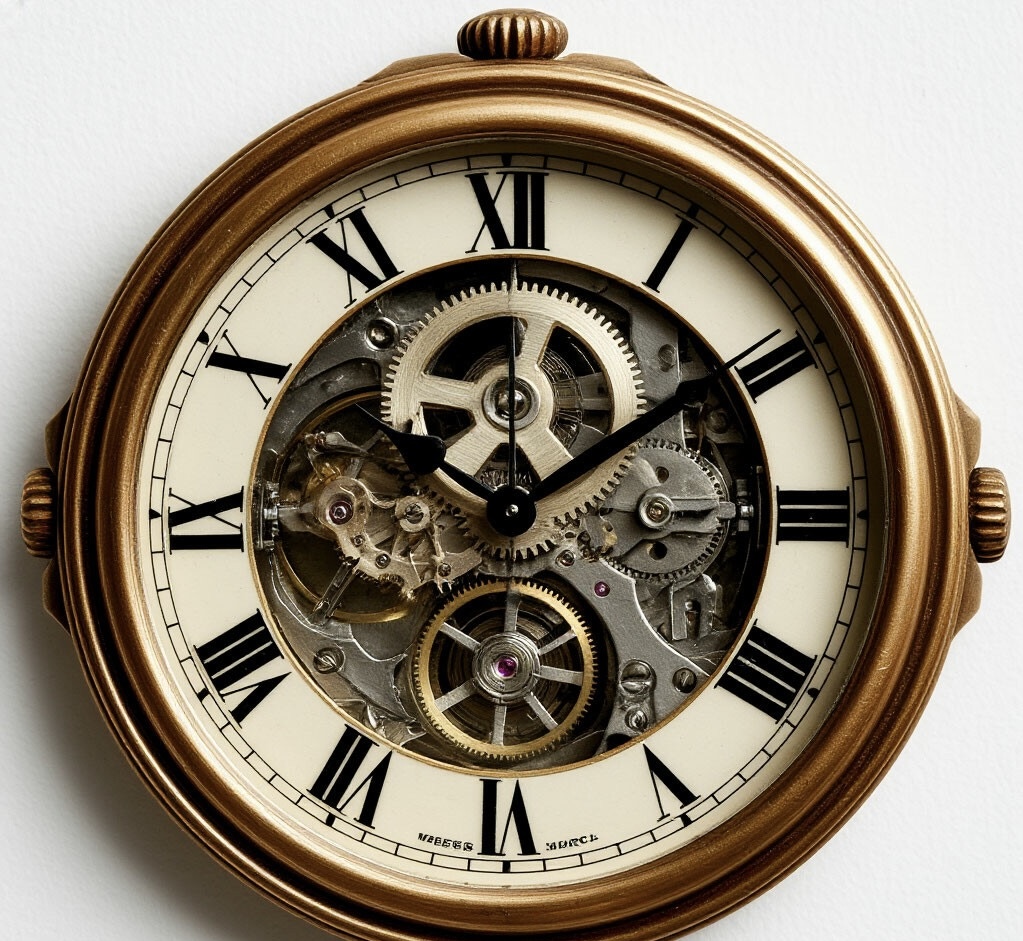
Accuracy is one of the key parameters determining the quality and reliability of a watch movement. It affects device functionality, durability, and brand reputation. Here are several aspects underscoring the importance of accuracy:
- Functionality and reliability — rate accuracy guarantees that the watch will show the correct time. Even minor deviations accumulate over time and lead to noticeable time display errors.
- Movement durability — precise manufacture of watch components contributes to their smooth operation, which reduces part wear and extends movement service life.
- Compliance with standards — watch accuracy must match established standards and norms, which is especially important for certifications and international recognition.
- Aesthetic perception — smooth second-hand motion and accurate time display give watches elegance and appeal.
High accuracy combined with quality materials makes mechanical watches not only a stylish accessory but also a reliable timekeeping instrument.
The role of materials in ensuring watch rate accuracy
Materials used play an important role in ensuring stable watch movement operation. Correct alloy selection helps improve watch functional characteristics and durability.
Main material requirements:
- Dimensional stability — materials must retain part geometry under temperature and humidity change. This prevents component deformation and ensures precise interaction of movement parts.
- Resistance to corrosion and oxidation — environmental effects, including moisture and air, must not lead to destruction or change of material properties. Using materials resistant to corrosion and oxidation helps preserve accuracy and reliability of watch movements for a long time.
- Mechanical strength and wear resistance — some watch movement elements, in particular springs, are subject to constant mechanical loads. Materials with high strength and wear resistance ensure long service life and rate accuracy.
- Resistance to magnetic effects — magnetic fields can affect watch movement operation, especially the balance and hairspring. Using materials resistant to magnetic effects helps preserve rate accuracy.
Accuracy of watch movement operation and correct material selection are interrelated aspects that determine watch quality, reliability, and durability.
Structure of a spring watch movement
A spring watch movement is a complex system consisting of many parts, each performing its role in exact time measurement.
The watch movement consists of several main components:
- Energy source — the mainspring — an important element that stores energy when the watch is wound and then gradually releases it, ensuring movement operation. The spring is in a barrel that rotates and transfers energy to the gear train.
- Gear train — includes: center wheel — ensures motion of hour and minute hands;
- seconds wheel — controls motion of the second hand;
- toothed wheels and pinions — transfer motion from the mainspring to various parts of the movement.
Balance and hairspring — an oscillatory system that regulates the watch rate. The balance is a heavy wheel that swings back and forth at a certain frequency. The hairspring is attached to the balance and ensures constant oscillation frequency, making it possible to measure time accurately.Escapement — a device that controls gear-train motion, allowing it to move in small steps. The escapement interacts with the balance and hairspring, ensuring exact, even hand motion.Pallets — components of the escapement that interact with the escape wheel and ensure balance motion.Shock-protection system. Protects the movement from external effects such as impacts and vibration.Lubrication system — special lubricants are used to ensure smooth, accurate motion of all moving parts of the movement.When the mainspring unwinds, it drives the gear train, which in turn transfers motion to the balance. The balance oscillates at a certain frequency controlled by the hairspring, allowing the escapement to count time accurately and move the hands on the dial.
Properties of precision alloys important for watch movements
Precision alloys have special properties that make them indispensable in producing watch movements. They ensure high accuracy and reliability of movement operation, as well as resistance to external effects.
Main properties of materials for watch movements:
- High elasticity — allows alloys to retain shape and recover after deformation. This property is important for watch movements because they are subject to constant loads and must retain accuracy.
- Stability of elastic properties — elastic properties of precision alloys must remain stable over a wide range of temperatures and service conditions. This ensures reliable watch movement operation under various service conditions.
- High strength and hardness — allows precision alloys to withstand large loads and minimize part wear. This is important for watch movements that must work for a long time without loss of accuracy.
Using precision alloys makes it possible to significantly raise watch movement quality, making them more accurate and durable.
Precision alloy 40KKhNM
One of the most sought-after alloys in producing watch movements is 40KKhNM. It has a number of unique characteristics:
- high strength and elasticity;
- property stability from −50°C to +400°C;
- corrosion resistance under high humidity;
- elevated wear resistance;
- excellent antimagnetic properties.
Thanks to these characteristics, alloy 40KKhNM is used to make mainsprings and other elastic watch elements where accuracy and reliability matter. To increase strength the material undergoes preliminary heat treatment (thermofixation) at 300–600°C.
Precision alloys produced by PZPS
PZPS offers a wide range of cold-rolled strip of precision alloys. Among them are alloys:
- with specified elastic properties 17KhNGT, 36NKhTYu, 40KKhNM;
- soft magnetic 27KKh, 49K2FA-VI, 50N, 50NP, 79NM, 80NM, 81NMA;
- with high electrical resistivity Kh15N60N, Kh20N80N, Kh15Yu5, Kh23Yu5, Kh23Yu5T;
- with specified thermal expansion coefficient 29NK, 33NK, 36N, 42N.
PZPS products meet international quality standards, ensuring durability and reliability of watch movements and other precision instruments. For cooperation contact the sales department. Our specialists will answer questions in detail and select material strictly matching your production requirements.