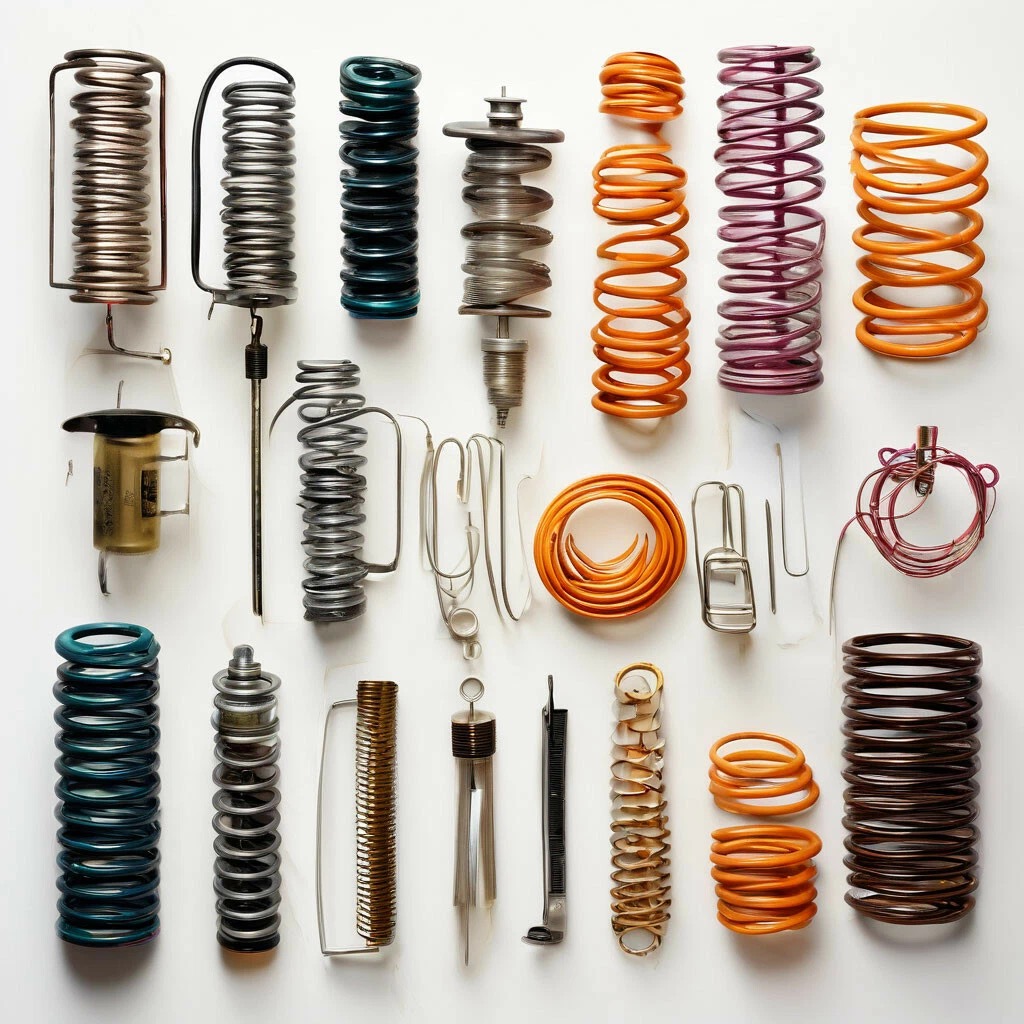
Elastic elements such as leaf springs, coil springs, and diaphragms are an integral part of many mechanisms and devices used across industries from automotive and mechanical engineering to aviation and medicine. Their main function is to absorb energy, withstand load, and return to the original shape after deformation is removed. These elements are subject to significant mechanical and sometimes thermal effects, which places high requirements on the materials from which they are made.
Main properties of steels and alloys for elastic elements
To ensure optimal operation of elastic elements, several key properties of the materials from which they are made must be considered:
- Strength — the ability to withstand load without failure. It depends on the steel’s chemical composition and the structure obtained as a result of heat treatment.
- Elasticity — the ability to return to the original shape after load removal. High elasticity is achieved thanks to optimal composition and special heat treatment.
- Plasticity — the ability to deform without failure. Provides flexibility of springs and diaphragms, allowing them to withstand repeated deformations without damage.
- Corrosion resistance — the ability to resist corrosion in various environments. This is especially important for critical elastic elements used in elevated humidity or under chemical exposure.
- Hardness — the ability to resist indentation by a harder body. High surface hardness ensures wear resistance and durability of elements, which matters for leaf springs and coil springs operating under high mechanical stresses.
- Heat resistance — the ability to retain original characteristics when working temperature rises significantly. Heat-resistant steels are used for springs subject to heating, for example in aviation and space technology.
- Impact toughness — the ability to absorb energy on impact. Tough steels ensure safety and reliability of elastic elements, which is critical for automotive and mechanical engineering industries.
These properties make steels and alloys indispensable for various service conditions and help them perform their functions in the best way.
Types of steels and alloys for producing elastic elements
There are several types of steels and alloys used to make elastic elements, each with unique characteristics:
- Carbon steels — have good strength and elasticity but low corrosion resistance. Used for elastic elements with moderate property requirements: steel 70 — used in producing elastic elements that require high wear resistance and elevated strength properties.
- Alloy steels — contain additions of chromium, nickel, molybdenum, and other elements that improve hardenability and thus strength and hardness: 65G — used for wear-resistant elastic elements not subject to impact loads in service;
- 60S2A — silicon alloying significantly increases strength properties, allowing this alloy to be used for heavily loaded springs;
- 70S2KhA — a high-carbon steel alloyed with silicon and chromium, used for clock-mechanism springs as well as large critical springs.
- Stainless steels — resist corrosion but cost more. Used in aggressive environments and elevated humidity: 12Kh18N9SMR — a corrosion-resistant heat-strength austenitic steel whose springs can be used under fairly severe service conditions.
- Special and precision alloys — developed for specific service conditions and have unique properties such as heat resistance, wear resistance, etc.: 17KhNGT — the material base is iron, with chromium, nickel, manganese, and titanium as alloying additions. Thanks to this the material can be used for elastic sensing elements and spring parts of general and special purpose operating at temperatures up to 250℃.
- 36NKhTYu — another iron-based alloy; high chromium and nickel content makes it possible to make elastic sensing elements operating at temperatures up to 250℃.
- 40KKhNM — an optimally selected chemical composition and a certain ratio of cobalt, nickel, chromium, molybdenum, and iron allow this alloy to be used in clock-mechanism springs and coiled cylindrical springs operating at temperatures up to 400℃. In addition, some surgical instruments and medical needles are made from the strip. Interesting fact: a spring of this alloy melted at PZPS is used in the famous Peacock clock at the Hermitage.
Properties of these materials can differ substantially, making it possible to choose the most suitable alloy for specific service conditions of elastic elements.
Application of leaf springs, coil springs, and diaphragms
Elastic elements find wide use in various industries where their unique properties as well as elevated reliability and durability matter:
- automotive industry — suspension leaf springs, damper springs, diaphragms for engine control systems;
- mechanical engineering — springs for mechanisms, diaphragms for pressure sensors, leaf springs for heavy equipment;
- aviation and space technology — landing-gear springs, diaphragms for fuel tanks, leaf springs for wings and fuselage;
- medical equipment — springs for surgical instruments, diaphragms for blood filters;
- instrumentation — clock springs, diaphragms for microphones and speakers, pressure gauges, leaf springs for optical instruments.
Thus, material selection for elastic elements depends on specific requirements for strength, elasticity, plasticity, hardness, corrosion resistance, heat resistance, and impact toughness.
PZPS offers a wide range of steels and alloys for producing elastic elements. We ensure high product quality thanks to modern technologies and strict quality control at all production stages. We also provide various manufacturing services, including heat and mechanical treatment, to guarantee optimal characteristics and high performance of your elastic elements. Call the numbers listed or leave a request on the website. Our specialists will help you choose the most suitable material, taking into account all technical requirements and service conditions of your products.