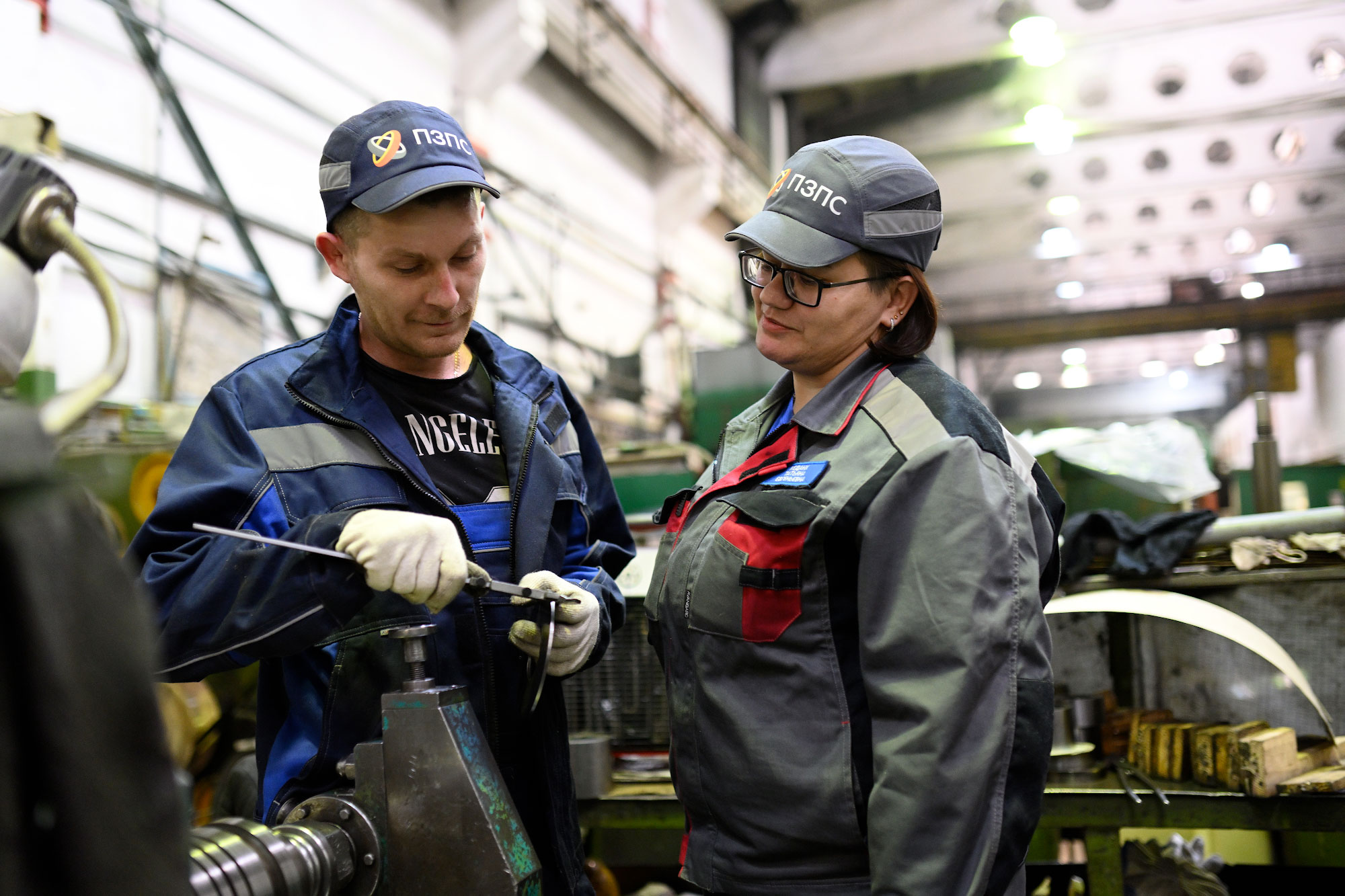
PZPS continues to improve the product quality assurance system. Within the advanced training program, controllers of the technical control department (QCD) underwent training on the basis of the company’s own training and methodological center. The program was aimed at deepening professional knowledge and practical skills of specialists, which directly contributes to strengthening the enterprise’s positions on the market of precision alloys and special steels.
What the technical control department does
The QCD at a metallurgical enterprise takes a direct part in ensuring quality of products released. Main tasks of the department:
- Checking raw materials and materials arriving at the enterprise for conformity to established standards. Controllers analyze chemical composition, mechanical properties, and other characteristics.
- Monitoring observance of technological parameters of production processes: melting, forging, rolling, heat treatment. They use visual inspection, spectrometry, X-ray fluorescence analysis, and other modern methods.
- Testing finished products for conformity to GOST, technical specifications, standards, and customer requirements. Depending on purpose and characteristics of rolled metal, mechanical, physical, corrosion, and other tests are conducted.
- Documenting quality check results — keeping protocols, acts, and reports that make it possible to trace product history and analyze quality trends.
Effective QCD work reduces the probability of releasing rejects, minimizes costs, and helps release products fully matching current standards and customer requirements.
QCD controller training program at the PZPS training and methodological center
During the advanced training course QCD controllers deepened their knowledge in the following key areas:
- Types of rolled metal defects — employees studied causes of cracks, pores, deformations, residual stresses, foreign inclusions, and other product nonconformities to specified requirements. Became familiar with methods of detecting them and classification.
- Methods and kinds of quality control — studied in theory and learned to apply in practice methods of visual, measuring, ultrasonic, magnetic, and capillary control.
- Metallurgical terminology — studied main terms and concepts from the field of materials science and metallurgy to raise the level of professional communication between controllers and production divisions.
- PZPS quality management system (QMS) — became familiar with principles and mechanisms of QMS work, documentation rules, product requirements, and control procedures.
The training program was aimed at raising controller competencies, which allowed them to perform tasks more effectively and contribute to releasing high-quality materials.
Role of the QCD in the PZPS quality system
High product quality is one of the key principles of work of Petersburg Plant of Precision Alloys. The enterprise strives to produce rolled metal fully matching established domestic and world standards and client expectations. In this process the technical control department performs the following functions:
- Ensures product quality, which is an important factor for retaining the enterprise’s reputation and satisfying customer needs.
- Checks conformity to standards and regulations, which makes it possible to make sure of product conformity to established requirements and raise safety and reliability of using semi-finished products released.
- Prevents appearance of defects and minimizes the amount of rejected rolled metal, helps reduce financial risks and decrease costs of correcting rejects.
To achieve high quality of products released, a comprehensive control system at all production stages has been introduced at the plant. QCD employees carefully check incoming raw materials, materials, and finished rolled metal using modern control methods and the newest laboratory equipment.
Quality steels and precision alloys produced by PZPS
PZPS releases a wide range of rolled metal used in various industries:
- Electrical steels (20895, 20880, 20860, 20832, 21895, 21880, 21860, 21832) — materials with high magnetic properties applied in the electrical industry.
- Soft magnetic alloys (49K2FA-VI, 27KKh, 50N, 80NM) — used in sensors, transformers, and magnetic circuits thanks to high magnetic permeability.
- Alloys for elastic elements (40KKhNM, 36NKhTYu, 17KhNGT) — possess stable elastic properties in a wide temperature range and are applied in high-precision instruments.
- Corrosion-resistant steels (12Kh18N9, 12Kh18N10T, 10Kh17N13M3T) — characterized by high corrosion resistance in aggressive environments; applied in the chemical and food industries.
- Alloys with high electrical resistance (Kh15Yu5, Kh23Yu5, Kh20N80N, Kh15N60N) — used in heating elements and electrical apparatus thanks to resistance stability and high heat resistance.
- Alloys with a specified TCLE (29NK, 33NK, 36N, 42N) — applied in instruments requiring high dimensional stability when temperature changes.
- Heat-resistant steels and alloys (KhN78T, 20Kh13) — possess high mechanical strength, which makes it possible to use them in the aviation and energy industries.
PZPS employees constantly improve their skills and knowledge by undergoing training and raising qualification. They study new technologies, standards, and requirements to ensure high product quality and satisfy client needs.
For cooperation, call +7 812 740–76–57 or leave a request on the website. We will answer all questions in detail and help select a material strictly matching your project requirements.